


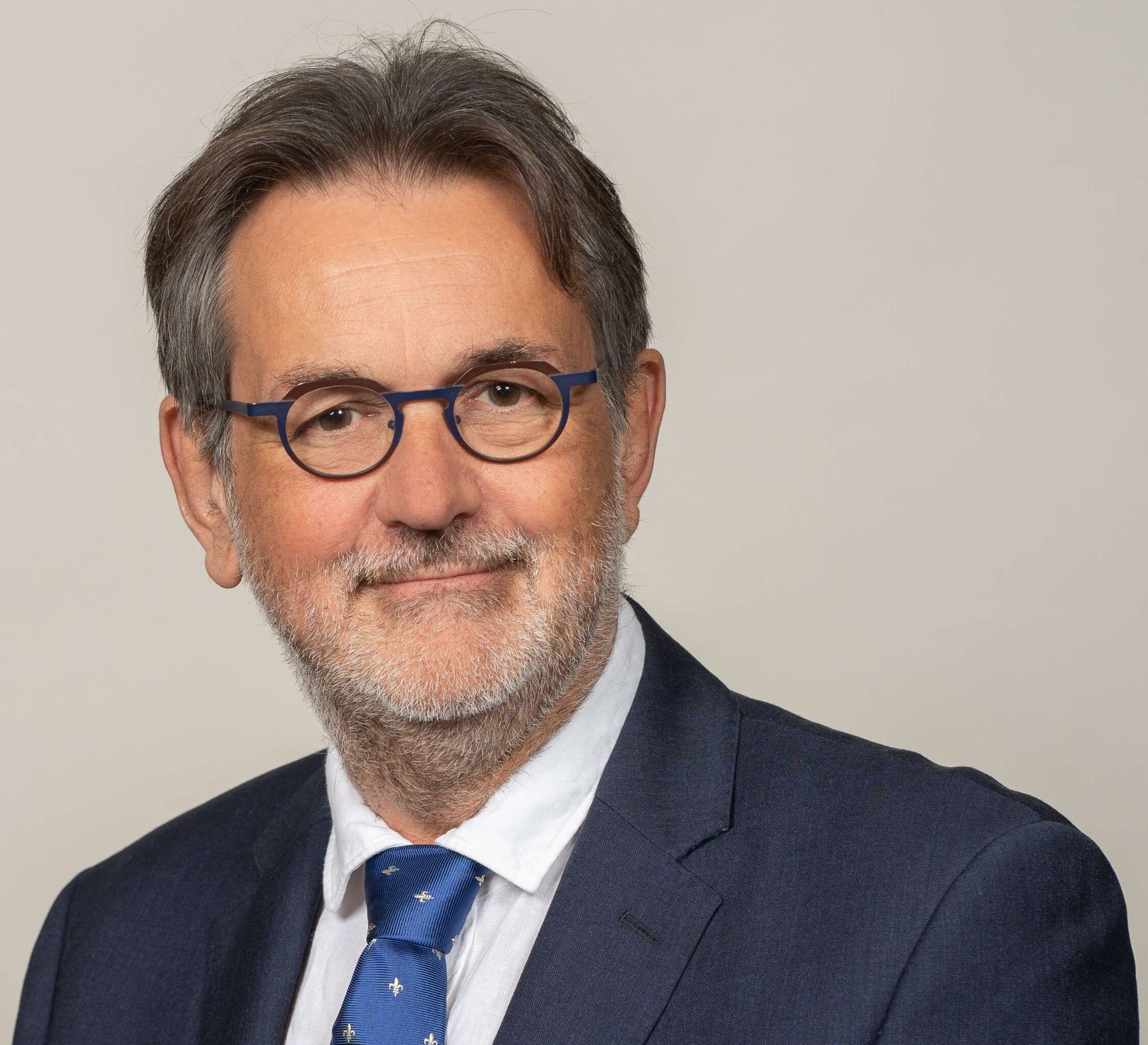
Chief Medical Officer Dr. Nick Gent said he has no intention of “just counting down the days” until he officially retires at the end of September, and that it will be a “wrench” to leave the job he has held since 2022.
News that he was stepping down from the CMO role was announced by the Ministry of Health last week. While the recruitment process for his successor will soon be underway, Gent told the Compass that there is still much to do while he remains in the post.
A key priority, Gent said, is to keep stressing the importance of best clinical practices across the medical profession to ensure that no one is being left behind.
“We know that we are failing to deliver care, particularly equitable care, to the poorest people in the Cayman Islands,” Gent admitted.
“Thanks to the findings of the STEPS National Health survey, we know that there are a small number of disease areas where we’ve really got to get the interventions in place.”
Falling through the gaps
Gent said about half to two-thirds of people in Cayman with diabetes and hypertension are not being treated due to lack of contact with healthcare services, health insurance limitations or because they can’t afford the services.
“Every day I’m seeing care packages for people with end-stage disease because of diabetes and hypertension that should have been treated 20 years ago,” Gent said.
“Obviously my successor will do the job in their own way with their own priorities, but I think anybody coming after me will recognise that these are things which we must progress. I won’t be able to finish all these projects, but I want to get them into a place where whoever takes over from me has got a good base from which to continue.”
Evidence-based healthcare
When asked what he is most proud of delivering, Gent says that as well as specific successes, he is pleased with helping bring about data-focused, structural change in the healthcare industry.
“This means we ask for the data which tells us where the problems are, ask what is the evidence for the best way of intervening in those, and find out how we make those interventions systematic,” he explained.
“It’s a way of trying to get a business structure into what is a fairly unstructured healthcare system.”
He added, “We have a healthcare system that has developed at a heck of a pace because of the change in population size, and we need to be thinking about how it all comes together in more coordinated ways.
“We now have all the hospitals and major healthcare providers sitting around the table talking about integrated care for serious acute issues like acute chest pain and stroke and things like that. Things are happening. It’s maybe a bit under the surface. People don’t see it. But unless those foundations are put in, you can’t go forward.”
Cayman’s future healthcare leaders
Another development Gent highlighted was being able to take on a number of Caymanian graduates in his department who, he said, “are really good, hard working, very keen people.
“We’ve invested a lot of time in training and developing them and I think they are going to be some of the important future leaders in public health and policy areas. I’m really proud of them and they show me that there is a real future here for Caymanian graduates.”
With medical training taking many years and often involving long periods of time spent overseas, getting the right education, training and experience is a long-term project which can be very challenging, he said.
Generating opportunities for Caymanians
Hiring foreign workers for particular roles can be “a quick and easy fix” which might be appropriate to offer certain skills in certain areas, he said, “but that doesn’t mean that it’s the way things are always done.
“We’ve got to put the effort in and look at more imaginative ways of how we link with other jurisdictions to provide the right training so that we can generate those opportunities [for Caymanians] in wider ranges of fields than we have in the past. It’s particularly acute in medicine and healthcare in general.”
He added, “If you want to train someone up to be chief medical officer, for example, then you’re looking at them spending a lot of time overseas, which is a big commitment. But if we can find more ways of helping young people receive training and experience here, we can maybe make those pathways easier for people. It’s possible, but it needs a really big push.”
Back to the UK for family time
After stepping down in six-months’ time, Gent is looking forward to spending more time with his family in the UK.
“For more than 25 years my work has taken me away from home for very long periods of time, living apart from my wife and children,” he said.
Now that his children are having children of their own, and his wife, who he met in medical school, has retired from full-time work as a doctor, he is returning to the UK to spend more time with his family and, no doubt, do his share of babysitting.
The plan was always to do the job for three years, said Gent, who turns 64 just after his contract ends, but he added, “Having said that, it was still a difficult decision because I have come to love being here and working here so much.
“The Cayman Islands is a lovely place to be and the work has been really interesting, so it’ll be a wrench, but I have another six months to go and there’s still a heck of a lot to do.”