


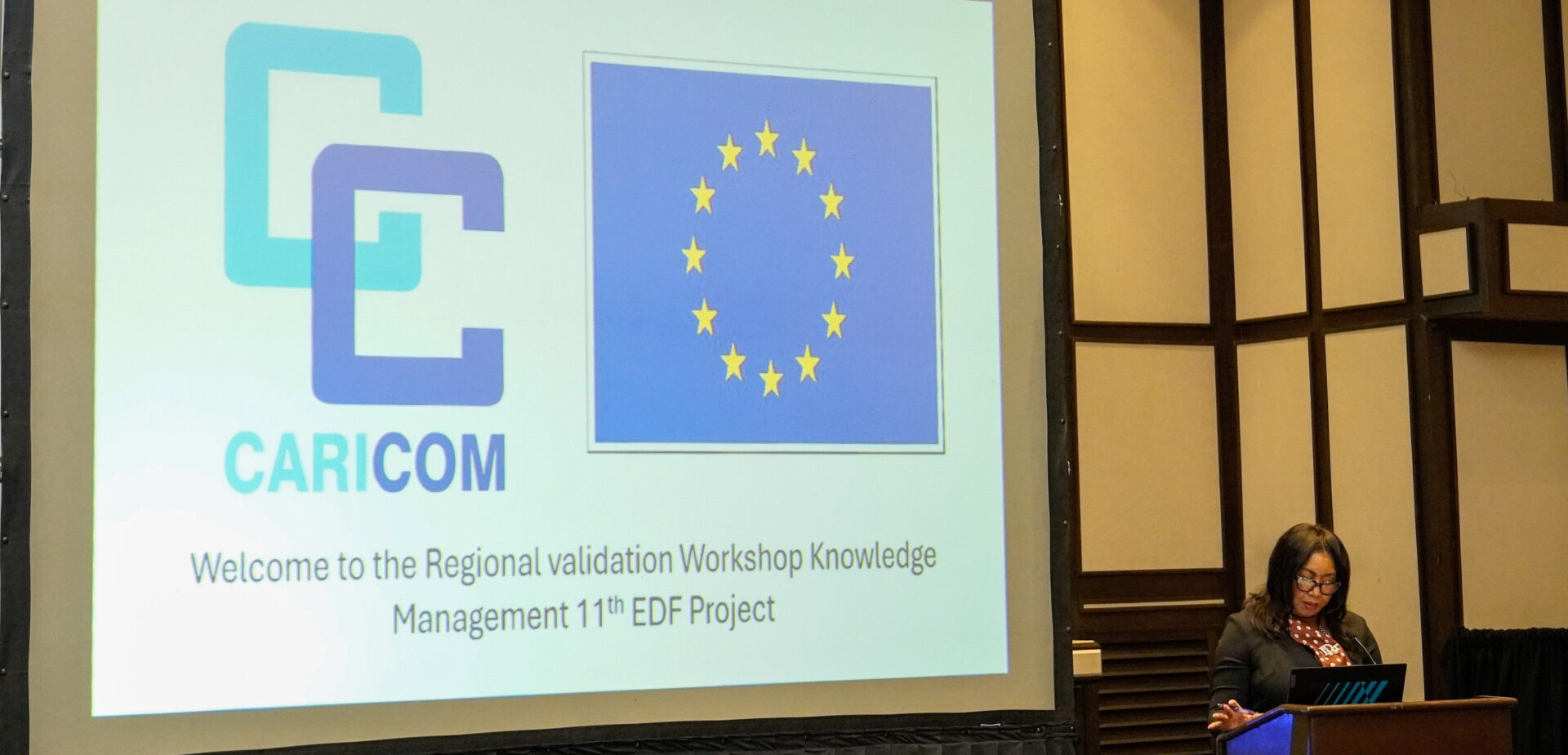

Last month, key stakeholders in the Caribbean Community (CARICOM)’s technology sector convened to evaluate and endorse the Knowledge Management Web Portal and Framework (KMF), a critical initiative aimed at propelling the region’s digital transformation journey.
The assessment took place over two days, from November 19 to 20, in Trinidad and Tobago, during a dedicated workshop organized by the CARICOM Secretariat, shared a media release. This project was financially supported by the 11th European Development Fund (EDF), which facilitates the development of the CARICOM Single ICT Space and promotes the community’s shift towards a data-centric digital economy.
This workshop marked the second phase of validation activities under the 11th EDF’s ICT4D component. The initial phase, completed in May 2025, involved an ICT Sector Gap Analysis that laid the groundwork for the development of several strategic frameworks, including the CARICOM Digital Agenda Framework 2036, the CARICOM Cooperation Framework, and the Knowledge Management Framework along with its associated Web Portal currently under review.
During the opening address, Ms. Evelyn Wayne, Director of Economic Policy and Development at the CARICOM Secretariat, highlighted the significance of this initiative. The release states that she pointed out that the KMF and Portal are “a defining step forward in supporting evidence-based economic planning, strengthening digital governance, and enabling a coordinated approach to ICT development across the Community.” She further emphasized that these tools are vital components in the broader effort to bolster regional digital resilience and integrate digital strategies.
The planned completion date for the Knowledge Management Web Portal is December 31, 2025. Once operational, it will empower Member States to securely upload and verify national datasets, access analytical dashboards, and produce both regional and national reports. Additionally, the portal will offer controlled public access to aggregated regional indicators, fostering transparency and aligning with international reporting standards. This digital platform will facilitate systematic monitoring of progress toward the Digital Agenda 2036, with clear targets and measurable outcomes.
Attendees at the workshop included senior ICT officials and technical specialists from various Member States, as well as representatives from the CARICOM ICT Cluster, including the Caribbean Telecommunications Union (CTU) and the Caribbean Broadcasting Union (CBU).
Participants reportedly expressed enthusiasm about the portal’s potential to resolve existing challenges in ICT data collection—such as fragmentation, inconsistent methodologies, and limited access to comprehensive regional datasets. They also provided practical suggestions to enhance system usability, refine data validation procedures, clarify workflows, and ensure alignment with both national and international reporting obligations.