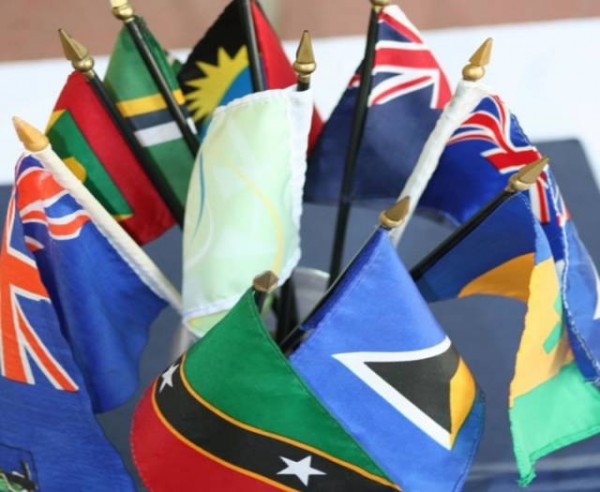

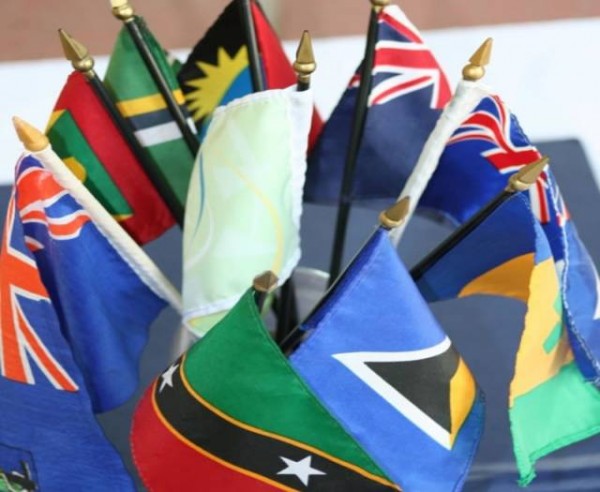
Member-country flags of the OECS.
The Organisation of Eastern Caribbean States (OECS) has agreed to establish a high-level negotiating team to engage the United States on a recent request affecting several member states, as regional leaders met in Saint Lucia this week to address urgent geopolitical and regional issues.
According to a news release, OECS leaders discussed the recent request from the United States for some OECS member states to accept Third Country Nationals (TCNs) from the US. The leaders noted that some member states have already signed non-legally binding agreements with Washington to facilitate further talks.
The Donald Trump administration has stepped up US immigration enforcement, which has seen them deporting individuals who are neither US citizens nor nationals back to countries other than their own. In some cases, the United States has sought agreements with partner countries to temporarily receive these deportees, even when they have no direct legal or residential ties to those states.
Socio-economic and security concerns
Regional leaders have expressed concern about the social, economic and security implications of such arrangements for small island states, particularly given pressures on public services, immigration systems and national security.
In response, OECS leaders agreed to form a broad-based, high-level negotiating team made up of representatives from member states to conduct technical negotiations with the United States. The move is intended to ensure a coordinated regional response as discussions with Washington continue in what leaders described as a rapidly evolving geopolitical environment.
For the BVI, which is an associate member of the OECS, the US request may not have direct implications. Unlike independent OECS member states, the BVI conducts negotiations with major global partners through the United Kingdom, a factor that could shield the territory from being directly bound by any arrangements negotiated between the OECS and the United States. Nevertheless, Premier Dr Natalio Wheatley attended the meeting.
Wider geopolitical developments
Beyond the US request, the leaders also focused on wider geopolitical developments, including the ongoing situation involving Venezuela and the United States. Leaders said they are closely monitoring developments and assessing potential impacts on the Eastern Caribbean, including economic stability, regional and energy security, migration flows, and diplomatic relations.
The OECS reaffirmed its commitment to peace, stability, and good neighbourly relations within the hemisphere, while maintaining principled engagement with international partners. Leaders also agreed to meet in a political caucus as frequently as necessary to ensure timely and coordinated decision-making.
They also promised to keep citizens informed, stressing that any decisions taken will be guided by the best interests of people across the sub-region, as the bloc navigates an increasingly complex global landscape.
Copyright 2026 BVI News, Media Expressions Limited. All Rights Reserved. This material may not be published, broadcast, rewritten or distributed.