


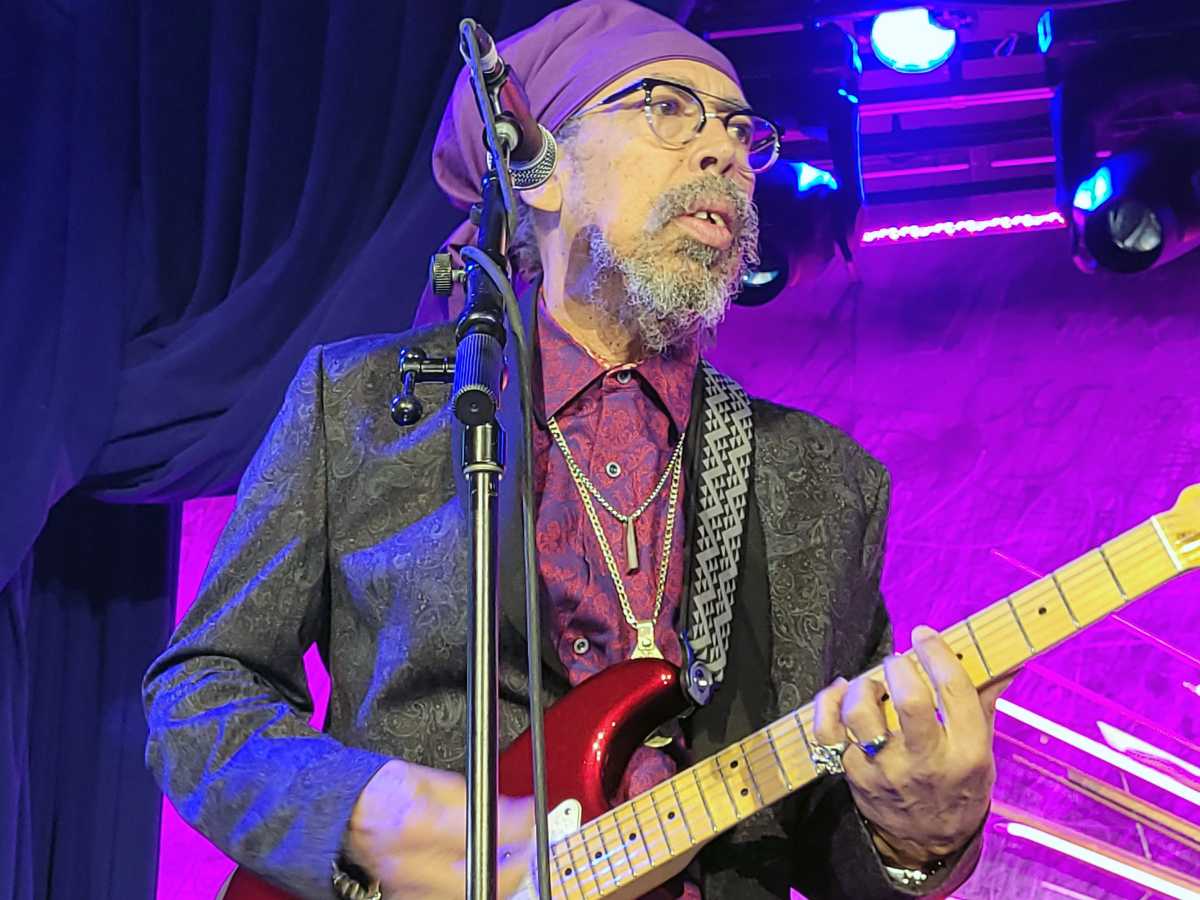
The reggae fraternity is again gripped in grief following the death of an avowed ‘reggae ambassador’ and the back-to-back death of the last of the Taxi Records’ famous ‘riddim twins.’
Genre loyalists were saddened by an announcement on Monday, Jan. 19, which confirmed the death of Third World founder/guitarist Stephen “Cat” Coore.
More baffling to fans was the fact that he succumbed at age 69 and seemingly at the prime of life.
Those in the know were convinced that if he were sick, whatever ailed him would resolve itself.
News about the circumstances surrounding his passing was scant, and few expected the terminal conclusion to his life.
Although declining health seemed a factor in Coore’s tragic demise, his dependence on support from a cane and rumors of a lingering stomach ailment seemed concerning.
However, following breaking news reports, shock, disbelief, and sadness resonated as factual proof of the debilitating conditions he must have endured.
What now seems definitive is the fact that Coore’s unique solo cello renditions will cease.
Coore was called a reggae ambassador, a title taken from a Third World song. He embodied a group named to represent an entire section of the world.
The musician/singer had one life to live, and he chose to live it dutifully — in public service to his country.
Like his father, David, who served in politics, Coore contributed generously to enhance and promote the genre associated with Jamaica.
Culturally connected from a young age, he joined Inner Circle before leading his own reggae ambassadors. Third World won international acclaim, earning awards, invitations to music festivals, and collaborating with artists such as Stevie Wonder.
Invariably, the musician’s untimely death signals the end of a Coore family dynasty marked by the elder’s assistance in drafting Jamaica’s constitution.
In addition to bolstering citizens’ rights for the newly independent nation, he also served as deputy to Prime Minister Michael Manley, then leader of the People’s National Party.
Cat Coore received national honors with the award of Order of Distinction in 2005.
If awards were given for live performances, his excellence with colleagues at Reggae Sumfest, Bob Marley Day in California, opening for Santana at Madison Square Garden, and his cello performances at Rototom in Spain and elsewhere would deserve belated honors.
Considered the Coore of Third World, his indelible imprint is bound to sustain the ambitions of generations of creatives who aspire to influence the cultural environment of their communities, using music’s lyrics and harmonies as armament.
Unfortunately, one week after Coore’s unforeseen departure, another shocker revealed the passing of Lowell Fillmore “Sly” Dunbar.
A revered musician on a similar path, he backed pioneering reggae Grammy winners Black Uhuru and became the syncopated dub-master of the acclaimed ‘reggae’s riddim twins’ duo.
“He’s gone to reunite with Robbie,” Chester McGibbon said.
As if to console himself over his grief, the fan referenced Robbie Shakespeare, Sly’s collaborator who preceded Dunbar in 2021.
On Jan. 26, 2026, the news was sobering.
Social media responded with solemnity that “Sly is gone to glory.”
Sly & Robbie became top producers with their Taxi Records label.
Together, they revolutionized the genre by emphasizing the hard-driving beats associated with reggae.
Using their instruments as punctuation, the pair blended unique drum-and-bass lines to define the identity of Jamaica’s music.
While Robbie thumped the bass, Dunbar drummed to enhance hits across all genres.
For that, they became sought-after celebrities to guarantee anthems for Peter Tosh, Bob Marley, Grace Jones, Madonna, Sinead O’Connor, Joe Cocker, the Rollinstones, Nona Hendryx, Bob Dylan, Gwen Guthrie, Jimmy Cliff, and others.
Most memorable New York appearances include their undisputed rhythm-filled showcases at The Pier and Radio City Music Hall.
Throughout their partnership, they reputedly recorded more than 200,000 tracks.
It is no wonder that the ‘twins’ dominated the dancehall era, creating hit songs for Shaggy, Shabba Ranks, and others.
Since the death of his prominent collaborator, Dunbar seemingly retreated from the spotlight but remained an admired fashion-forward stylist.
Sly Dunbar’s enduring legacy will highlight the contribution he earned from the Jamaican government in 2015 when he was presented with one of the nation’s highest awards, the Order of Distinction.
Sunday, Sly Dunbar was listed among prominent achievers during the en memorium segment of CBS Sunday Morning, a top-rated national television program.
Allegedly, Sly had been battling cancer for a period of time.
He was 73 years old.
King of Stage succumbs
The theater fraternity is also aggrieved by the death of Woody King Jr.
Acclaimed founder of the New Federal Theater, the legendary film and theater producer transitioned on Jan. 29, 2026.
Best known for showcasing many actors, I remember King’s generosity in providing opportunities for young Black entertainment critics.
Nostalgia also relates to King’s exposure of burgeoning Black thespians.
In an interview, King reportedly said, “I want to tell stories that contain the rhythms that only Black people have. And where does that rhythm come from? It can’t be developed by white people?”
King was always candid
This Insider recalls numerous conversations with the talent magnet.
Mostly shared at the Henry St. location on the Lower East Side, he provided a gateway and early access to future stars.
Because of his insightful attitude, members of the Black press were able to enjoy advance performances from burgeoning actors Denzel Washington, Mario Van Peebles, and others before Hollywood claimed ownership.
At a time when Black critics had limited access, King ensured these members of the press received credentials for theatrical productions.
Just to name a few: actors Samuel L. Jackson, Morgan Freeman, Laurence Fishburne, Debbie Allen, Phylicia Rashad, Chadwick Boseman, and others.
In 2018, actor Glynn Turman executive-produced “King of Stage: The Woodie King Story.”
The documentary tells of his early experiences as an actor, lighting expert, and director who championed many careers.
While arts specialists referred to King as the “Renaissance man of Black theater,” others regarded him as the “godfather of Black theater.”
Among a plethora of honors, King was inducted into the American Theater Hall of Fame in 2011 and received Tony Awards for excellence in 2020.
While his impact on the NY theatrical platform remains indomitable, King’s influence also leaves a testament in the form of mentorships in the television and film industries.
Born in Alabama, the southerner moved north to Detroit and ultimately New York.
He was 88 years old.

Bad Bunny wants “Ice Out”
Puerto Rican superstar Bad Bunny made history Sunday winning the album of the year category at the 68th annual Grammy Awards.
His victory marked the first time an all-Spanish-language album nabbed the coveted prize.
In addition, the Hispanic native also won unanimous rewards for his reggaeton composition, which earned another gramophone to add to his collection of half of a dozen.
Added to those insurmountable feats, the singing sensation received the loudest applause of the evening when his name was announced.
However, none of those achievements brought as much attention as the reaction he received after accepting his honor.
With clarity and conviction, the popular singer delivered an impassioned statement regarding the Department of Homeland Security.
“ICE out,” “We’re not savages. We’re not animals, we’re not aliens, we’re humans, and we are Americans,” the Latino winner said.
Apparently, there was no language barrier.
Seemingly, a hush fell over the venue, filled with red-carpet-ready patrons.
After his unexpected comments, Bad Bunny gave a speech suggesting that people should respond with love as retribution.
Slated to headline the halftime entertainment later this month during the Super Bowl, Bad Bunny aimed his diatribe at an administration that has already warned of the prospect of assigning ICE agents to the football game.
Bad Bunny’s anti-ICE comment was the first of a slew of protest messages directed against the White House. Throughout the lively music salute, six-time host Trevor Noah joked about presidential faux pas and other political foibles.
The South Africa-born American seemed to score points referencing the network’s potential of a lawsuit from the president.
His monologue gradually intensified, with comedic commentary about Nicky Minaj, suggesting her whereabouts might be inside the White House.
The audience seemed to endorse the satires and jokes he interspersed with compliments and related information.
Best Contemporary Country Album winner Jelly Roll went political, saying, “Jesus is not owned by any political party.” And Justin Bieber and his wife Hailey sported ICE out” pins as they entered the showplace.
Several Grammy winners also offered acid remarks about the prevailing state of national politics.
SZA, Gloria Estefan, and best new artist winner Olivia Dean punctuated acceptance speeches with poignant messages.
“I’m up here as a granddaughter of an immigrant,” Dean said.
“No one is illegal on stolen land,” this year’s song of the year winner, Billie Eilish, said.
And Estefan, winner of the Best Tropical Latin album, said she hopes that “the government listens to our pleas for humanity…”
The Miami resident said she is optimistic people will stand up and “speak out against injustice.”
The Cuban immigrant also lavished praises on Bad Bunny, saying his nomination signaled progress in the industry.
Changes to the most reputable awards ceremony are likely next year, when Disney takes the helm from CBS-TV, which has hosted the annual for 50 years.
Apparently, following a deal between the entities, a new arrangement will enable rights to ABC-TV.
Losers of the prestigious award on Sunday included Noah, who made his final hosting engagement with the Grammys, and Supreme Court Justice Ketanji Brown Jackson.
They were both beaten by the Dalai Lama in the best audiobook, narration, and storytelling category.
Lila Ile, a heavily favored contender in the reggae category, along with Jesse Royal and Vybz Kartel, also had to yield to Keznamdi, who took the prize for “BLXXD & FYAH.”
Highlights included stellar tributes and performances to D’Angelo, Roberta Flack, Ozzy Osborne, and others who died since the airing of the last awards presentation.
Catch you on the Inside!