


By Sharon N Simon
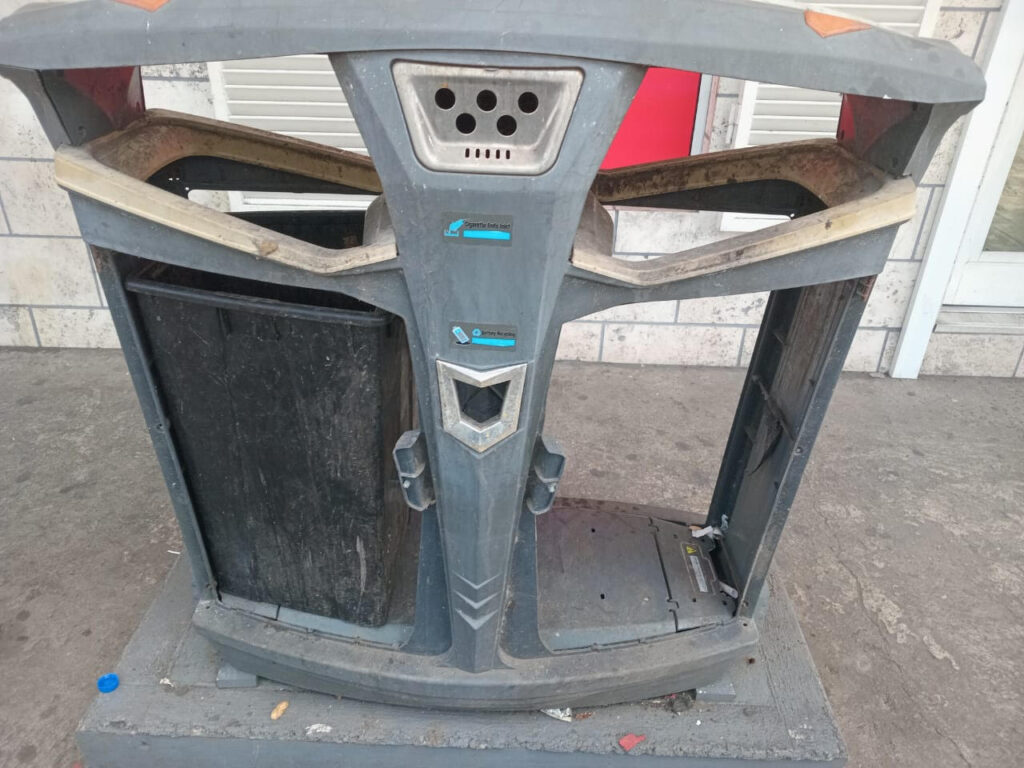
They were introduced as the sleek, durable solution to urban clutter: modular waste stations designed to withstand the salt air, heavy crowds, and the relentless pace of a busy city center. But as the sun beats down on the streets of St. John’s, a different reality is wafting through the air. What were meant to be symbols of modern efficiency have, through many eyes, become “filthy” landmarks. While the heavy-duty construction remains intact, the maintenance required to keep these units functional appears to be outstripping the resources allocated to them.
The very features that make these bins “advanced” are exactly what make them high-maintenance. To keep a high-traffic waste station operational, several layers of upkeep are non-negotiable: sanitization through weekly high-pressure steam cleaning to prevent organic waste buildup, sensor calibration to ensure fill-level alerts function properly, and mechanical integrity checks including regular lubrication of locking systems and modular doors to prevent the salt-heavy air from seizing the hinges. Without these measures, the pungent odors currently plaguing pedestrians are inevitable.

Despite being marketed for “high-traffic environments,” there is a growing consensus that the internal volume of these bins may be mismatched for the city’s needs. Urban planners often opt for sleek, modular designs for aesthetic reasons, but the removable internal bags or bins often hold significantly less than a traditional open-top barrel. In a city where tourism and local foot traffic converge, these “smart” bins can reach capacity in just a few hours.
“They look great on paper, but if a bin is full by noon and smells by 2 pm, the technology doesn’t matter,” says one local shop owner. “It’s like putting a tuxedo on a toddler; it’s still going to be a mess eventually.”
For a busy urban core, the math is simple but demanding. To prevent the “filth” factor, bins require emptying at minimum twice daily during peak seasons, a deep chemical wipe-down once a week to combat smell and sticky residue, and a monthly check of the modular seals to ensure pests like rodents or gulls aren’t gaining access.
Were they a good choice? In theory, yes. Their durability is perfect for the Caribbean climate. However, a waste station is only as “smart” as the cleaning schedule behind it. Without a rigorous, daily commitment to maintenance, these expensive installations risk becoming nothing more than high-priced eyesores.
St. John’s doesn’t just need better bins; it needs a maintenance strategy that matches the ambition of its infrastructure.