


On 1 May, the sun rose on a new day for cruise tourism in the Cayman Islands. A resounding ‘no’ vote on new piers left the industry reeling.
But the scenes in George Town Harbour were no different to any other day. A fleet of tender boats cut through the aquamarine waters, ferrying cruise passengers from the behemoths in the bay to cramped shoreside facilities.
Passengers yawned or stared at screens as they sweated in unshaded lines at the Royal Watler pier. After a consequential, but purely advisory, referendum it is no real surprise that nothing changed overnight.
Two large Carnival ships disgorged almost 8,000 passengers on 1 May – the day the results were announced.
And Port Authority advance bookings show that the number of cruise arrivals for 2025 is expected to increase this year. But experts on all sides of the issue counsel that, while there may be peaks and troughs, the trend that has seen numbers drop by around 40% from 2018 to now is likely to continue.
With the question of berthing answered – at least for now, a bigger, existential question hangs over the industry. What’s next?
Time for compromise?
Re-igniting the campaign for a dock that can accommodate newer, larger ships, remains a priority for some.
But realists in the industry are counselling compromise, seeking to move on from the rancorous debate and play the hand they have been dealt.
Questions are now being asked about how to improve visitor experience and minimise job losses within the existing framework.
In some senses, says Cline Glidden, director of the Port Authority board, the clarity of a firm decision gives government and its partners freedom to invest in enhancing the current set-up.
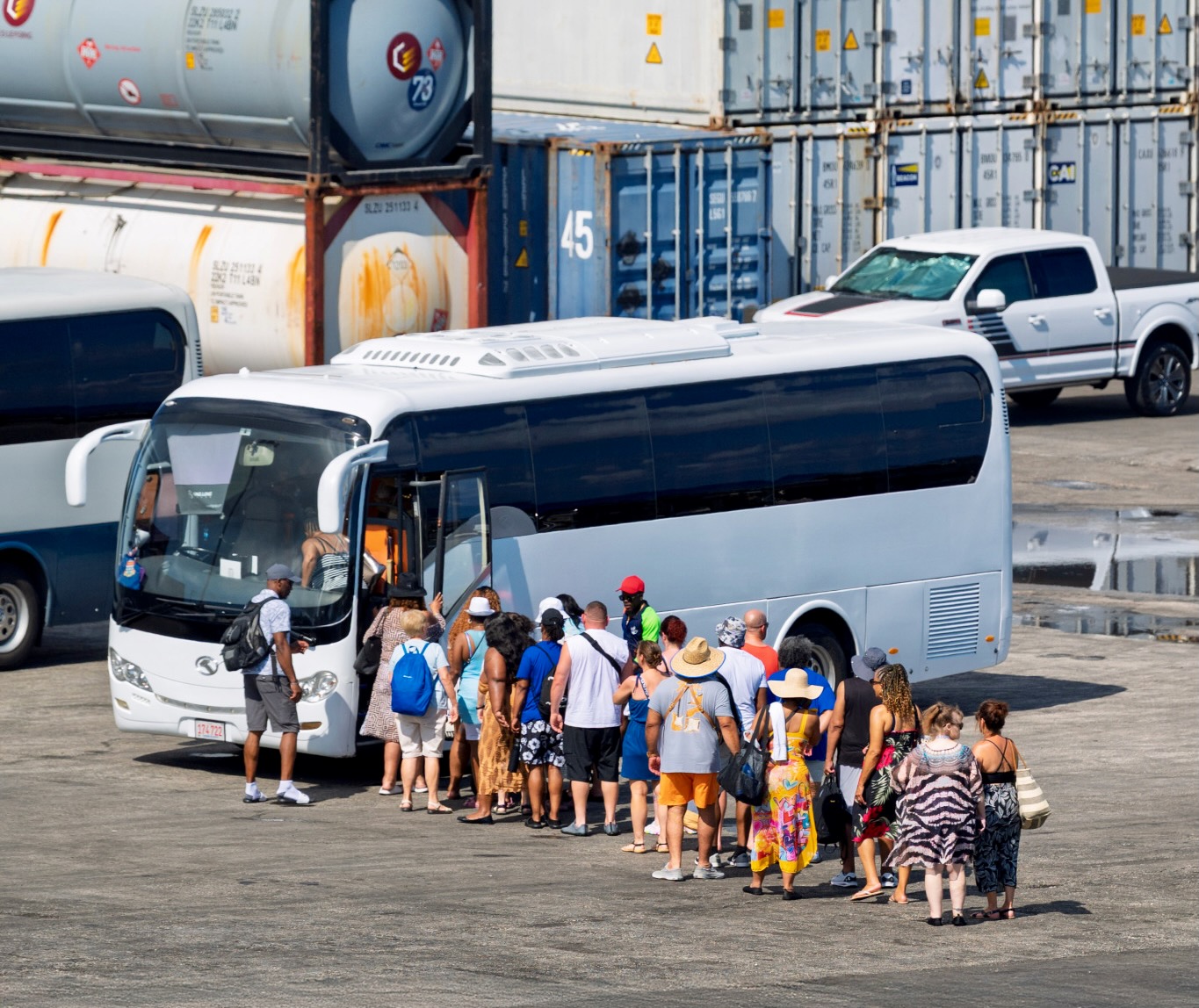
Shore-side security, shaded waiting areas, better management of transport and tour operators and investment in the secondary landing point at Spotts top a long wish list of necessary investment.
Troy Leacock, former Cayman Islands Tourism Association president and an advocate for cruise piers in Cayman, believes the port debate could resurface as visitor numbers decline. But in the medium-term, he believes the sector needs to accept the result and work within current limitations.
“Rather than sitting down and saying, ‘I told you so’ as the numbers drop, the cruise tourism industry needs to just get on and do the best job it can to minimise the decline and maximise what we can get from the cruise tourism that we do have.”
At Caribbean Marine Services, the Caymanian business that has provided tender boat services to the cruise lines for 50 years, there was relief at the result which ensures a future for the company and its employees.
“It is not in our interests to be fighting against our customer,” said David Carmichael, dismissing suggestions that the company was behind a ‘no’ campaign.
“We will just do what we have always done and get on with the job.”
Cruise industry trends suggest a shift not only towards bigger boats but towards shorter haul itineraries that involve less fuel burn and include islands that the corporations own themselves. The cruise lines – and by extension the private islands they own – are increasingly the profit centres in the industry.
Despite that, Carmichael believes there is scope for Cayman to maintain an important position on the western Caribbean itineraries. No-one’s business depends on that more than the tender boat operation.
The cruise lines, too, were in a conciliatory mood following the result.
Michele Paige, of the Florida Caribbean Cruising Association – the trade organisation for 23 cruise lines operating in the region – said the group was ready to come to the table.
In an emailed statement in response to questions from the Compass, she said, “We respect the decision of the people of the Cayman Islands and look forward to working with the new government to enhance the benefits of cruise tourism for local communities whose livelihoods depend on it.”
Managed decline?
It should be no surprise, says Glidden, despite the rhetoric of the campaigns, that the sun still rose and the ships still arrived. Cayman’s cruise industry is not racing towards a cliff-edge but is, nonetheless, confronting the likelihood of real decline over the next decade.
Factors unrelated to Cayman’s infrastructure limitations are also at play.
Multiple ships diverted itineraries from Mexico amid a dispute with the cruise lines over fees. Meanwhile Royal Caribbean has suspended trips to its private island of Labadee in Haiti amid ongoing violence in the country.
One of the ships diverted from Labadee, the Adventure of the Seas, anchored in Grand Cayman last week, 12 May, with 3,800 passengers on board.
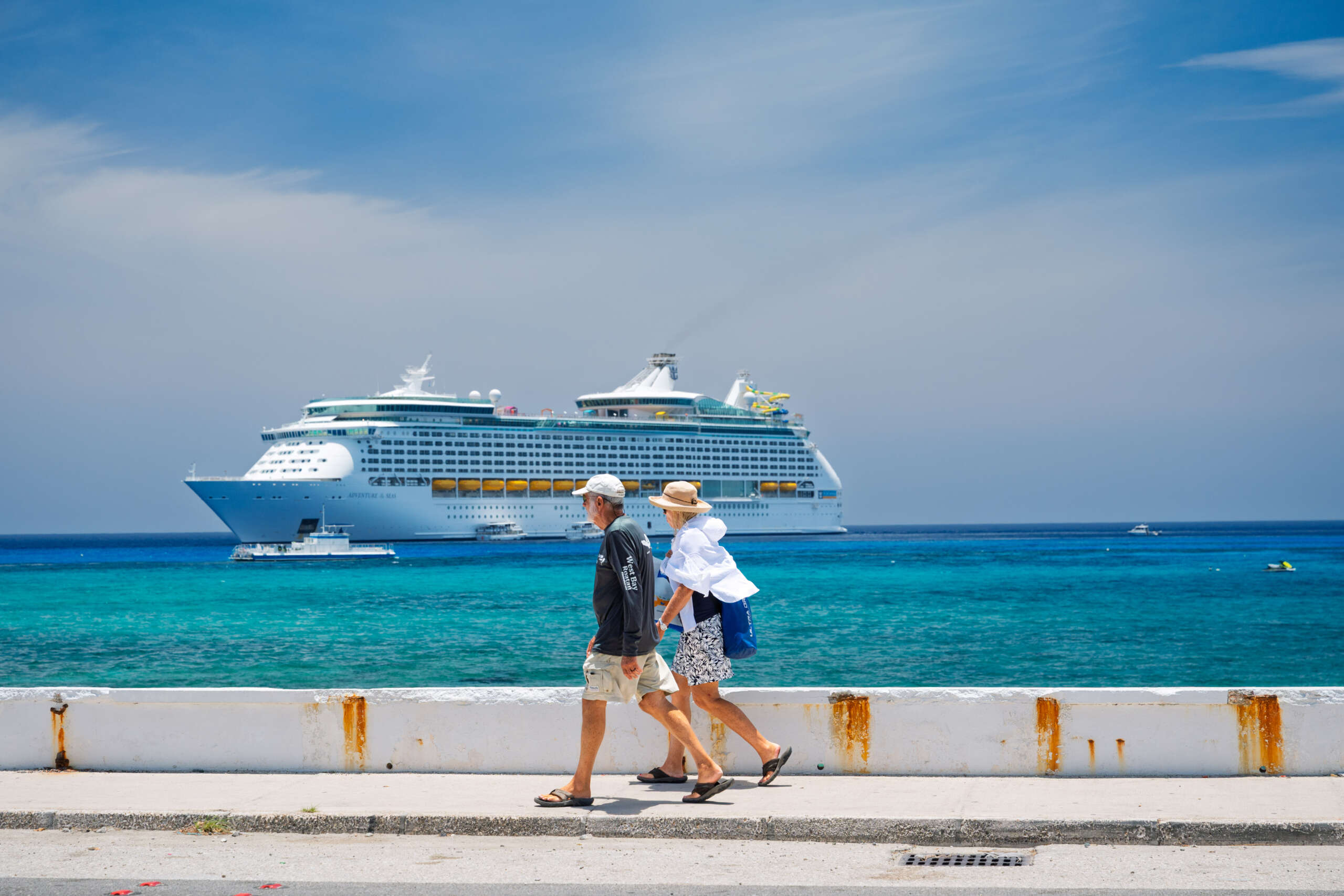
Cayman remains an appealing destination, says Glidden, but the reduction in visitor volumes should tell people that no-one is bluffing when they talk about a diminishing industry.
If the decision on piers is final – and there is some debate over this – Glidden argues that the islands must look at a ‘managed decline’ of the sector.
He is not convinced that higher-spending boutique ships can be persuaded to divert to Grand Cayman from multi-island itineraries in the eastern Caribbean. For the new government, he is encouraged by discussions of a comprehensive overarching plan for tourism.
But he cautions that if piers are not part of that, then a strategy must also be developed to support and transition workers who depend on the visitor volume supplied by cruise to transition to other forms of work.

Leacock accepts there will be some job losses. But he has called for government to appoint a cruise director, within the Ministry of Tourism, to work with the private sector, to focus on getting the best for those that work in the sector.
“We need somebody that wakes up every single day, and their job is to make cruise tourism in Cayman better,” he said.
“Put the piers to one side, and remember cruise tourism is important. It is worth $150 million a year to our economy. It employs thousands of Caymanians that represent hundreds of Cayman-owned businesses.”
Shade and on-shore security
For Glidden, the clarity of a decision from the people – if it is followed with a clear direction from government – on berthing, gives the Port Authority scope to make necessary upgrades. While he believes the industry does need piers, he said the uncertainty over the issue had meant the existing set-up has suffered.
Once the PACT coalition indicated they would not introduce berthing, he said the port was able to raise fees to help fund investment in both cargo and cruise.
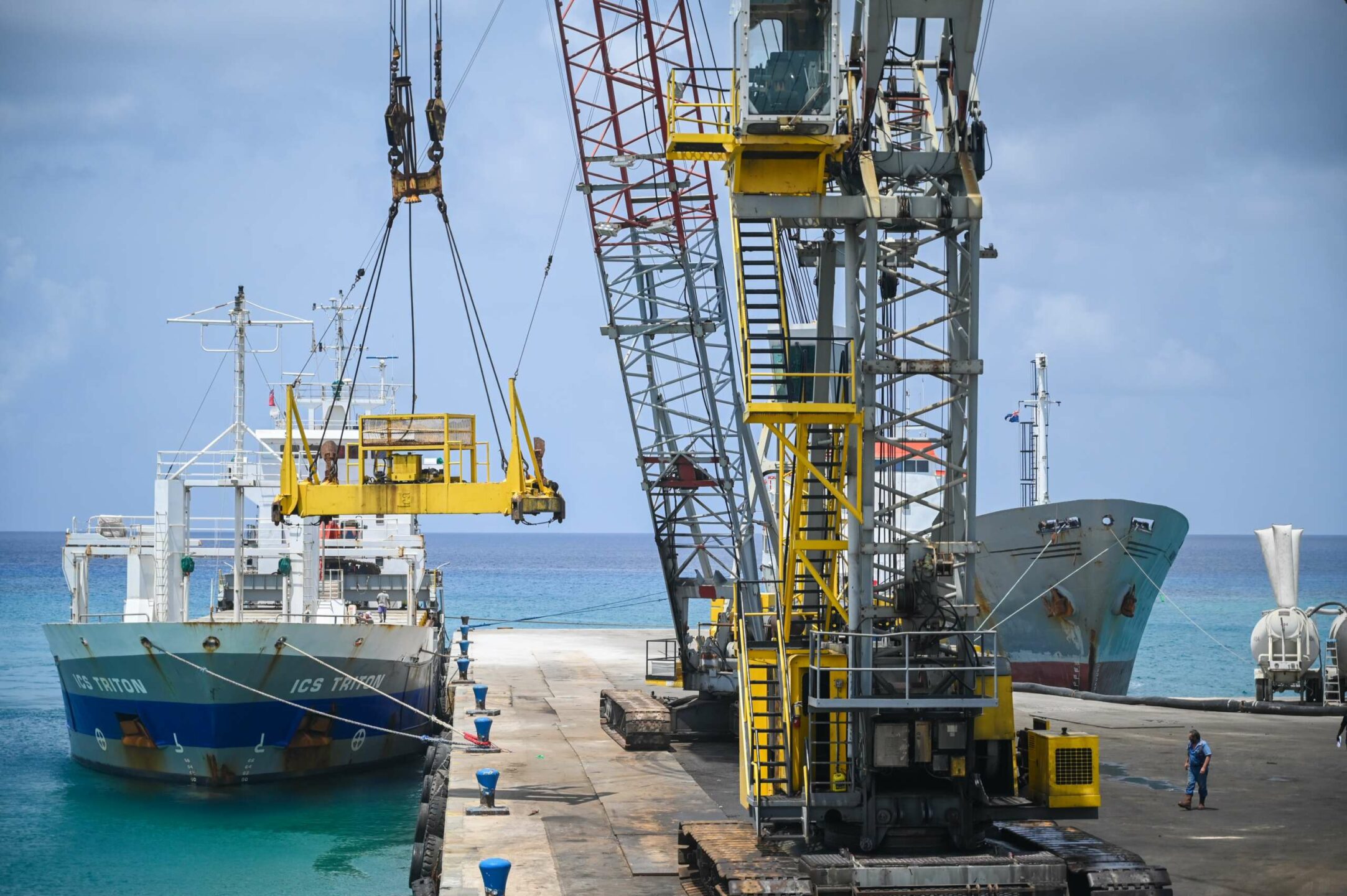
That has resulted in new cranes to help offload containers and will soon filter through to upgrades to the Royal Watler pier. Plans have been drawn up to add shade for waiting passengers and Glidden says talks are taking place with cruise lines about moving some of the security screening process on shore.

He added that the port had been able to give longer leases to retail tenants at the pier, allowing them more surety to invest in their businesses.
While many of those tenants support piers, the uncertainty over if and when that infrastructure might be built limited the desire of anyone – from the tender boat operators, to the shore-side businesses, and the port itself – to commit millions of dollars to improving moribund infrastructure.
“The discussion that has been going on for 25 years has really limited what can be done,” said Glidden, who was tourism minister in 2011 when a previous deal was discussed for piers.
Economist: Focus on stayover
For Caribbean economist Marla Dukharan, shrinking cruise passenger volumes present an opportunity rather than a cost for Cayman.
For Dukharan, whose paper on cruise berthing in Cayman was an integral part of the ‘no’ campaign, the future of the sector cannot be looked at in isolation.
She said the supposed advantages of cruise tourism may well be outweighed by the negative impact on the more lucrative stayover sector.
Highlighting overcrowding at Stingray City, Starfish Point and Seven Mile Beach, she said Cayman would be best advised to look at its tourism product as a whole. She believes limiting visitation to those sites could ultimately make them more lucrative.
Dukharan said previous marketing campaigns had successfully targeted luxury tourism, promising a more exclusive experience – a successful strategy that she believes is undermined by too many budget cruises.
“Targeting that (high end) market has worked for Cayman. I think it’s a target market that has demonstrated resilience and the inelasticity and demand that you want. Any efforts being spent at curating better experiences and more diversity of experiences needs to continue to target that market.”
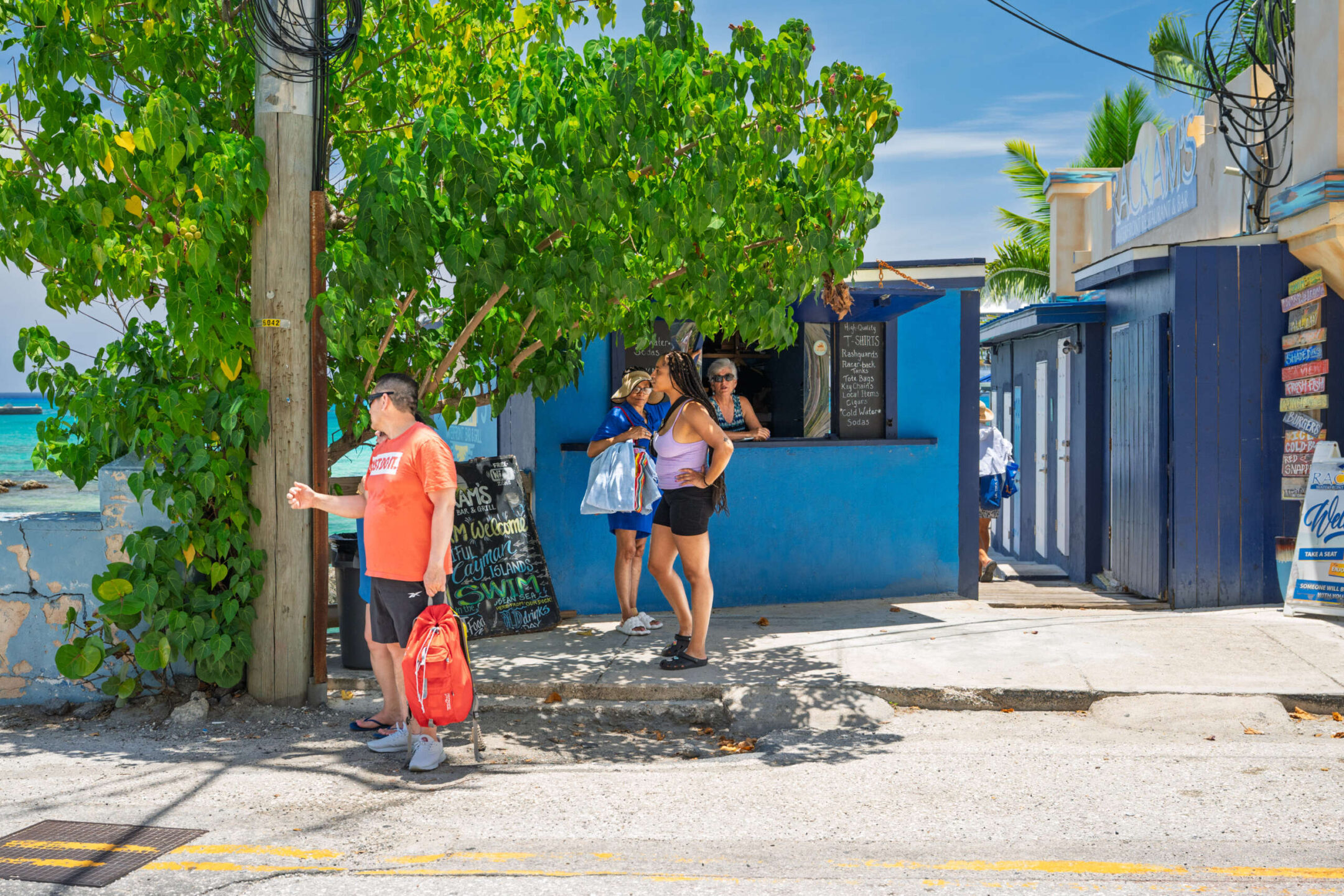
While she acknowledges there could be a downturn in jobs from cruise, she said no data had been provided to show the extent of that and what, if any, government intervention was needed.
Transport sector braces for impact
The biggest impact is expected to be on the transport and tour bus sector, which is still recovering from the impact of the pandemic.
Kenrick Webster, owner of Webster’s Tours, employed around 35 people in 2018, when almost 2 million cruise passengers visited Cayman. COVID-19 forced him, like many others, to make tough decisions and the company emerged from lockdown as a leaner operation with a smaller fleet and around half the staff.
Without cruise piers he sees little opportunity to build the business further. But he said his operation is diverse enough to survive further attrition in visitor numbers at current levels.
But he expects smaller operators and those that depend totally on cruise to see a loss of business and jobs. And switching to stayover visitors is not an option for many.
“If they move those from the cruise to come over to the land based side, it would just saturate the market,” he said.
Where he does see potential is in the movement towards a national public transport system, something he believes is desperately needed.
“This would be an opportune time to look at a comprehensive ground transportation system,” he said.
“If it’s managed properly, maybe they can have some of those drivers come and drive public transport buses.”
Ultimately, though, he believes the islands should reconsider its decision and think again about cruise piers following a well-managed public education campaign.
Does ‘no’ to new piers really mean ‘no’?
Joey Woods, the former director of the Port Authority, is sceptical that any efforts to enhance the current facilities will have a meaningful impact on visitor numbers.
If there was a quick, inexpensive fix, he said, “We would have done it years ago.”
Woods believes the referendum was a tactical mistake that limits government’s options – at least in the immediate term.
He said the “cold, hard truth” that the new government would need to confront is that piers are the only way to save the sector.
“I don’t think (passenger numbers) will go to zero,” he said, “but it will be so low with respect to what we used to have, that it won’t sustain the businesses.”
He believes there is an opportunity to discuss cruise piers again as the islands contemplate what to do about cargo.
Woods was port director when a proposal was drawn up for a new facility at Breakers. One of the options outlined in a strategic outline case was to cut a channel through the road and use quarried ponds as a safe harbour. The idea was for cargo, trans-shipment and, potentially fuel, but could also be adapted for cruise and super yachts, he said.
That infrastructure is at least a decade away, however, and relies on supplementary traffic and highway improvements.
Woods believes George Town is the best place for a cruise port and that government will ultimately come back to that conclusion as numbers drop further.
Leacock, who was against the previous pier project but changed his mind, citing the experience of the pandemic, to throw his weight behind the ‘yes’ campaign at this referendum, said the debate over infrastructure could still resurface. He said many people had voted ‘no’ because of the lack of specifics presented and suggested it may be an option to go back to the people in future with a set of clear alternate proposals and a proper public education campaign.
“I think as time goes on, it’s going to become more and more apparent to governments and to people in Cayman, that cruise tourism is continuing to suffer. This is not scaremongering.”