


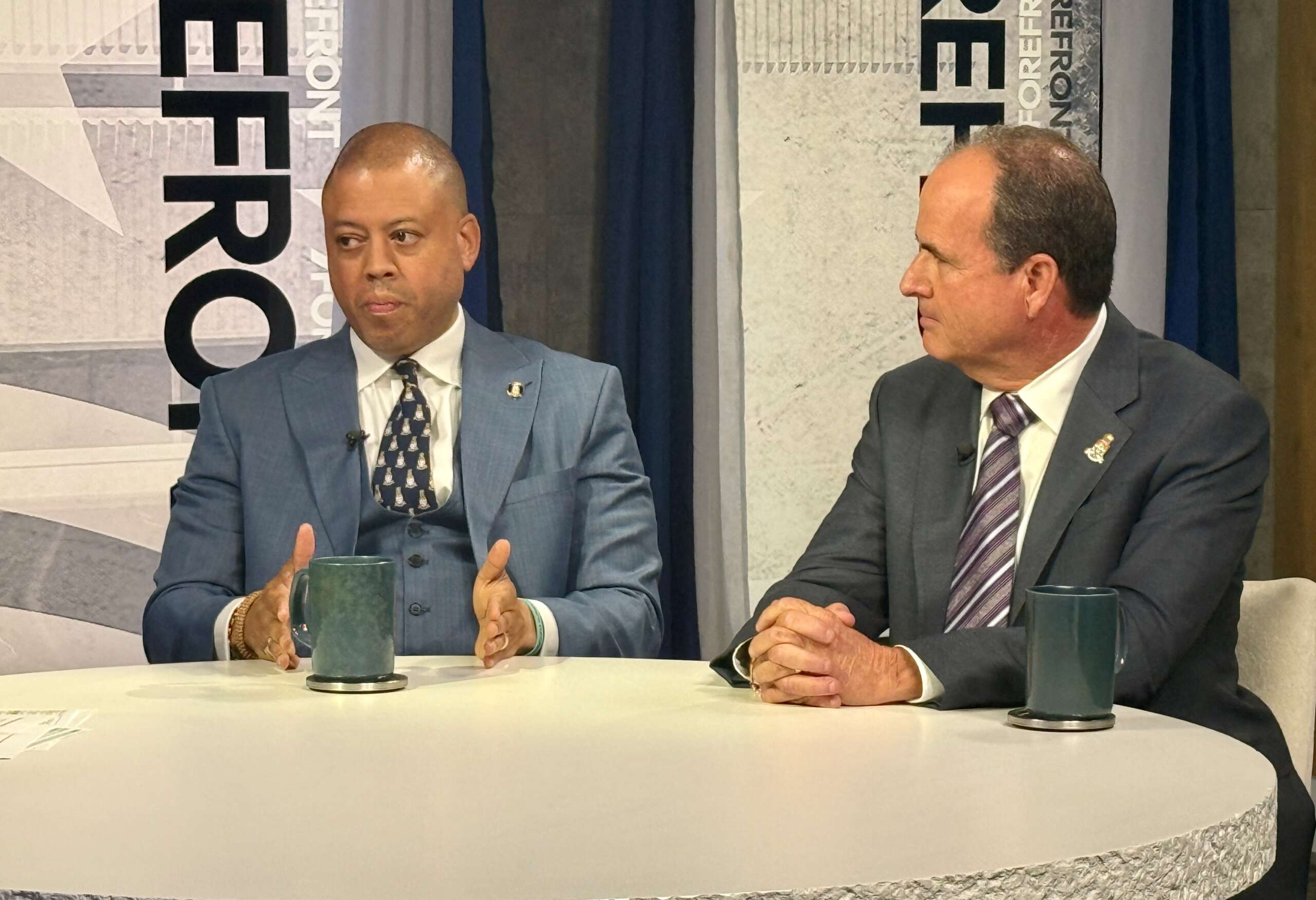
Plans for a $50 million high school on Cayman Brac will be one of the first projects tackled in line with the new coalition government’s shift in direction on education.
Premier André Ebanks and Deputy Premier Gary Rutty both highlighted the need to rethink the Brac school project among a handful of immediate priorities in the first 100 days of their new administration.
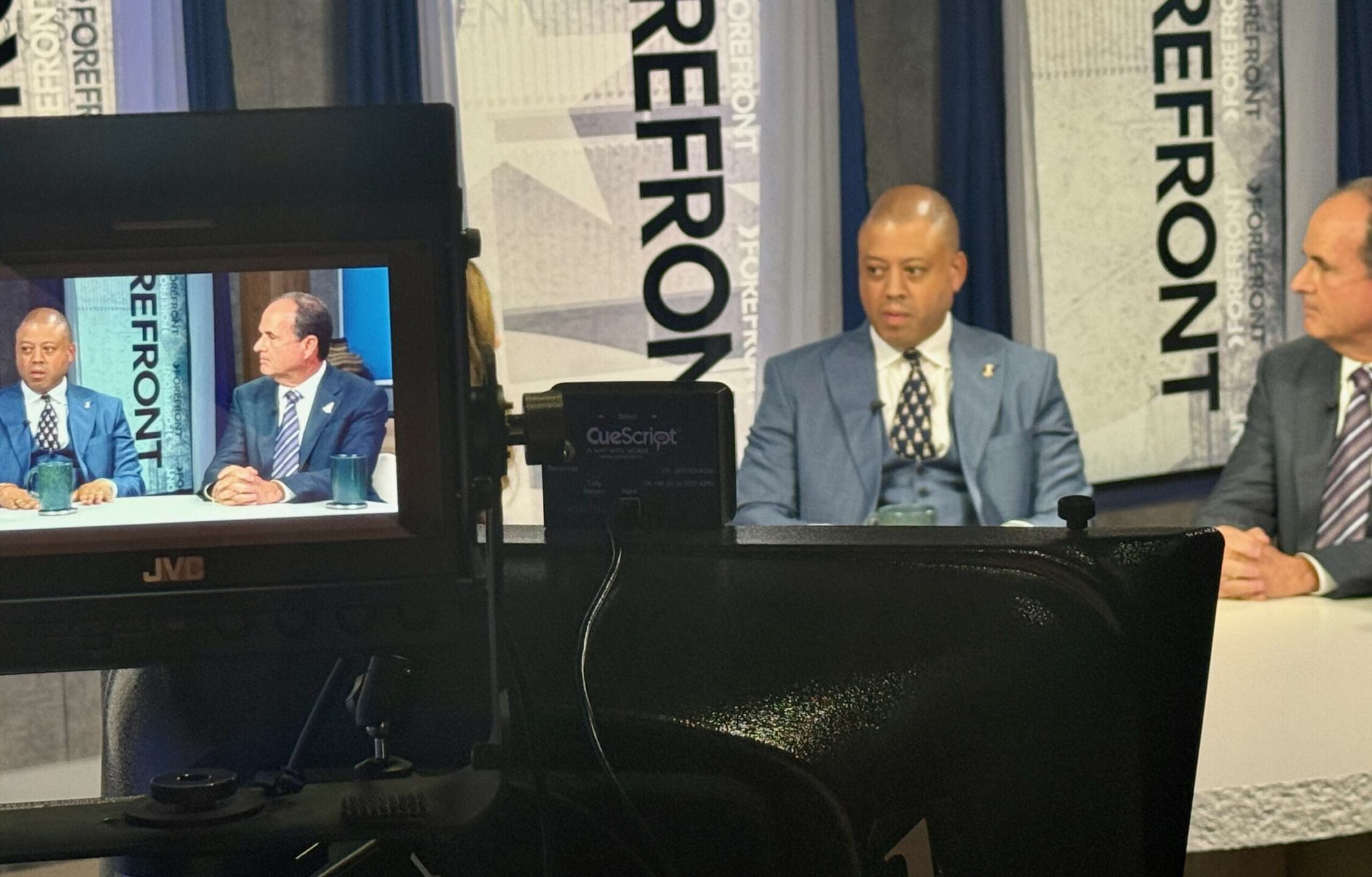
Speaking in an interview on Compass TV’s Forefront political talk show on 8 May, both men indicated education was one of the key joint priorities of the National Coalition For Caymanians.
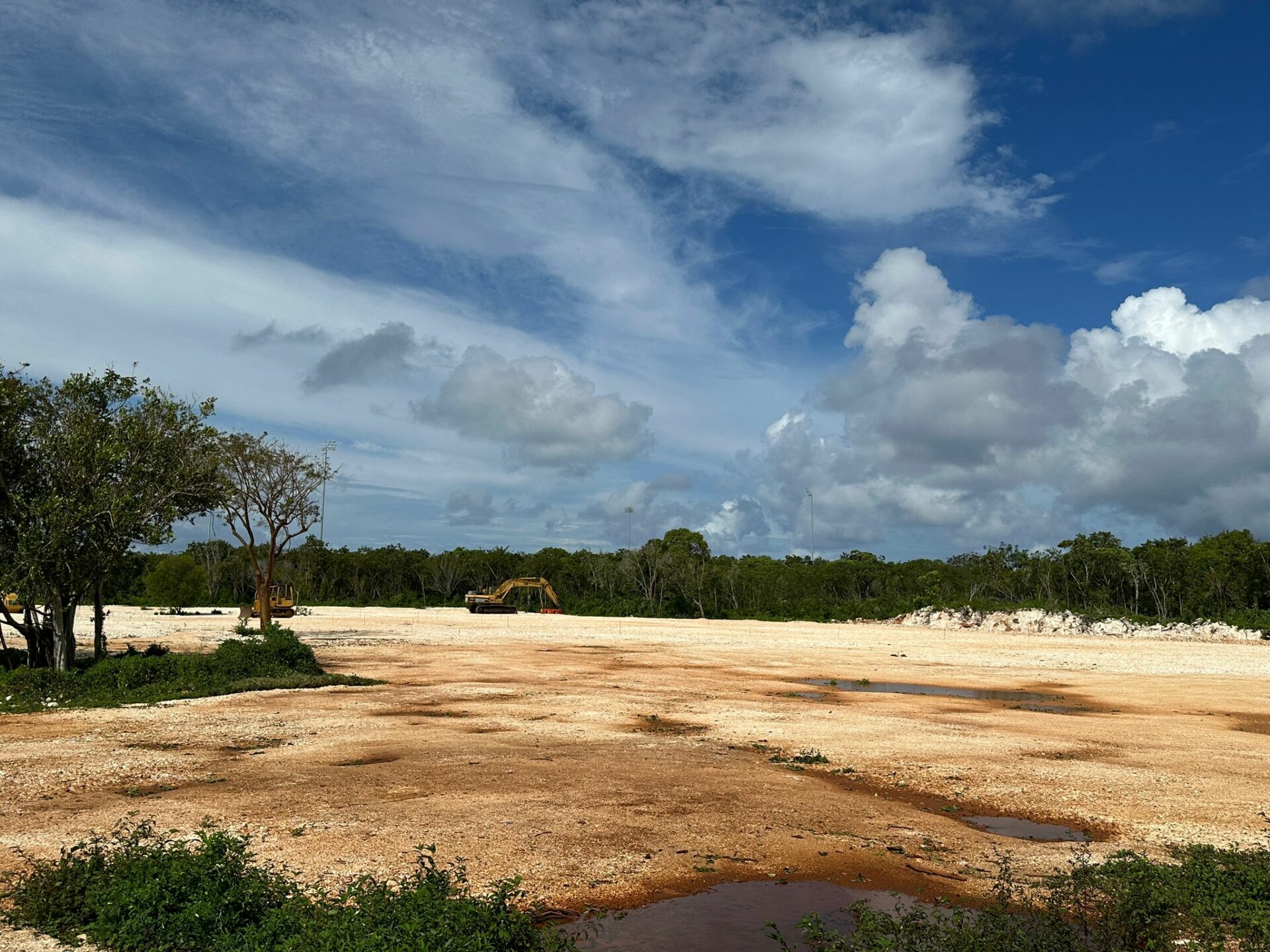
On the Brac school, Ebanks said the new group would need to see the contract and determine if it could be scaled down. Much will depend on the nature of what the previous government has signed
He said the first question would be, “Is it fixed? If it isn’t fixed, is there a pathway for us to be able to modify it?”
The Compass reported late last year that Arch and Godfrey and McAlpine had been selected as the preferred bidder on the project after a final business case was approved by Cabinet.
The escalating cost, from an initial $25 million to an estimated $50 million, coupled with concerns that expenditure could rise even further, was cited by Ebanks at the time as one of the reasons he and three other MPs resigned from the UPM coalition.
Rutty suggested an overemphasis had been placed on buildings over the past two decades and the results in Cayman’s schools did not measure up to the expenditure.
“We talked about $200 million in these schools (John Gray and Clifton Hunter) that were built in the last couple of years,” he said. “We should not have one student coming through those schools failing, with that kind of investment.
“To spend $200 million and have the results that we have right now? We’re failing.”
He said 35 students had graduated from Layman E. Scott Sr. High School on the Brac last year – with some of the best results in the country. Of those, only half were Caymanian.
“Who are we building this school for?” he asked.
Asked by host Tammi Sulliman if there would be a robust conversation among the new Cabinet on the school project, Ebanks suggested there was already a broad consensus.
“It may not be robust for us; it may be obvious what needs to be done,” he replied.
Rutty went on to suggest that the dollars were needed elsewhere in the education system, referencing exam results and school inspection outcomes.
“We have two-thirds of the kids coming through the public school system basically failing. You have 16 public schools, and only four receiving ‘good standard’,” he said.
“That’s unacceptable for a country like Cayman. We’re one of the top financial centres in the world. We should be producing the top students here.”
Immigration reform an immediate target
In the wide-ranging interview, Rutty and Ebanks also highlighted immigration reform, access to healthcare, infrastructure and cost of living as key shared goals.
On immigration, Ebanks said the coalition would move quickly with some reforms within the first 100 days of his administration.
“We see immigration and a human capital plan as some of our quickest wins that we want to launch straight out of the blocks.”
He said significant research had already been done by the civil service and the various political parties prior to the election.
“We’re going to bring that together to see what are the things that could be implemented straight away,” he said.
“There isn’t any need for a large delay.”
Rutty said the current immigration laws were not fit for purpose.
“Our fellow Caymanians are feeling left behind. They want the protection law,” he said, referring to the Caymanian Protection Law that was repealed in 1992. The spirit of that law has now given rise to a discussion white paper introduced by the previous government earlier his year proposing to rename The Immigration (Transition) Act (2022 Revision) to the Caymanian Protection Act.
“They want protection boards put back in place … if we can’t have an immigration law to protect our people, we are failing them as well.”
Human capital plan
Ebanks said the aim was to have an integrated approach that considered immigration alongside commerce, education, training and, especially, scholarships as part of a national human capital plan.
Speaking on graduating students in particular, Rutty said a link-up was needed between the scholarship secretariat and Workforce Opportunities and Residency Cayman.
“We need to bring them together, because we have a lot of talent, and the best investment that a parent will ever make is in a child’s education,” he said. “And if they can’t get a job here, they’re going to use that expertise and knowledge and go someplace else. And someone else would benefit from our investment.”
The pair also talked about plans for housing and cost of living, looking at revising the duty structure on food and diversifying import routes to sidestep US tariffs.
Coalition agreement in the works
Ebanks insisted Cabinet positions have not been set in stone as yet. He said a briefing was taking place with the financial secretary Thursday and the group would sit down with civil service heads to ink in ministerial positions and key priorities.
He said a binding coalition agreement, which will be made public, should be complete by the end of next week.
He highlighted this as the glue that would hold the group together and avoid the pitfalls of the last four years, where coalitions were beset by defections and disagreements.
Coalition governments are commonplace in Europe, and Ebanks cited the Conservative and Liberal Democrat partnership in the UK as one example.
“This isn’t something we just dreamt of. This is a proven model,” he explained. “It keeps us focused, because we would have created this document together.”
He acknowledged there would be differences and disagreements, saying he didn’t want a “team of zombies” that agreed on everything.
“The difference is how we resolve that,” he said.