



Premier André Ebanks says the government will be “overhauling our education system” to address Cayman’s “social deficit”, the result of years of growth that, he noted, failed to create equal opportunities for all Caymanians.
The premier, in his parliamentary budget address on 6 Nov., acknowledged that while Cayman experienced strong economic growth from 2009 to 2025, driven by thriving financial services, construction and tourism sectors, this success came at a cost. He said the country had been “hyper-focused on balance sheets and bank accounts,” while neglecting to build real wealth across the population.
The budget, as outlined in Parliament, earmarks $250 million, or 17% of total spending, to strengthen infrastructure, enhance programmes, train teachers and build a workforce ready for a more equitable future. The transformation, Ebanks promised, will start with early childhood education and stretch through higher learning, ensuring Cayman’s next generation can thrive in an economy that works for all.
Key spending areas
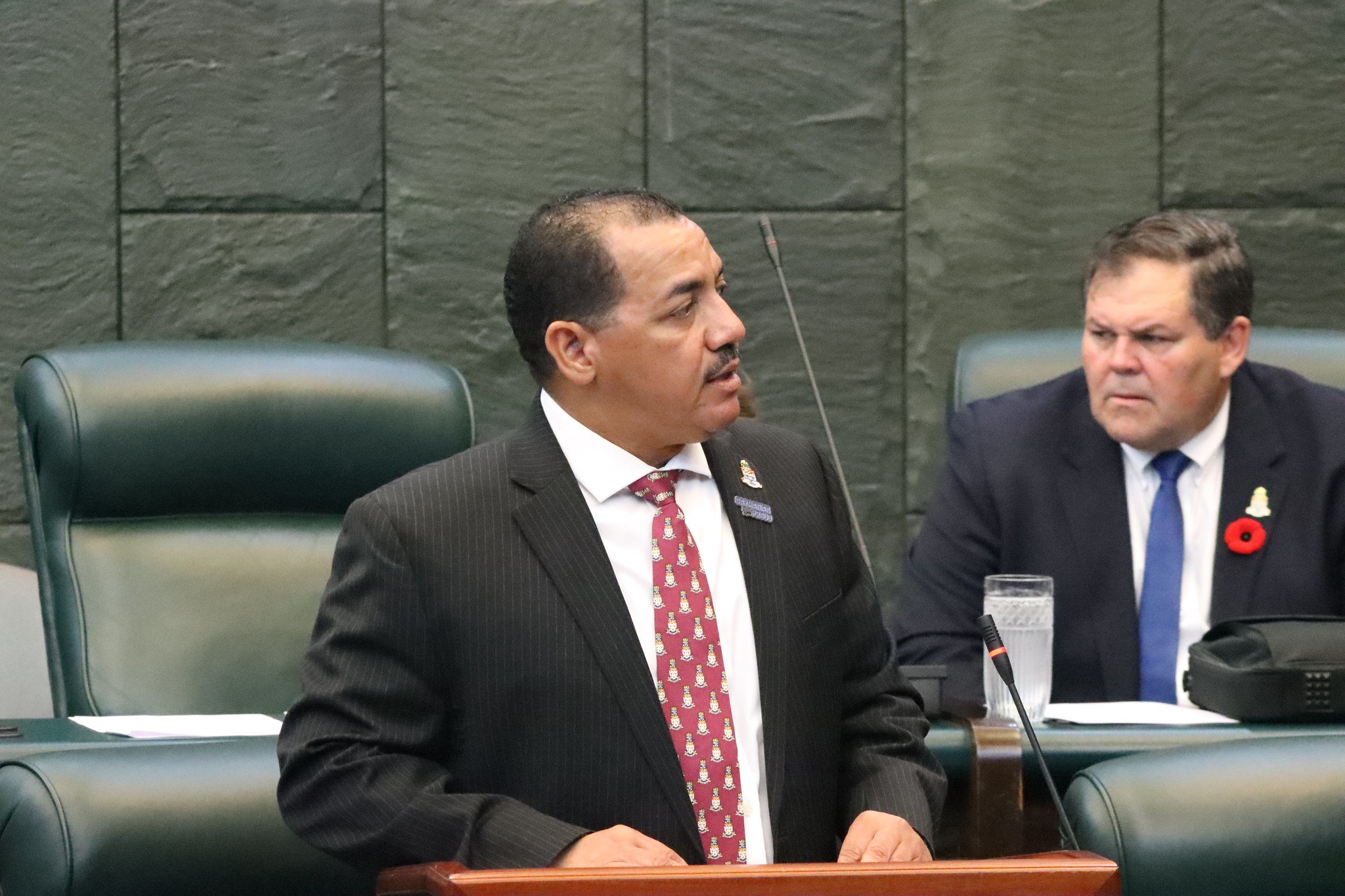
Education Minister Rolston Anglin expanded on the premier’s vision, outlining plans for a “comprehensive restructuring” of the education system.
“Too often, our education system has been segmented – one policy for early childhood, another for primary, another for special education,” said Anglin. “The future demands coherence – a unified, learner-centred system that connects every stage of the journey.”
Anglin stated that the new framework would integrate education, immigration and workforce development under a single strategic outcome, which he described as “strong education and immigration systems that support a highly skilled and adaptable Caymanian population”.
Education lies at the core of the 2026-2027 budget – one of the administration’s biggest ‘big-ticket’ priorities – with funding expanding across nearly every major category compared with 2025.
Spending on primary-level teaching and learning is set to rise from $41.52 million in 2025 to $45.9 million in 2026 and $46.9 million in 2027, a 10.6% increase in the first year, followed by a further 2.2% the next. This allocation covers teaching staff, curriculum delivery and national assessments for the roughly 2,500 to 3,000 students enrolled in public primary schools.
Funding for secondary-level teaching and learning will also rise, from $42.06 million in 2025 to $45.05 million in 2026 and $46.52 million in 2027, an increase of 7.1% and 3.3%, respectively. The additional funding supports expanded testing and curriculum modernisation for 2,000 to 2,300 students across government secondary schools.
Investment in early childhood care and education will grow from $624,024 in 2025 to $793,528 in 2026 and $805,047 in 2027, a 29% increase in the first year and 1.5% in the second. The increase supports a review of the Early Childhood Assistance Programme and expanded subsidies for families.
Anglin said the review aims to ensure that “no family is left behind because of cost barriers”, and that early-learning quality standards are applied consistently across all providers.
The Ministry of Education’s 2026-2027 capital spending marks a shift toward new infrastructure and facility upgrades after a year largely focused on completing ongoing projects.
Major allocations include $17 million for expanding the Lighthouse School, $4 million to complete the new Cayman Brac High School, and $5.5 million for a new school hall at Joanna Clarke Primary. Additional funding supports the phased construction of a new West Bay high school, new classroom blocks at Edna Moyle and Sir John A. Cumber primaries, and the relocation of the Sunrise Adult Training Centre to the George Hicks Campus.
The budget also earmarks funds for new school halls, ICT upgrades and enhanced public library facilities, with library capital spending projected to rise by approximately 410% over 2026-2027 compared to 2025.
“The budget … sets a clear course for national transformation through education and training,” said Anglin. “It is built upon the principle that education is the foundation of nation-building – the key to social mobility, economic resilience and civic unity.”
Aligning education with labour market needs
Funding for services to improve workforce readiness is set to rise sharply in the 2026-2027 budget period, increasing from an estimated $596,759 in 2025 to just over $2 million per year in both 2026 and 2027. The strategy aims to strengthen Caymanians’ employability and align their skills with labour market needs.
This category features expanded support for internships, apprenticeships and employer engagement for 2026-2027, with 75-100 employer interactions expected each year, and is part of a broader National Workforce Strategy and Human Capital Plan.
“For too long, many of our young people have faced a difficult transition from school to work,” Anglin said. “Too many talented Caymanians have graduated without a clear pathway to meaningful employment.”
Other areas of notable increase include Scholarship and Grant Administration Services, up nearly 20% to $970,308 in 2026, supporting more than 2,000 local and overseas scholarships each year.
Anglin highlighted government’s intention to “align scholarship criteria with the projected needs of the national labour market, ensuring that public funds invested in higher education translate into meaningful employment outcomes for Caymanians”.
While most education programmes will receive higher funding, some areas will see modest reductions. Among them, Student Services, which provides therapy, counselling and assessment for students with barriers to learning, will fall by nearly 6%, from $5.97 million in 2025 to $5.57 million in 2026. School Inclusion Services, which supports students with behavioural and emotional challenges, will decrease slightly from $2.06 million in 2025 to $2.03 million in 2026, before increasing marginally to $2.08 million in 2027.
Anglin also highlighted plans to modernise digital learning platforms and adopt a more data-driven approach to education, alongside the creation of a National Parent-Teacher Association, which he described as “a unified body that gives parents and guardians a stronger voice in shaping education policy and school culture”.
Both Ebanks and Anglin framed education reform as a long-term national investment rather than a short-term spending measure.
“Our goal is not only to prepare Caymanians for the jobs of tomorrow,” said Anglin, “but to prepare them for life – for citizenship, for leadership, for service.”