



– Advertisement –
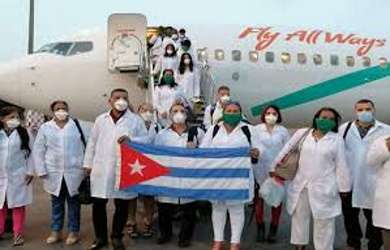
TORTOLA, British Virgin Islands, Mar. 19, CMC – The government of the British Virgin Islands says it will not be ending its Cuban health programme and for now, will be maintaining its agreement with Cuban medical professionals.
 That assurance came from BVI Health Services Authority (BVIHSA) CEO Dr June Samuel, who confirmed that no directive has been issued to terminate the territory’s long-standing relationship with Cuban Medical Services.
“The Virgin Islands currently maintains an existing contractual arrangement with the Cuban Medical Services. At this time, there has been no directive issued to terminate this agreement,” Dr Samuel said in response to questions from BVI News.
However, she noted that the programme’s presence in the territory is gradually decreasing.
She said one Cuban doctor and three nurses are scheduled to leave this year as part of routine rotations and will not be replaced. Three other Cuban doctors and four nurses will remain within the territory’s healthcare system.
Samuel also made clear that the Authority is not actively recruiting new personnel through the Cuban programme at this time.
She emphasised that ongoing workforce planning remains a priority, with a focus on maintaining consistent, high-quality healthcare services.
“The BVI Health Services Authority continues to assess its staffing needs in the context of its broader workforce planning and remains committed to ensuring continuity of quality healthcare services for the people of the Virgin Islands,” she said.
The BVI’s position comes amid a broader regional shift, as several countries respond to increased US pressure to reconsider their participation in Cuba’s overseas medical missions.
In recent months, Jamaica, Guyana and The Bahamas have ended their programmes, while Panama has also taken steps to distance itself from the arrangement.
For years, Cuba’s medical missions have provided vital support to small and developing nations by supplying doctors and nurses to underserved areas. In return, the Cuban government receives a portion of the salaries paid to its nationals.
However, renewed scrutiny from the United States, has raised concerns about labour conditions and the structure of these agreements, alongside warnings that countries maintaining such programmes could face US restrictions.
– Advertisement –