


Antigua and Barbuda
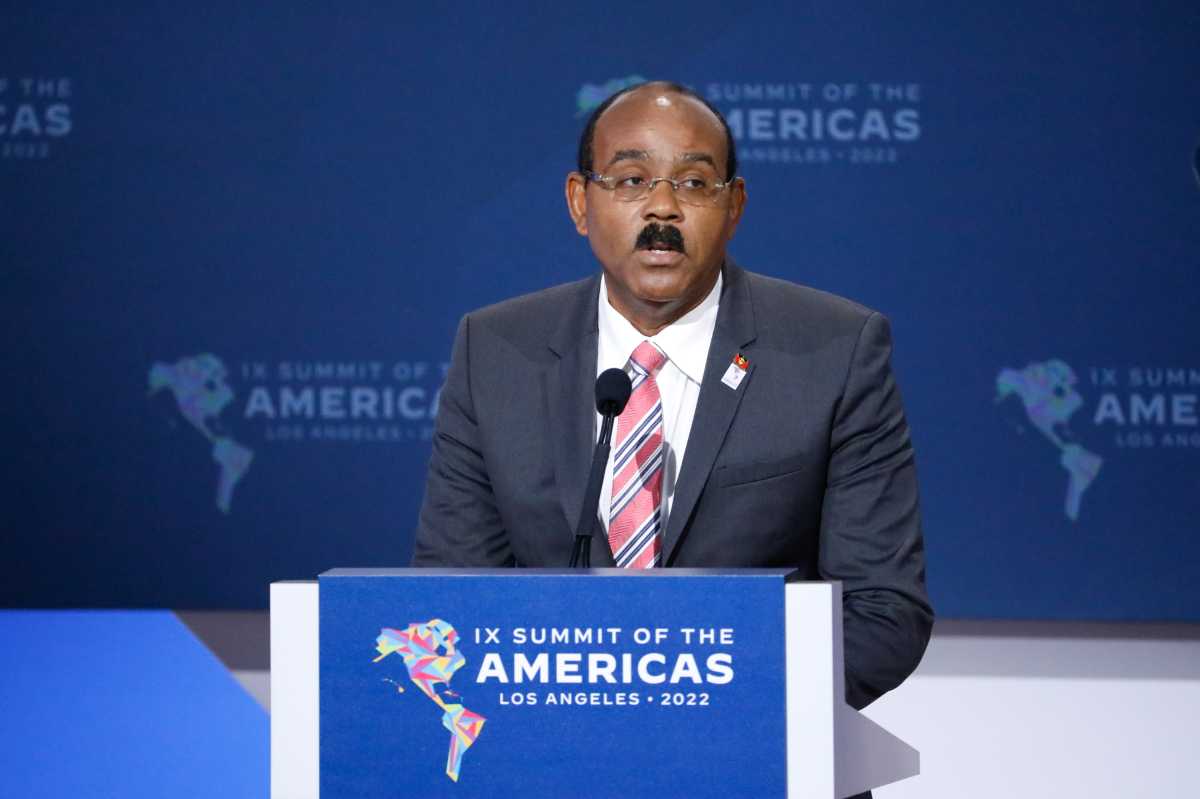
Gaston Browne, prime minister of Antigua and Barbuda, has called for stronger cooperation among middle and small nations, arguing that a closer alliance is necessary as global power structures change.
In an opinion article published in The Telegraph, Browne said the Commonwealth of Nations could form the basis of a coalition of middle powers proposed by Mark Carney, prime minister of Canada.
He wrote that “in a world of shifting global power structures, there is an obvious need for a coalition of compatible middle and small nations together magnifying their influence globally.”
He argued that the Commonwealth already represents such a group of countries, adding: “Indeed, if in the world today there were not such a group of like-minded, predominantly English-speaking, free-trade-supporting, rules-based nations, one would need to be created. Fortunately, with the Commonwealth, we already have one. The question now is what we do with it.”
Browne raised the issue following questions about the Americas Counter Cartel (ACC) Conference, attended by four CARICOM states including Trinidad and Tobago and Guyana, which later joined the ACC coalition.
Antigua and Barbuda will host the Commonwealth Heads of Government Meeting 2026 from November 1–4, where Browne will assume the Commonwealth chairmanship. The summit will focus on climate resilience and economic innovation.
Browne said cooperation among middle powers has become more urgent amid global tensions, asking: “How should countries that are not one of the world’s superpowers best navigate, prosper, and keep themselves… ‘at the table, so they’re not on the menu’?”
He warned that countries should not expect the global system to return to the past: “It is dangerously naïve to think there will be a return to the ‘factory settings’ of global structures… The geopolitical order is changing, and that change is here to stay.”
Browne also highlighted discussions between Canada and Australia under Prime Minister Anthony Albanese, and proposals for closer trade ties between Canada, Australia, New Zealand and the United Kingdom.
Reflecting on the Commonwealth’s role, he said small states benefit from the global rules-based system: “Because, self evidently, we wouldn’t have the capacity to wield power freely in a dog-eat-dog world.” He added that the Commonwealth could help deepen cooperation by reducing trade barriers and harmonising standards to strengthen economic ties among member countries.
Caribbean
Caribbean Public Health Agency (CARPHA) is encouraging early testing and healthier lifestyles as the region marks World Kidney Day under the theme “Kidney Health for All – Caring for People, Protecting the Planet.”
CARPHA reports that chronic kidney disease (CKD) affects millions globally, with 15.4% of adults in Latin America and the Caribbean living with the condition. Early detection—especially for people with diabetes, hypertension, cardiovascular disease, obesity, or a family history of kidney disease—can reduce the need for advanced treatments and improve outcomes
CARPHA Executive Director Lisa Indar stressed that better control of diabetes and hypertension, along with healthier diets and increased physical activity, is key to protecting kidney health in the Caribbean.
The agency works with regional governments to prevent and manage non-communicable diseases through initiatives such as Guidelines for the Management of Diabetes in Primary Care in the Caribbean, a Six-Point Policy Package to reduce obesity, hypertension, and diabetes, and the Caribbean Moves program promoting healthier habits.
CARPHA also collaborates with partners like the Pan American Health Organization and the CARICOM Secretariat to strengthen policies and technical support for kidney health.
Globally, about 788 million adults were living with CKD in 2023, nearly doubling from 378 million in 1990, highlighting the growing public health challenge.
Dominica
Roosevelt Skerrit, Prime Minister of Dominica, said the government hopes to finalize an agreement with the United States this week to allow a limited number of third-country migrants to be sent to the island when they cannot be returned to their home countries.
Speaking at a news conference, Skerrit explained that the draft agreement would allow seven migrants every four months, totaling no more than 28 per year. He said, “Seven people per quarter… So in a year there will be 28… no more than 28 persons.” He stressed that the numbers are small, adding that “it is not the hundreds that people are saying, or the thousands.”
The arrangement would be managed operationally by the International Organization for Migration (IOM). Skerrit noted that logistical issues still need to be worked out, including housing and whether migrants would stay together in one building or in separate locations. He also said some migrants “may not stay in Dominica permanently” and could later return to their home countries.
Skerrit added that discussions with the United States also involve financial arrangements “so that we’re not out of pocket in respect to this matter.”
He argued that the agreement could benefit Dominica’s development, pointing to the country’s small population and labour shortages. “The reality is… we are a small population. There are a number of skills we need in the country,” he said, adding that bringing in skilled people could “add value for our society.”
Skerrit also urged citizens not to respond with xenophobia, saying people should look at “the potential positive side of it.” He added that the engagement aims to protect opportunities for Dominicans while strengthening ties with the United States.
Jamaica
Fayval Williams, finance minister of Jamaica, is scheduled to open the 2026–2027 budget debate this month, outlining how the government plans to address a gap in the JA$1.4 trillion national budget.
Government revenues were heavily affected by Hurricane Melissa, prompting Williams to announce a set of new taxes on Feb. 12 aimed at raising about JA$29.5 billion for the 2026/27 fiscal year.
One of the major measures is a tax on sweetened non-alcoholic beverages, expected to generate JA$10.1 billion. Williams noted that it is the first time in ten years the government has introduced new taxes, saying “it took a Category 5 hurricane for that to happen.”
The budget debate is expected to be closely watched, coming less than five months after the hurricane struck Jamaica on Oct. 28, causing an estimated US$8.8 billion in physical damage and wiping out 40% of the country’s gross domestic product.
Julian Robinson, the opposition’s spokesman on finance, will respond to the government’s proposals but he has already criticized the tax measures, saying the imposition of new taxes will lead to no growth.
Further contributions to the debate will come from Opposition Leader Mark Golding followed by Prime Minister Andrew Holness. Williams is then scheduled to close the debate on March 24.
St Vincent and the Grenadines
St Vincent and the Grenadines has warned citizens to prepare for possible price increases due to the ongoing conflict involving the United States, Israel, and Iran.
Prime Minister Godwin Friday said the war, which began with U.S. and Israeli attacks on Iran targeting its leadership, security forces, nuclear programme, and missile sites, could have “serious implications” for the Caribbean nation.
Speaking at a news conference, Friday said that even though the conflict is far away, it could still affect the country.
“The bombs may not fall here, but they have serious implications for us and for other countries around the region,” he said, noting that conflicts in the Middle East often lead to concerns about energy supply and rising fuel costs.
Iran has since launched counterstrikes against Israel, U.S. military bases, and other locations in the region, resulting in both military and civilian casualties.
Friday warned that the country faces “the high likelihood of experiencing a severe energy and fuel cost shock over the next 12 months.” He added that the impact will depend on how long the conflict lasts.
He also cautioned that higher fuel prices could have widespread economic effects, particularly for the tourism-dependent economy. “We anticipate that there is going to be a very high risk of us experiencing increasing fuel costs,” he said, adding that such increases would have “so many implications.”