


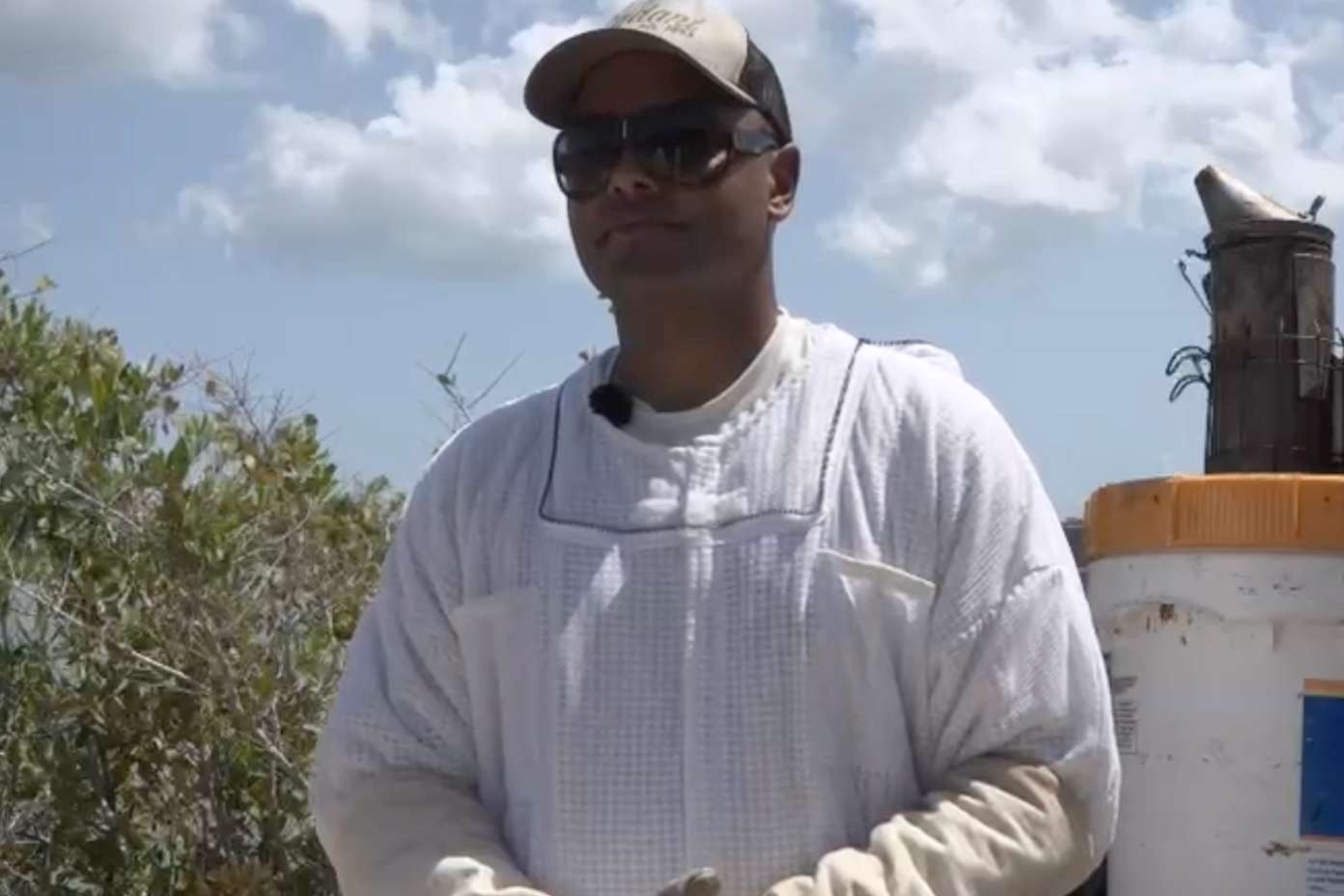
A small, locally-owned apiary is demonstrating the vital role of bees in overcoming two of Cayman’s most pressing sustainability challenges: protecting local food systems and building environmental resilience in the face of a warming planet.
Reagan’s Honey, located in Spotts Newlands and named after the daughter of founder and head beekeeper Jamaal Solomon, is one of the few local operations offering hands-on education in beekeeping and pollination.
Through its private tours and beekeeping experiences, the apiary also promotes pollinator health as a cornerstone of climate resilience, agricultural productivity and biodiversity conservation.
“We got started as a small hobby in the backyard, keeping upwards of seven beehives,” Solomon told the Compass during a recent tour. “Then we expanded to a larger location, where we maintain up to 20 hives at any given time.”
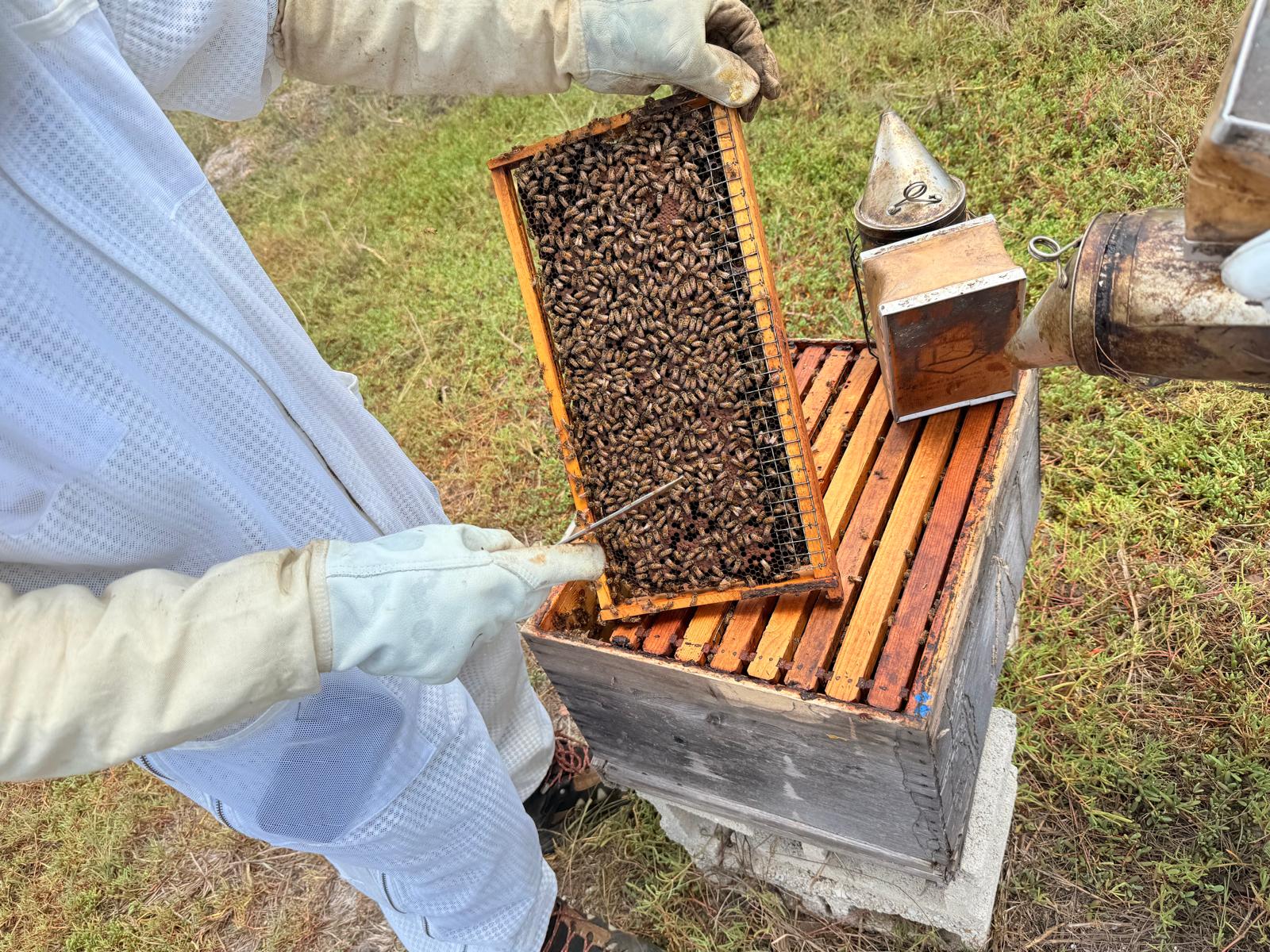
The apiary is currently home to 10 hives, housing roughly 300,000 bees. Solomon says he typically harvests honey once a year.
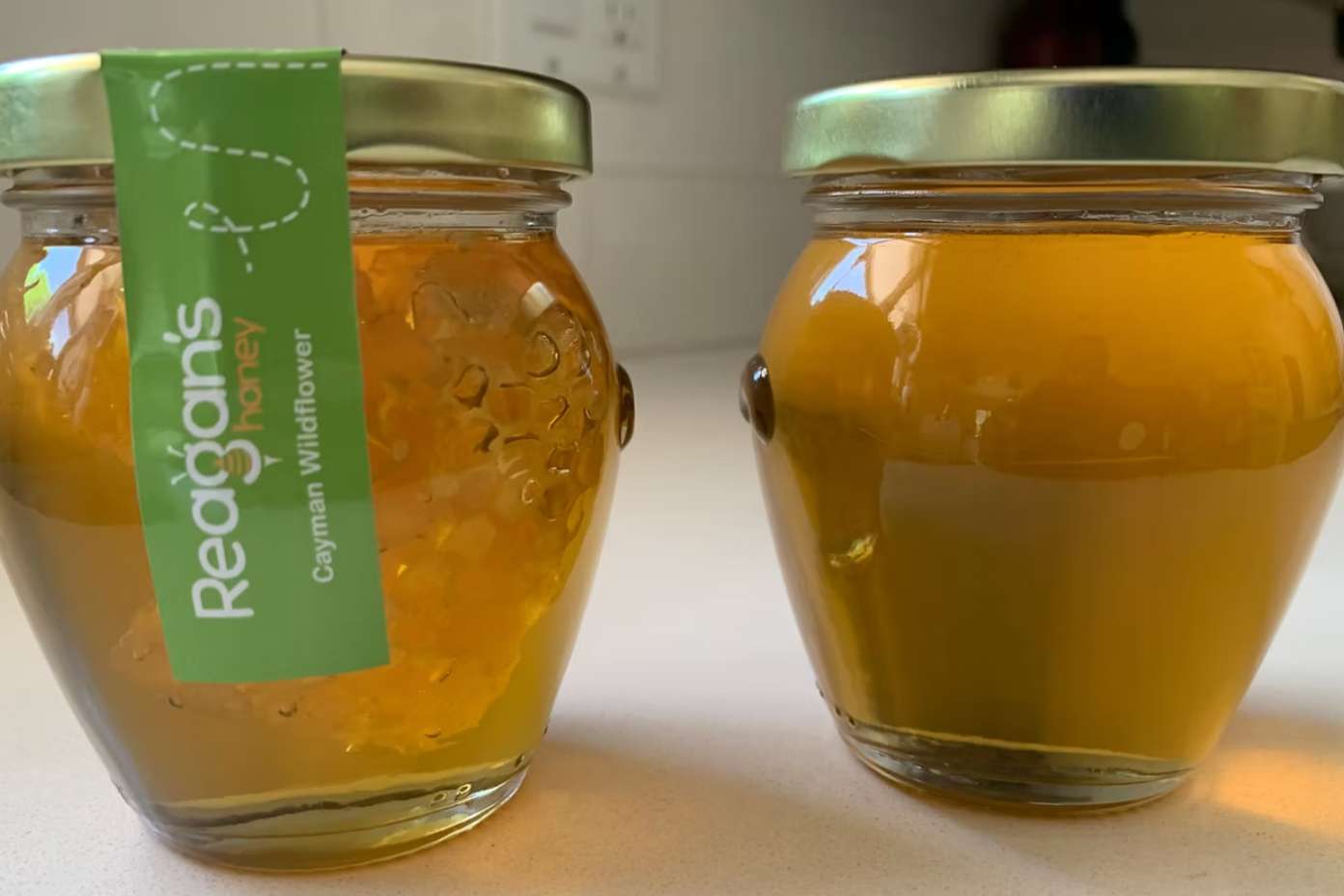
“You’ll find our products on shelves at places like Kirk Market and in local gift shops,” he said. “We produce the regular liquid honey – what some people call runny honey – and we also make honeycomb squares, that are blocks of natural honeycomb.”
The role of bees in climate resilience
Globally, nearly 75% of crops that yield fruits and seeds for human consumption rely, at least in part, on pollinators like honeybees. On islands such as Cayman, where agricultural land is limited and ecosystems are delicate, their contribution is even more critical.
Bees in the Cayman Islands pollinate a wide range of plants – from fruit trees and vegetables to native species like sea grape, logwood and black mangrove.
Mangroves are vital flood barriers and marine nurseries that help protect the islands from storm surges and sea-level rise.
“Here in Cayman … now that we’re in in the summer, the honeybees in this area … are feeding on all of the blooms from the black mangroves, collecting that nectar, and in turn, pollinating those plants which help to increase the mangrove wetlands,” Solomon explained.
As bees gather nectar from these blooms, they facilitate the regeneration and resilience of local ecosystems.
“The honeybee plays a pivotal role in the success of mangroves,” Solomon said. “We need bees and other pollinators to support the growth of these forests, which will in turn, protect us from natural disasters and support our marine life.”
As critical pollinators that help to strengthen the island’s ecological safety net, bees play a key role in boosting Cayman’s climate resilience, supporting biodiversity and enhancing food security.
Boosting local food security
“Honeybees are the optimal pollinators of so many crops,” said Solomon. “A lot of what we see in the supermarkets comes directly from honeybee pollination.”
With more than 90% of food imported into the Cayman Islands, there’s growing momentum to support local farmers and backyard growers. Beekeeping can play a key role in boosting agricultural productivity.
Solomon compared the process to companion planting – the practice of growing different plant species close together to enhance growth and deter pests. “You can house bees next to the crops that they are meant to pollinate,” he explained.
Demoy Nash, acting deputy director at the Department of Agriculture, says that supporting pollinators is part of Cayman’s broader strategy to enhance food security.
“The promotion of bees is at the heart of any food security effort,” Nash told the Compass. “This is a part of the strategy of the DoA – to build out a beekeeping industry which will result in the increase of honey production, its byproducts and the overall benefits that can be derived from honeybees.”
Despite the island’s small size, a growing number of local apiaries are helping to protect bee populations amid rising environmental pressures.
Solomon encourages those who aren’t ready to become beekeepers to still do their part.
“It’s always a good thing to have some of your garden to kind of just grow wild and and then in turn, that will promote and attract a lot more pollinators and animals to your space,” Solomon said. “Also limit the amount of pesticides that you use. Try to be as natural as possible.”