


Two fatal pedestrian crashes within weeks of each other – and less than three miles apart – have intensified concern over pedestrian safety on Cayman’s busiest roads.
That unease erupted into outrage in October, when bystanders allegedly assaulted a driver involved in a non-fatal collision in East End – an act of vigilante violence that could be a sign of mounting public frustration over the issue.
The first fatality occurred shortly after midnight on 13 Sept., when Paulo Pillas, a 37-year-old bartender from the Philippines and his co-worker were struck by a white Dodge pickup truck while pushing a trolley across a pedestrian crossing on West Bay Road. Pillas was pronounced dead at the scene. His colleague sustained serious injuries but was later discharged from the hospital.
Police confirmed that the driver of the vehicle was over the legal alcohol limit at the time of the crash.
In the days that followed, grief quickly turned to anger as residents and witnesses questioned the safety of the crossing, describing it as a site of repeated near misses and close calls.
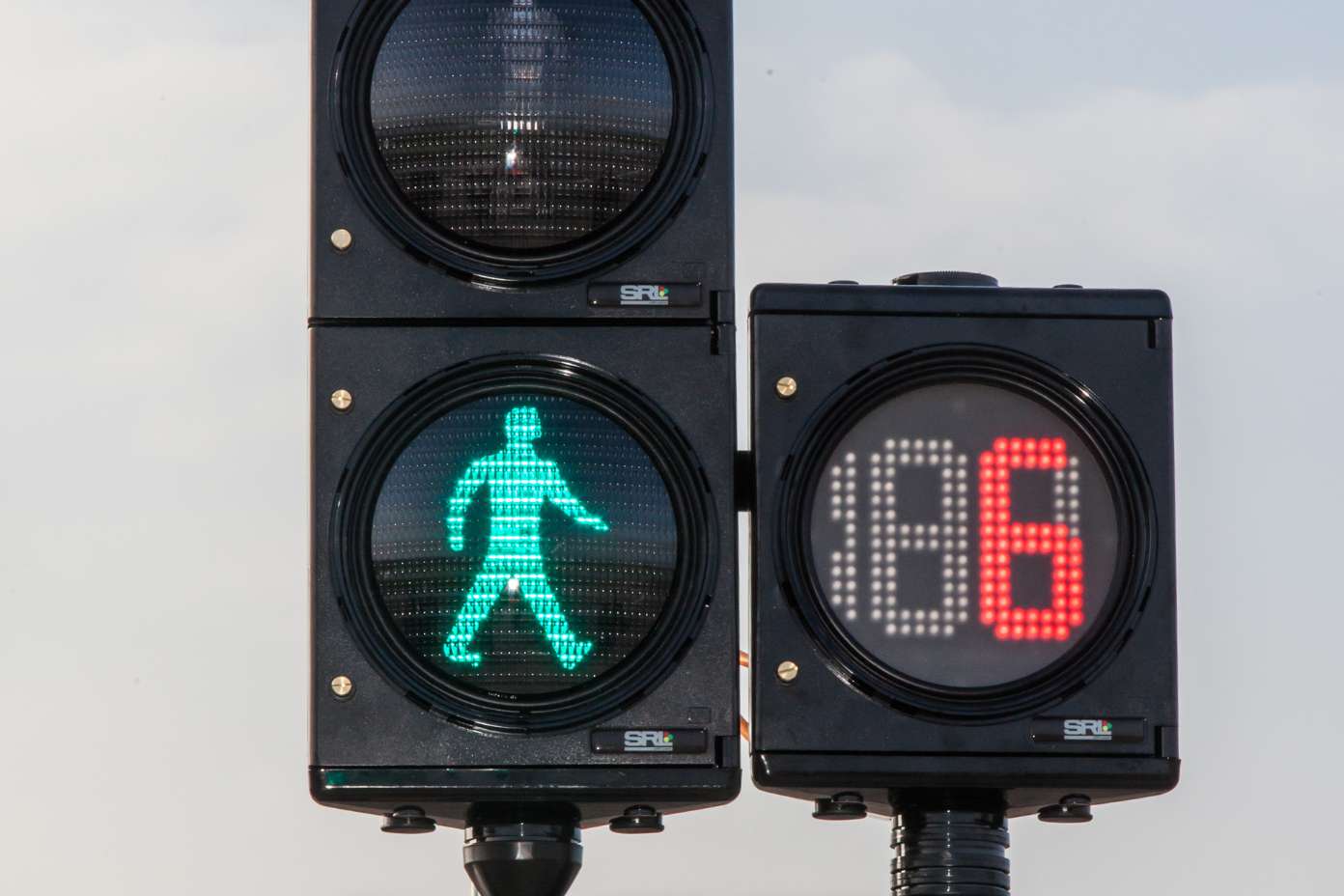
“Even in the daytime, I’ve seen cars screeching to a halt,” said Alyson Mora, a witness. “It’s not safe for the cars and it’s not safe for the pedestrians. We need proper ‘green man’ crossings like they have in the US and UK.”
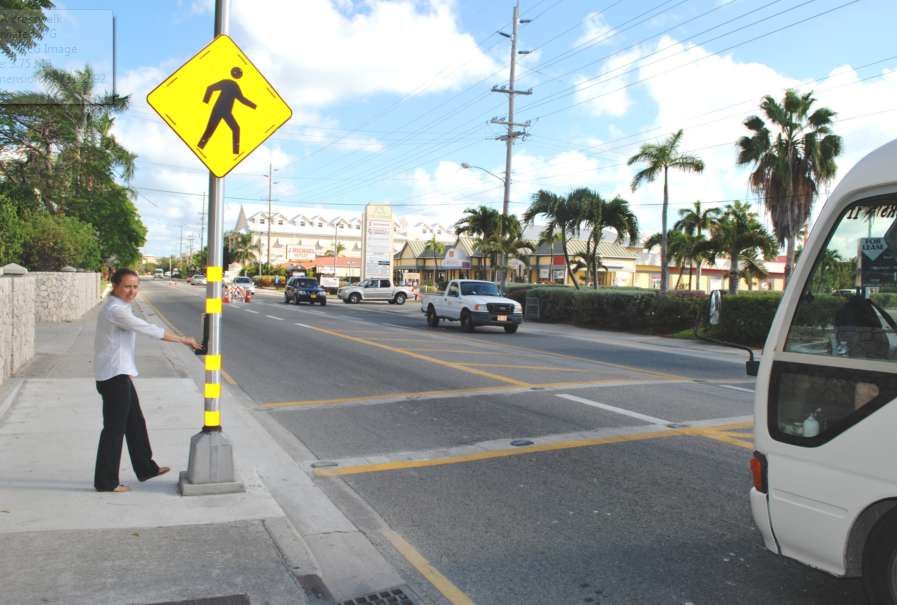
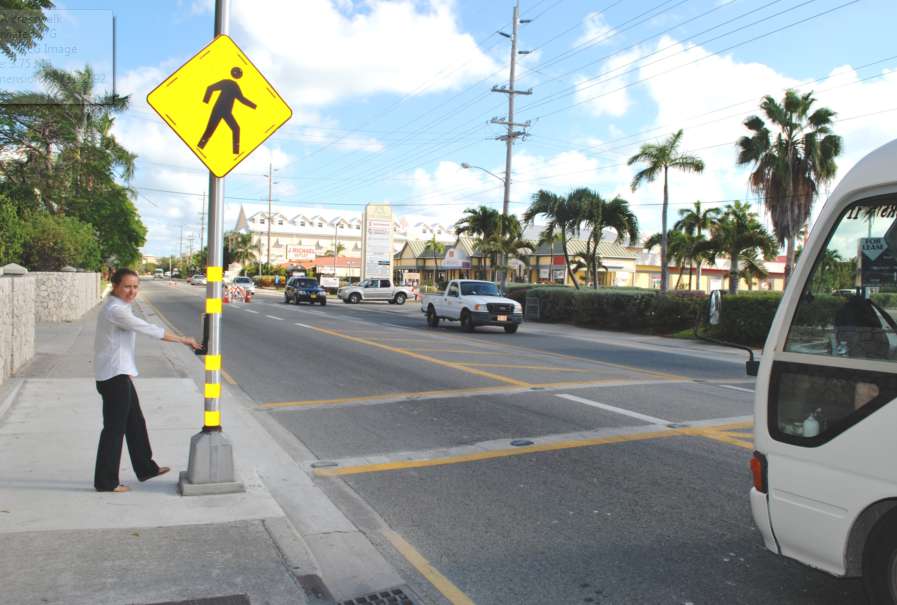
Mora’s comments highlight a concern that Cayman’s crossings rely too heavily on driver caution rather than guaranteed pedestrian safety. West Bay Road crossings use flashing yellow beacons that warn drivers when pedestrians press a button to cross, but unlike the UK’s ‘green man’ crossings, there’s no red light requiring vehicles to stop. In the UK, traffic halts completely while the green man signal gives pedestrians a protected window to cross.
Two deaths, three miles apart
Just over a month later, on 18 Oct., a man, believed to be a visitor, was killed while crossing the street – less than a mile from where Pillas had died weeks earlier.
Both fatalities occurred along a busy section of West Bay Road lined with hotels, bars, restaurants and shops – an area frequented by tourists and residents alike.
There are 12 pedestrian crossings along the 4.5 mile stretch between the Lobster Pot on North Church Street and The Grove on West Bay Road, including in the areas where both incidents occurred. This amounts to roughly one crossing every 2,000 feet, more than one-third of a mile.
The Global Designing Cities Initiative – a non-profit that works with municipalities to create safer, more sustainable and more equitable streets – recommends that pedestrian crossings in areas of high-foot traffic be placed every 80 to 100 metre, which converts to every 262 to 328 feet. The organisation notes that when crossings are more than a three-minute walk apart, people are more likely to take shorter, unprotected routes instead.
When contacted for comment, the Royal Cayman Islands Police Service said investigations into both fatalities remain ongoing and that it was therefore unable to confirm whether the victims were using designated crossings at the time.
“RCIPS cannot confirm the crossing type or whether a crossing was used while the investigations are active,” a police spokesperson saidm adding that the department could not attribute specific causes or confirm whether speed, alcohol or distraction were factors in either case, noting that “these matters form part of the active investigation.”
A growing issue
While unable to provide complete data on pedestrian collisions, police have confirmed that there have been three fatal pedestrian crashes between 2024 and 2025 – one on Bodden Town Road in 2024 and two on West Bay Road this year.
In total, 14 people were killed on Cayman’s roads in 2024, up from nine the previous year. Police data also shows that serious road crashes – those involving major injuries or significant vehicle damage – reached 274 last year out of more than 2,200 reported collisions. Many of these incidents involved speeding, alcohol or distracted driving.
The police spokesperson said various measures have been put in place to improve pedestrian safety, including marked crossings with flashing lights, regular street lighting audits and requests for additional lighting where needed and clear speed-limit signage supported by physical traffic-calming measures where possible.
Officers also carry out mobile speed detection and targeted enforcement during peak traffic hours, alongside ongoing public education campaigns coordinated with government and partner agencies.
Despite these efforts, some residents remain unconvinced. “The flashing lights are just decoration,” said one taxi driver who asked not to be named. “People drive drunk or they just drive fast and nobody’s watching.”
The growing tension around pedestrian safety turned violent on 25 Oct., when several bar patrons in East End reportedly attacked a woman after her car struck a pedestrian. Police said the driver was sober and the pedestrian suffered only minor injuries.
Detective Superintendent Peter Lansdown condemned the mob’s actions. “There is no place for these types of actions in our community,” he said.
The frustration following September and October’s pedestrian deaths is part of a broader pattern in a year marked by serious road crashes involving cyclists – including the April death of 39-year-old Norwegian triathlete Per Undheim, who was struck and killed while cycling on Bodden Town Road.
Just days following the hit-and-run death of Per Undheim, another cyclist, Demry Rankine, was struck on South Church Street with the driver fleeing the scene, leaving him in a coma.
“It’s really sparked this conversation and brought people into action,” said Daniel Cummings, president of Cayman Cycling, who referred to the incident as a “wake-up call.”
These tragedies have become a touchpoint for growing public anger. For many, the deaths of both pedestrians and cyclists symbolise deeper frustrations over reckless driving and the dangers of navigating Cayman’s narrow, car-dominated roads – where sidewalks often disappear without warning, crossings are scarce and speeding through built-up areas has become common.
Official response
Road safety is the focus of a 15-year government plan to bring the number of road deaths down to zero by 2038.
The National Road Safety Strategy, released in 2023, describes Cayman’s fatality rate as “alarmingly high” compared to developed countries such as the UK and Sweden.
Between 2015 and 2018, Cayman averaged 13.3 road deaths per 100,000 people, compared to 11 in North America, with eight to 10 crashes occurring daily. The report cites a number of factors driving these high rates: rapid population growth, diversity and transience, an evolving transport system, inadequate infrastructure and fragmented road safety oversight.
The plan calls for sidewalks along all major roads, speed cameras, dedicated cycle paths, road safety education in schools and tougher penalties for traffic offences. The interim goal is to reduce fatalities by 30% by 2028.
The Traffic and Roads Policing Unit is stepping up its efforts to curb dangerous driving and improve pedestrian safety.
“TRPU’s enforcement activity includes mobile speed enforcement and targeted speed operations at identified locations,” said the RCIPS spokesperson. “We also conduct breath-testing and DUI checkpoints, and reactive testing when impairment is suspected.”
Officers are also cracking down on drivers who fail to yield or drive carelessly, including in high foot-traffic areas like West Bay Road. “RCIPS officers conduct high-visibility patrols and targeted operations on West Bay Road as operational needs allow,” the spokesperson added.
But police say enforcement alone isn’t enough. Education, too, plays a crucial role. The RCIPS media team, working alongside the department of communications, is supporting a national road safety campaign to help change driver and pedestrian behaviour through public awareness.
Over the coming months, police plan to intensify roadside operations and work closely with other agencies to pinpoint high-risk areas and design new safety measures aimed at reducing collisions and saving lives.
When asked for advice to improve safety, the spokesperson outlined several precautions. For drivers: slow down in built-up areas, approach crossings with caution, avoid alcohol or drug impairment, limit mobile-phone use and give pedestrians priority where required. For pedestrians: use designated crossings, make eye contact with drivers before stepping out, wear reflective clothing at night, avoid distractions and cross only where visibility is clear.
For those who don’t, the consequences can be severe. Drivers found responsible for fatal crashes face charges ranging from causing death by careless or dangerous driving to causing death while driving under the influence – offences that can carry prison time, fines or disqualification from driving.