


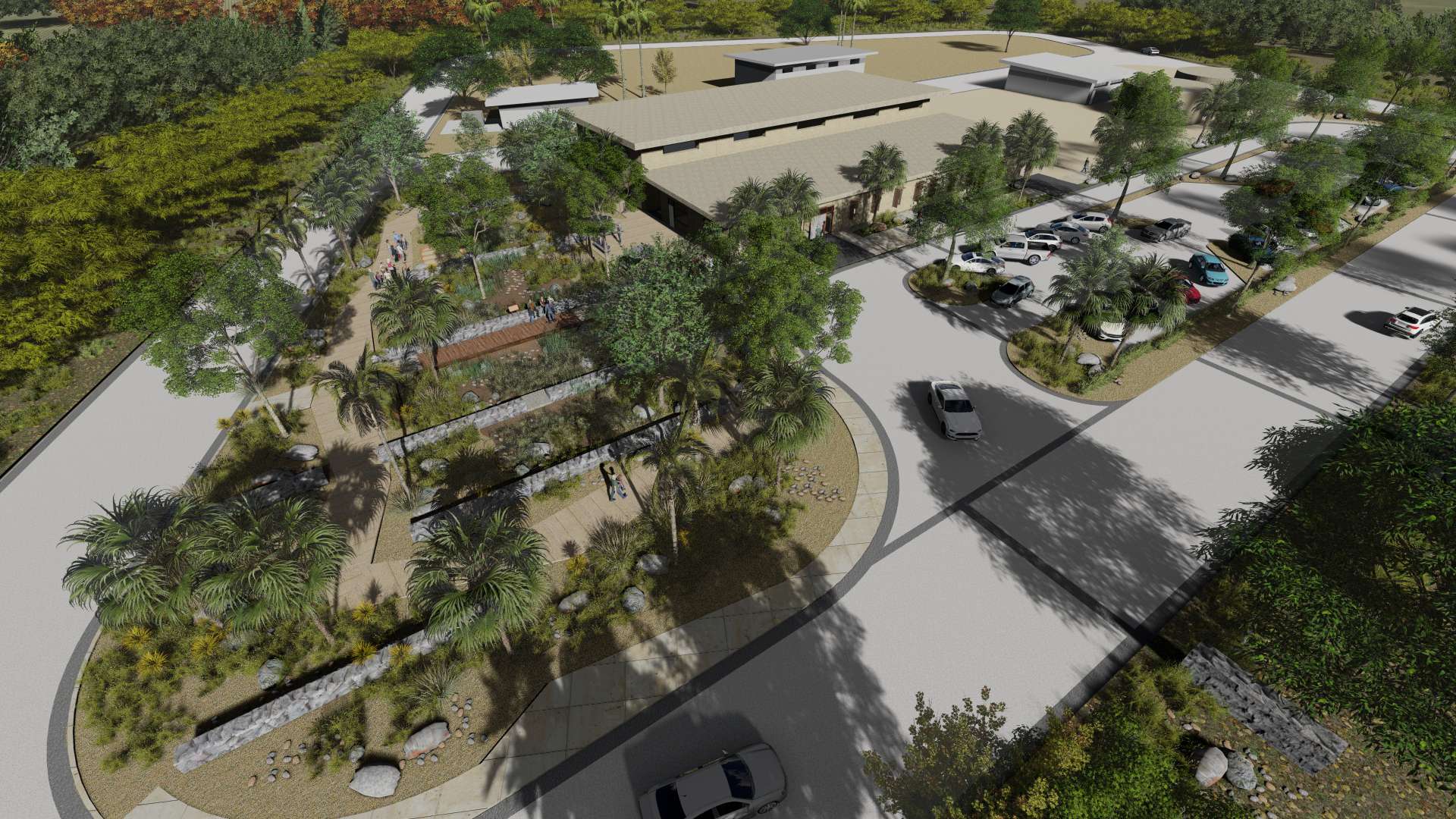
Cayman’s Consolidated Water will start work on a US$204 million contract to build and run a water desalination plant in Hawaii after crucial approval was granted by the US state.
Consolidated Water is to start construction of the plant in Honolulu, the capital of the US Pacific island state, in the first quarter of next year, with a completion date by 2028.
Rick McTaggart, CEO of Consolidated Water, told the Compass, “It’s quite gratifying that we started out as a very small business in Cayman and that we have such a reach and reputation in the US.”

He added that this project milestone would help pave the way to begin construction once all permits have been obtained.
The Honolulu Board of Water Supply, the client, approved the results from a small pilot plant built by Kalaeloa Desalco, a wholly owned subsidiary of Consolidated Water.
Speaking after the approval, McTaggart told the Compass, “We have built a good little business in Hawaii. Hopefully, there will be other opportunities there in the future.”
The move paved the way for construction to start on construction of the small- to medium-sized plant, which will produce millions of gallons of fresh water every day to supply an industrial estate in Honolulu.
“We are hoping as soon as we get the final permit we will start construction. It’s really a race to get it done. The faster we can do it, the better it is for us,” McTaggart said.
The contract has the potential to extend to 30 years, as it called for construction and management for 20 years, with the possibility of two five-year extensions.
McTaggart added there was potential for more work in Pearl Harbour, famous as the site of a major US Navy port and air station, where a surprise attack by the Japanese in 1941 brought the US into World War II.
The CEO said there was a long-term plan in Hawaii to diversify water sources because of pollutants, such as leaks of aviation fuel, over decades.
Lucrative niche
McTaggart said Consolidated Water not only built desalination plants, but also had carved out a lucrative niche for itself in the US with water treatment and reuse facilities through a California-based subsidiary.
“Desalination is a proven technique and we’ve been doing it for 50-plus years in Cayman,” McTaggart said.
Although the process is still controversial in some places because of a variety of fears, including water quality, and the amount of energy used, technology advancements have made it less so.
“Energy use is half of what it was 30 years ago because of pump efficiency and other innovations in the process,” he said.
Tests in Hawaii had shown the water produced in the pilot scheme was as good as, or better, than water from other sources, he said, adding that the firm’s foothold in California on the West Coast meant it had connections with water utility companies.
He added that Consolidated Water had bid on the Honolulu contract “given the connections we had with our West Coast operations”.
Consolidated Water, which celebrated its 50th anniversary two years ago, is no stranger to providing clean water on foreign shores – it operates desalination plants in the Bahamas and the British Virgin Islands.
“It’s a different environment from the Caribbean. In Cayman, Barbados, the British Virgin Islands, desalination is extensive and connected with producing drinking water,” McTaggart said.
“In the Caribbean, we are very strong in desalination and we continue to build our business there. There isn’t much demand for wastewater treatment, although Aruba is doing a project we will probably bid on,” he said, noting, “Absolutely, we will build a desalination plant pretty much anywhere because we have that depth of experience.
“I’m looking every day for new projects. They are sort of few and far between for the size we are comfortable with – small- to medium-sized, about 10-15 million gallons a day.”
He added, “The growth that is driving the company forward is really more on the US side at the moment, in our manufacturing business, our West Coast water treatment business and obviously our Hawaiian project.
“We’re a very solid business in the Caribbean, but it’s more slow growth.”