


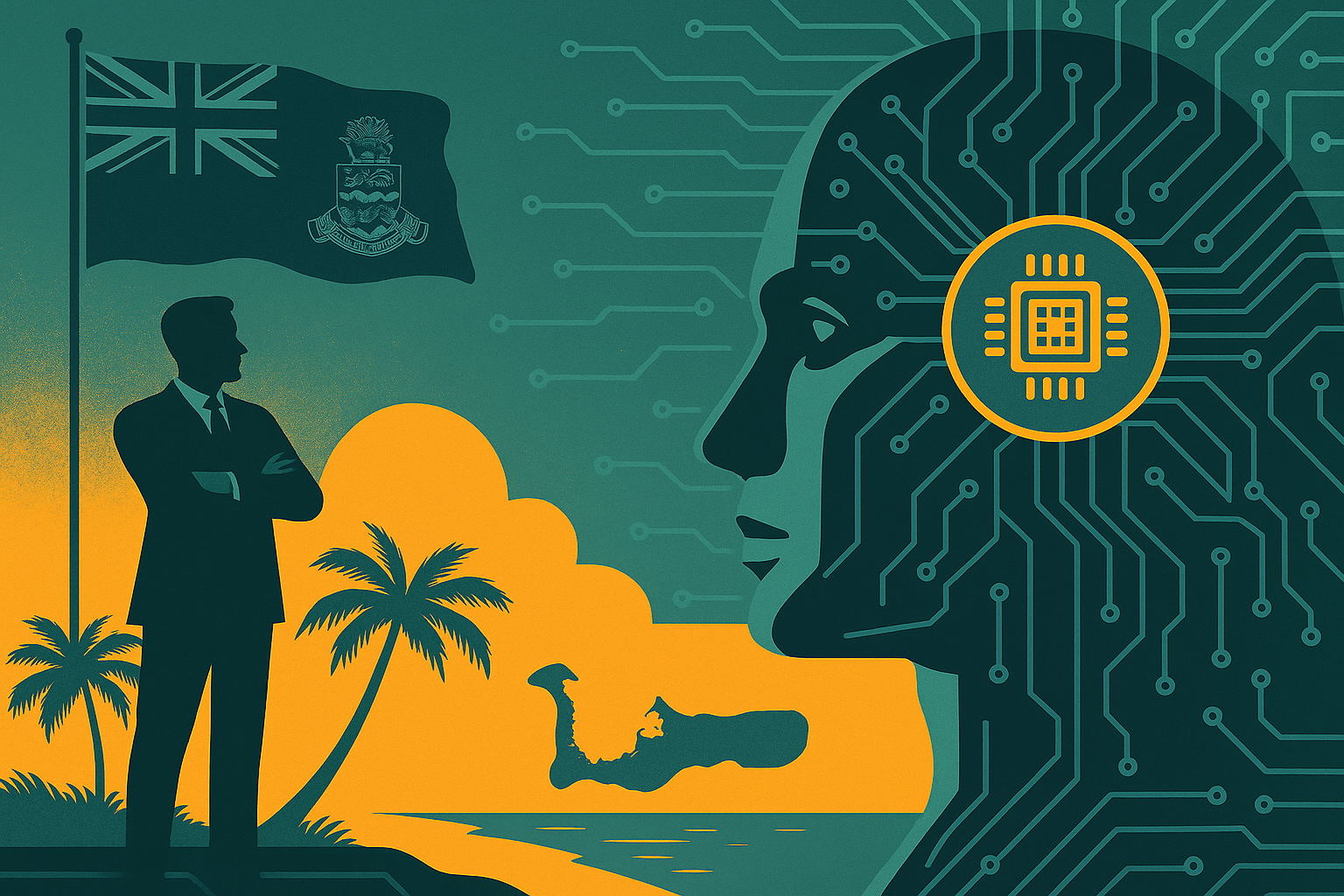
Thousands of jobs in Cayman’s financial services sector could be impacted by the artificial intelligence revolution, according to industry experts.
However, they believe the adoption of rapidly advancing new technology could also create new opportunities for residents and businesses in Cayman – provided the islands get the approach right.
The increasing adoption of AI tools is already undermining entry-level roles. And Cayman will need to revolutionise its approach to education and training, or risk being left behind.
“This is the first tech ever that is wiping out the white-collar jobs and graduate jobs before it’s wiping out manual labour jobs,” said Jason Butcher, an investor and strategic advisor specialising in AI and fintech.
Several industry leaders likened AI tools, like ChatGPT and Claude.AI, to “highly caffeinated interns” that can perform complex administrative tasks in a matter of seconds.
While this increases productivity and could lead to an economic boom, it also creates challenges in maintaining career pathways for young people in the islands’ dominant industries. Entry-level opportunities that provided an on-ramp for graduates in complex white-collar professions like law, financial regulatory compliance and accounting are likely to shrink.
Tamsin Deasey, of the University College of the Cayman Islands, is ultimately an optimist on the potential of artificial intelligence, which she believes can supercharge the Cayman economy and create more interesting careers for the next generation.
Deasey believes a rapid pivot in emphasis in education and training is needed.
“The only way to get around this is to retrain people in the new jobs that are coming – and quickly,” she said. “We need to make AI literacy mandatory at every level of education, starting in primary school.”
For those who adapt quickly, AI can be an engine of opportunity, says Brandan Caruana, CEO of tech bank Tenet.
“Everyone is going to have access to a PhD-level assistant in their pocket – the question is, who will have the ambition and the curiosity to make the most of it? That’s where the value will be created,” he said.
As part of this series, to demonstrate the potential of AI, the Cayman Compass prompted ChatGPT and Claude.AI to analyse relevant reports and data, as well as transcripts of our recorded interviews with local figureheads.
Its conclusion – articulated in a companion op-ed with this story – serves as a demonstration of the power of the technology, as well as a pithy summary of the choice facing Cayman as it contemplates the future.
“Cayman can lead, becoming a model for small-island innovation and exporting our expertise globally. Or we can drift, relying on systems built elsewhere, for problems we understand better than anyone,” according to the column produced by the large language models.
The disruption
Recent analysis by Goldman Sachs highlighted core areas of Cayman’s economy among those most “at risk” for job losses – singling out accountants and auditors, legal and administrative assistants, and customer service representatives. Even more sobering findings come from a KPMG report in the UK projecting that up to 40% of all jobs could be impacted by generative AI.
Butcher explained that, unlike past technological shifts that mostly hit blue-collar roles first, AI is hitting professional and graduate-level jobs. He warned that many roles Caymanians traditionally trained for in the white-collar world are already shrinking.
While there may be a time lag in Cayman before those impacts are fully felt, he believes the disruption is already happening – and will only accelerate. Cayman, he says, does not have the option of sitting out a technological shift that is happening all over the globe.
“Cayman isn’t insulated,” he said. “Our firms serve global clients, and those clients are already demanding AI integration.”
And he believes the transition must happen quickly to avoid businesses being left behind.
“What took 20 years with the internet is happening in two to five years with AI.”
Of particular concern, says Deasey, is the inherent disadvantage that young graduates could face in a job market that will increasingly value judgment and experience.
While debate has often surrounded the “glass ceiling” preventing many Caymanians from reaching C-suite jobs in Cayman’s boardrooms, she is now concerned about the “silicon floor”– the idea that entry-level jobs that once provided an “on-ramp” to meaningful careers may be automated out of existence.
To some extent, that is already happening, says Louise Reed, managing director of CML Offshore recruitment and non-profit Connect by Nova which provides career support to Caymanians.
“Entry-level routine tasks traditionally assigned to graduates are increasingly being automated by AI,” she said.
“But it isn’t necessarily all bad news. AI is also opening new doors and creating opportunities. For graduates, it’s crucial to keep an eye on emerging technology trends and place a strong emphasis on developing soft skills, such as critical thinking, communication, and adaptability.”
The Opportunity
Deasey argues that Cayman can leverage its current reliance on work permits to ensure the job impact to local people is kept to a minimum.
“If we get this right,” she said, “Cayman can reclaim jobs for Caymanians instead of relying so heavily on imported talent.”
She urges government and the private sector to work together to create a model for learning that will equip students to take advantage of AI.
“People need to understand that the entry-level pathway is gone. So we need to train them to step directly into higher-value roles – roles that use AI as a tool, not see it as a threat,” she said.
“This isn’t something we can wait five or 10 years on. The change is happening now, and we need to build the skills pipeline now to keep Caymanians in the market.”
Caruana is similarly optimistic about both the capacity for firms to add value and for individuals to leverage technology to meet their goals. He sees the traditional career path shifting – and believes that can be a good thing.
While he agrees that AI might create a divide, it won’t necessarily be on economic grounds.
“Those who thrive will be the ones who figure out how to work with these tools instead of competing against them,” he said.
“Everybody has access to a commoditised intelligence now – and that makes everybody smarter at doing what they do. Whether you’re a journalist, a chef, a dive instructor or a small business owner, you now have a digital assistant that can help you make better decisions, faster. That levels the playing field in a way we’ve never seen before.”
Silo: A case study in leveraging AI
One firm that is implementing AI to enhance its services is SILO Compliance – a Cayman-founded anti-money laundering compliance platform that is used across multiple jurisdictions.
The company is building and testing AI-powered tools that automate the tedious, time-consuming tasks.
One example is country risk assessments with the AI tool providing more information and deeper knowledge of each country in real time.
Kimberly Smith, SILO Compliance founder, says it is helping to reduce the time to update from several days to just a few hours.
New tools like this then frees up the compliance officers to make the high-level judgement calls needed.
She accepts this could mean slightly fewer jobs in the industry – especially for entry-level staff.
“Entry-level staff eventually become the ones that make those high-level judgement calls, and it’s my experience that doing the tedious research – knowing the smallest details – is how one learns to make judgement calls later in their career.
“The industry needs to address how we train the next generation of AML professionals – as they will be making more strategic decisions for a company and less of a back-office support function than today’s AML professional. AI isn’t a significant threat to the AML compliance career because there must always be a real person making the judgement calls – but AI is already changing how we work and who we hire.”
Dr. Devi Shetty, the founder of Health City Cayman Islands, made similar remarks in a separate interview with the Compass for this series.
He said widespread use of technology would help doctors focus on what they do best.
“These technologies will make hospitals safer for the patients,” he said.
“The sensors and the software don’t get tired. They do the data collection, they do the monitoring, and the doctor still makes the judgement call. That’s the difference – better information, faster, and safer for the patient.”
Positioning Cayman for growth
Caruana believes Cayman is well positioned to make the most of the AI revolution.
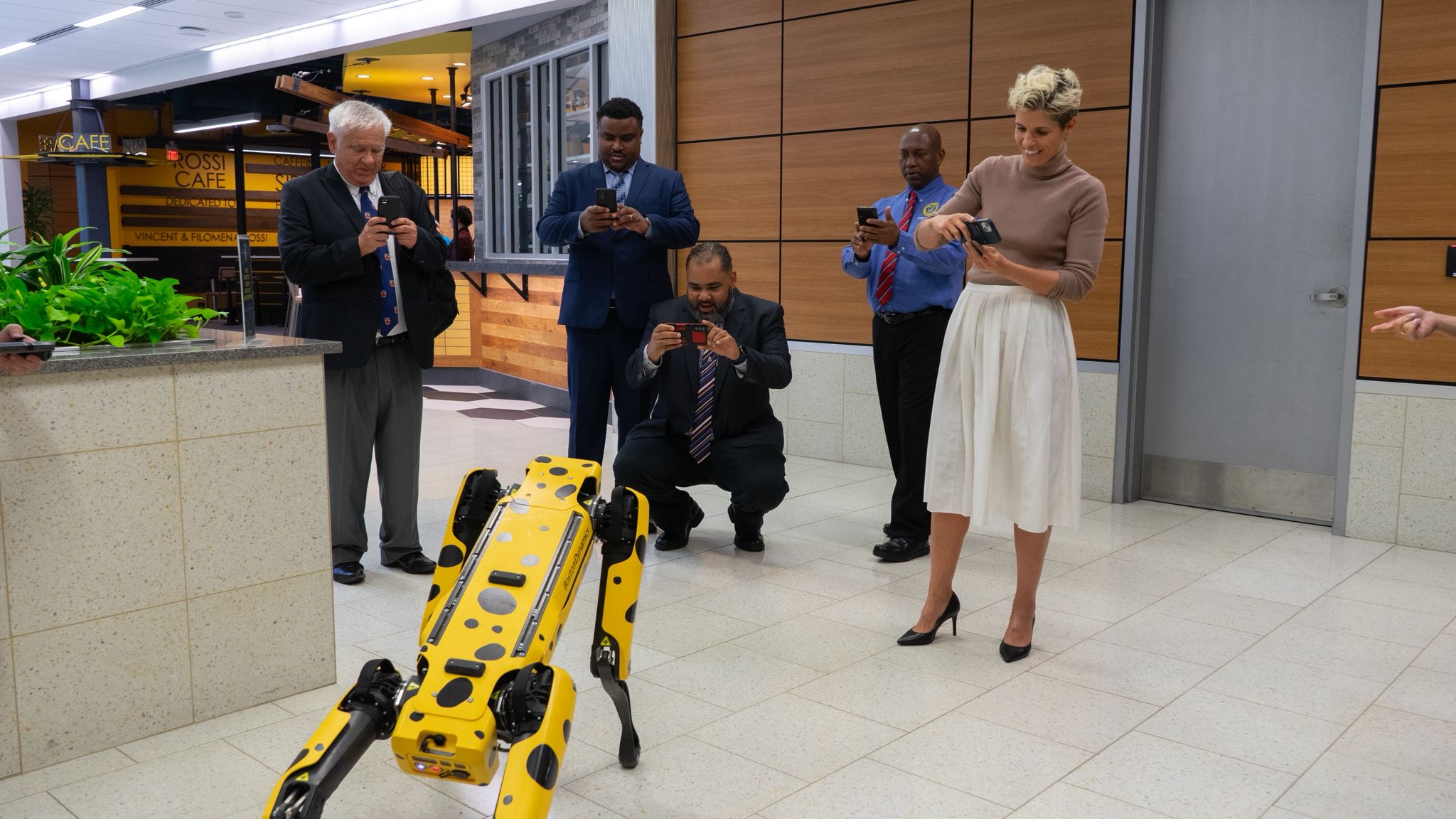
He might have drawn stares when he walked his robot dog around Camana Bay, but he is a firm believer in curiosity and play as the drivers of learning.
“We’re always at the bleeding edge of tech here because of the nature of our industries,” he says. “I’ve even got a robot dog at home – that’s the level of technology we’re talking about. The question is, are we using it to its full potential, or just letting it be a gimmick?”
According to PwC’s Value in Motion report, AI could boost global economic output by as much as 15 percentage points over the next decade, with jurisdictions like Cayman well-placed to capture a share of that growth. Nearly half of local firms already see AI as critical to their strategy, especially in financial services, compliance and risk management.
And with its global reputation in financial services, agile economy and early adoption of emerging technologies, PwC notes Cayman could position itself as a regional hub for AI-driven business innovation – creating not just efficiency, but entirely new categories of high-value jobs.
“AI can allow a smaller group of people to produce more value and do more productive work,” Caruana says. “That’s what every wave of technology has done – and this will be no different.”
He argues that Cayman is small enough to be a test bed for innovation in areas that can make people’s lives easier and solve problems we have “learned to live with”.
He highlights driverless public buses to beat traffic, underwater surveillance drones to protect marine parks, and hi-tech weather modelling to predict hurricanes among the type of innovations that could become commonplace in the future.
Deasey shares that optimism, calling AI “the best thing that’s ever happened to humankind”, and insisting that “it’s going to make us better thinkers and more efficient”. For her, the challenge – and opportunity – is to build skills and confidence so Caymanians can embrace AI as a partner, not a threat.
Handled wisely, both agree, AI could position Cayman not just as a regional hub for innovation, but as a global example of how a small jurisdiction can adapt and thrive.
“I think Cayman has an opportunity here,” Caruana said. “If we start playing now, we’ll be – as usual – advanced above our peers, and the destination we should be. But we can’t afford to sit on our hands. The jurisdictions that embrace these tools are the ones that will capture the economic value, and the ones that don’t will be left behind.”