


It has been almost 30 years since the Cayman Islands last implemented a comprehensive land-use plan. At that time Bill Clinton was in the White House, Tony Blair was in 10 Downing Street and Truman Bodden was leader of government business of a three-island territory with a population of 35,543.
The now-long-abandoned Glass House served as the seat of the Cayman Islands government, popular developments like Camana Bay, Cricket Square and The Grove had not even begun, and there were no major highways. Hurricanes Ivan and Paloma had yet to provide a frightening reminder of how exposed the Cayman Islands is to extreme weather.
Cayman Islands law envisages that the development plan will be updated every five years.
But the land-use framework put in place at the turn of the century is still the basis for critical decisions on how the islands’ built environment evolves today. This remains the case, despite the fact that population has more than doubled, the business and tourism sectors have grown substantially, and technology and research have demonstrated new climate threats and means to fight them.
Meanwhile, pressure over land use, environmental preservation, access to beaches and docks, and public rights to enjoy the coastline continue to be flashpoints for conflict in the community.
Landowners, architects, realtors, infrastructure experts and conservation officials have different visions of what a development plan should contain. But all agree that it is desperately needed.
Here we look at some of the most pressing issues a development plan – and a coordinated package of policies to support it – could help resolve.
1. Firm decision needed on building heights
“We need to build giraffes, not elephants,” says Mike Stroh, of Trio Architecture, on the perennial hot-button issue of building heights.
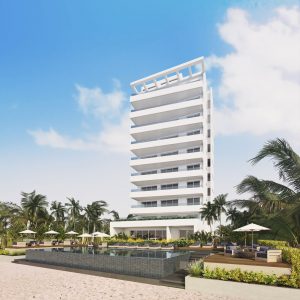
He argues developers should be allowed to go higher – particularly in George Town and on Seven Mile Beach – to meet the demand for housing and hotel rooms, without eating up sparse land.
If it is an approach that comes with the right caveats, he believes it would gain wider support. Stroh argues conditions could be attached to ensure developers did not opportunistically build out as well as up. He believes environmental advocates would also support this approach if they got something in return – such as greater setbacks, increased public access, contributions towards beach replenishment or commitments to preserve land on the site or even elsewhere on island.
Realtor Kim Lund said the issue of building heights was restraining the redevelopment of Seven Mile Beach. He believes investors and developers are holding back capital and ‘land banking’ until the issue is settled.
“Definitely there is a reluctance with developers and investors, especially some of the larger ones, to proceed with projects until there is clarity in what the new regulations will entail,” he said.
2. Deal with density across the islands
Density restrictions are not just about building heights. They affect the ability for Cayman to experiment with different accommodation models.
Plans by restaurants and construction firms to introduce dormitory-style housing for staff have proved difficult because of restrictions on the numbers of bedrooms per acre. Stroh said the current plan and regulations don’t encourage investors to pursue targeted projects – for example rental-type accommodation for construction and tourism workers who are willing to share kitchen, bathroom and laundry facilities. The same limitations exist in the middle-income market, says Gary Gibbs, Dart’s executive vice president for development.
Allowing greater density would enable, for instance, multi-family homes to exist in one building, creating opportunities for people to get on the housing ladder at a lower price point, which is a model common in Germany, for example.
He said a national plan could consider “higher density zoning that doesn’t exist at the moment” to help the private sector deal with issues like housing without eating up too much land.
3. Innovate with low-income housing
A business owner remodelled four shipping containers to provide low-cost rental accommodation for his staff in 2023, but was forced to remove the structures by the Central Planning Authority.
“It is clear to the authority that metal storage containers used for residential purposes are not consistent with the architectural traditions of the islands,” the authority said.
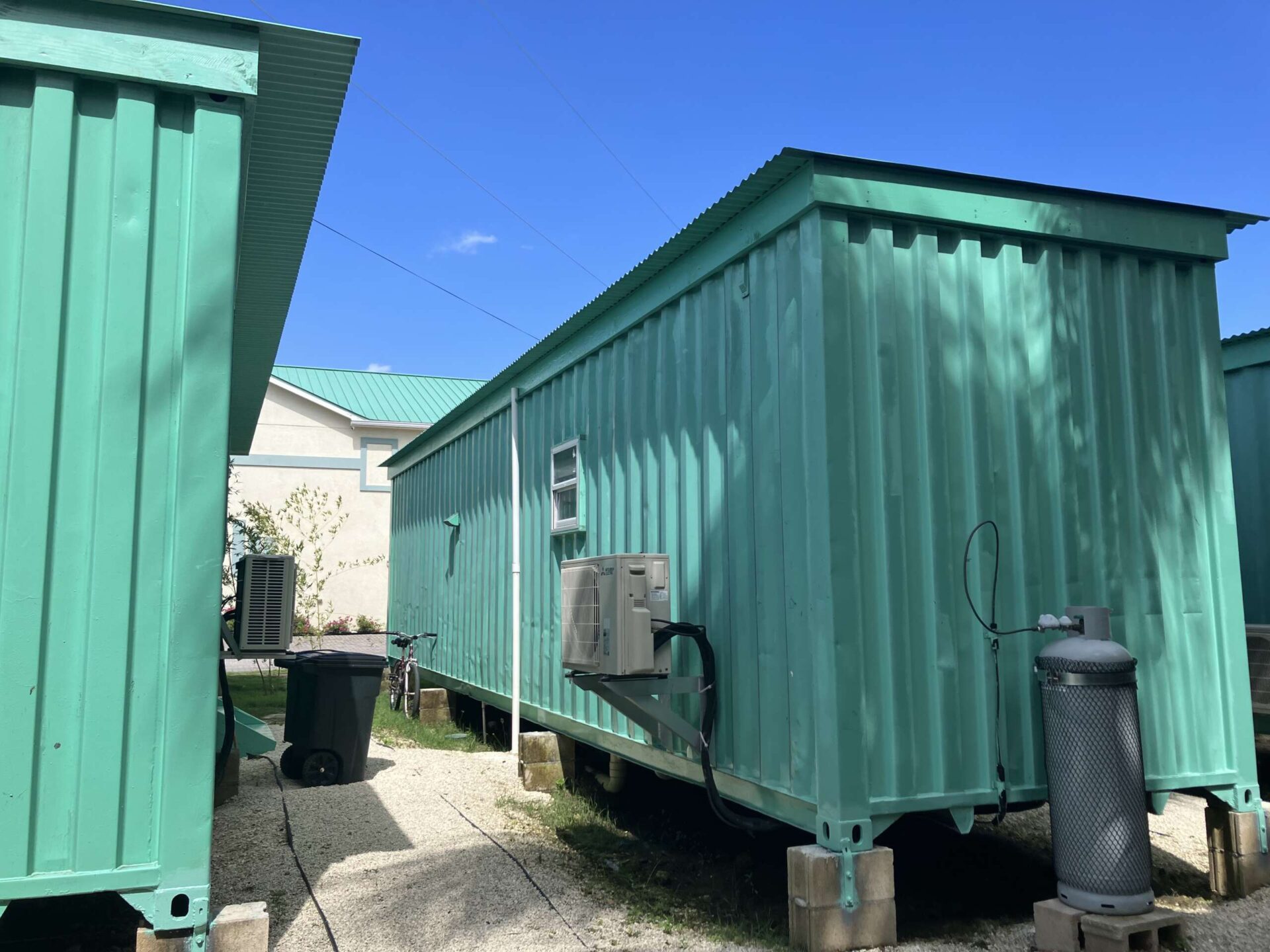
The concept, however, is one that won’t go away. With the number of people living under the radar in unfit or unsafe housing increasing every year, Tara Nielsen of Acts of Random Kindness argues that consideration has to be given to some form of low-cost prefab or container-home policy.
“We are seeing people living in far worse conditions,” she said.
“The design and manufacture of tiny homes is something that has grown exponentially over the last decade. It doesn’t have to be a rust container. I really think there are options we could look at and developers that would work with us to do this at low cost on a large scale.”
A development plan wouldn’t be expected to necessarily deal with that level of minutiae. But Stroh argues it should provide clarity on minimum standards around design and construction and leave the rest to properly qualified and regulated architects. He said the technology around modular homes had improved to the point where even 3D-printed homes are an option in some places. He believes hurricane-rated, aesthetically pleasing tiny homes that can be moved from place to place are a possibility that the plan could entertain.
4. Get people out of their cars
The issues of transport and planning are inextricably linked and a development plan needs to look at how people move, as well as how and where they live and work.
The planning statement published last year sets out ambitions for “building and maintaining a safe and efficient network of roads, having regard to national and economic growth strategies”.
However, a long-term plan will also need to look beyond simply pouring more tarmac.
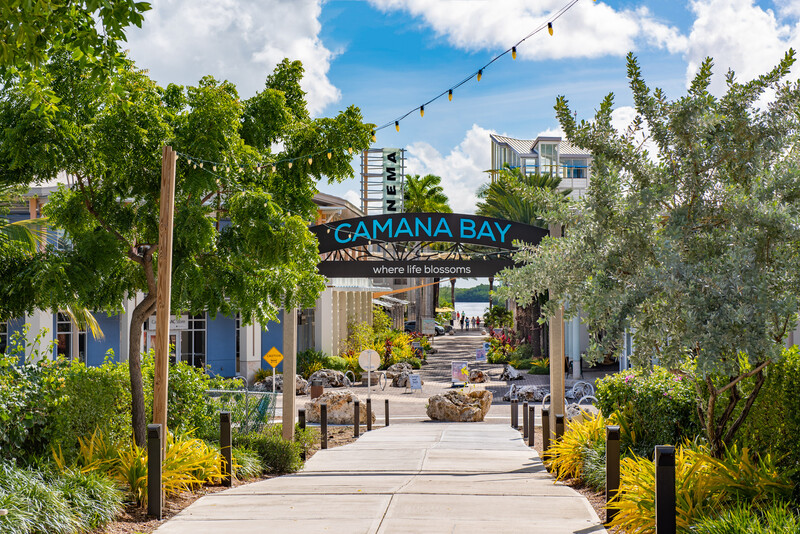
Gibbs argues that the traditional American zoning model is outdated and that a new plan should consider greater flexibility to allow mixed-use zones. Dart achieved that at Camana Bay, in spite of current restrictions, by using a zoning overlay called a planned area development.
The advantage, says Gibbs, is it allows the creation of areas where people can, as the development’s slogan goes, ‘Live, Work, Play’. Similar approaches have been tried on a smaller scale at Grand Harbour and to a degree at Health City in the eastern districts.
Having basic facilities like daycare centres, pharmacies, bars and cafes close to where people live is a means to reduce reliance on cars, says Gibbs.
Stroh encourages that approach but also argues for a simpler solution.
“Cayman needs Uber,” he said.
“It works everywhere else, why not here?”
5. Hold back the ‘ocean of parking’
While Uber might not seem like a planning issue, Stroh points to a clear challenge for every project in the Cayman Islands.
“You have to have an ocean of parking spaces in the footprint of any building.”
Currently 1.5 spaces are required per apartment and 0.5 per hotel room. An aerial picture of any project shows how much land is eaten up by parking lots. Even in his 10-storey One GT project in George Town, he said, the first 2.5 storeys are taken up with parking.
He argues both for better transport options and flexibility within the planning regulations to consider waivers on the space requirements for developments that are pedestrian friendly – either by being close to offices, schools and amenities or by having restricted policies on vehicles.
6. Balance the protection of the environment with the needs of the economy
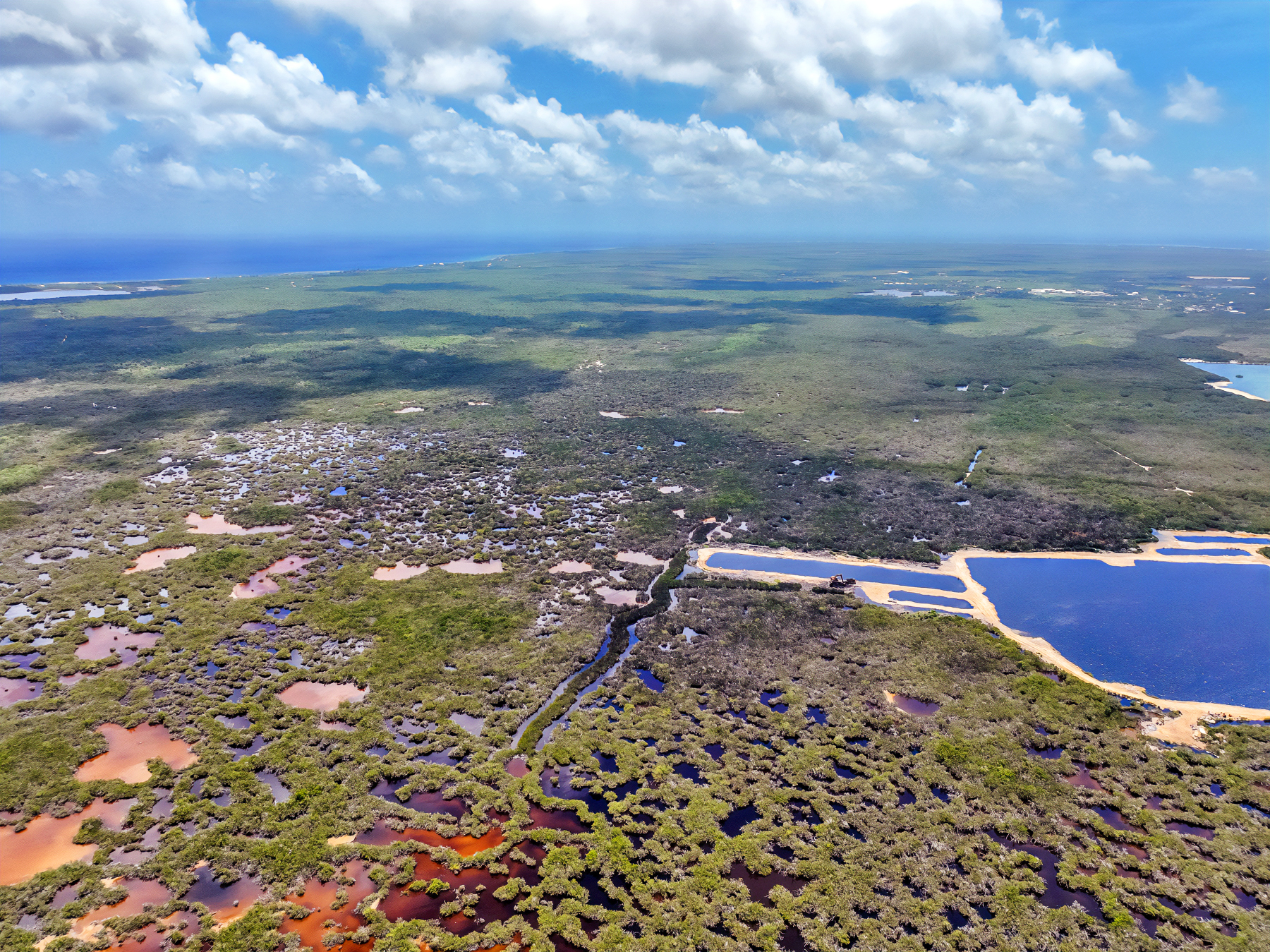
The most fundamental issue for a development plan is to determine where and how Cayman can build and what it should protect.
Ian Kirkham, the chair of the National Conservation Council, cautions that more environmentally sensitive land will be lost in the coming years if the issue is not addressed properly with a new approach to zoning. He agreed that higher density development was preferable if it helped to deal with Cayman’s housing and infrastructure needs, while allowing important areas to be preserved.
He cites environmental pre-planning – the concept of landowners and government working to mitigate environmental concerns in the planning stages – as a method that has worked well in the US and Canada.
He said the departments of environment, planning and infrastructure and the conservation council could and should be working closely together to ensure the new zoning map reflects the needs of each.
He believes major developers would also be on board with such a policy.
“Give them the rules and they will accept them and work within them, but in the absence of rules, it is a free-for-all.”
He believes there is room for compromise on all sides and said the National Conservation Council is ready to work with all parties to get the best result for Cayman.
There is some evidence for this in the public statements of Cayman’s biggest developer. Jackie Doak, director at Dart Enterprises, speaking at a Chamber lunch event before COVID, said developers were seeking clarity first and foremost about where to invest and where to protect.
“We believe that an environmental management framework would help balance the country’s environmental, social and economic interests,” she said at the time.
7. Consider population growth
Initial drafts of Plan Cayman – the framework produced first in 2018 and updated last year that will provide the guiding vision for a series of area plans – came in for heavy criticism during public consultation because it did not consider population growth.
That feedback has been incorporated in a redraft, published last year.
The introduction to that document acknowledges the population has grown by more than 20% between the two drafts.
Few countries have seen growth like it.
“Between 1990 and 2022 the population has tripled from 26,969 to 81,5461. In fact, the estimated resident population for 2022 is the highest ever recorded and there are 18,000 more people living in the Cayman Islands than there were just 5 years ago,” the draft statement notes.
While there is plenty of political and public opposition to continued growth and government may seek to check that march through immigration reform, Cayman has seen consistent year-on-year increases in population since the 1960s when there were fewer than 10,000 people on island.
The Port Authority caused controversy when it cited estimates that Cayman’s population could reach 250,000 by 2074 as part of a presentation on the need for new cargo facilities. However, port officials said the number was not a desired target, but a projection based on the past 50 years of data.
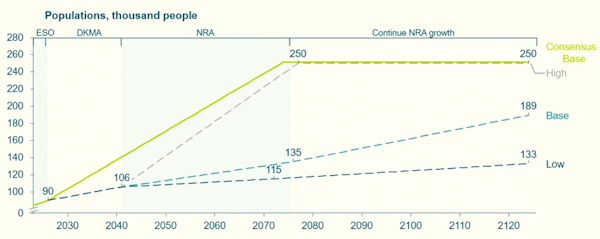
Whether that number is likely or desirable, it is clear that the plan must consider how Cayman’s development can catch up with its current population, let alone prepare for the future.
This ever-growing population has a huge impact on the built and natural environment, infrastructure, transportation, accommodation, services, recreation spaces and the community of the Cayman Islands. Our response to that is one of the key challenges for this plan.”
8. Sort out infrastructure priorities
Population concerns spills over into concerns about infrastructure.
Everything from new solar farms to bike paths and public transport would require careful land-use planning. While roads and housing are the most obvious concerns, the unseen plumbing of the island is of particular concern.
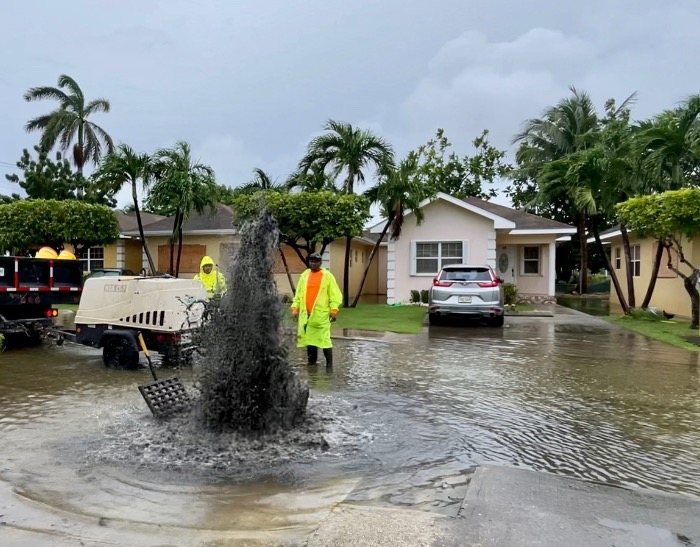
It’s not something that makes headlines – except in the aftermath of a hurricane – but a piecemeal approach to stormwater management has contributed to flooding challenges in neighbourhoods across Cayman. Similarly, there is no obvious solution to the lack of sewage facilities serving most homes in Cayman. Poorly regulated septic tanks fill the void, amid growing concerns.
“A long-term approach to infrastructure has to be an important part of any development plan, especially somewhere like the Cayman Islands where there are so many competing needs,” said Jack Mackenzie, head of deal advisory at KPMG, which works on infrastructure planning across the region.
Ideally, he said a bipartisan plan would sketch out long-term priorities to ensure projects are independent of political patronage but rather connected to a well-thought-out list of needs.
He said different approaches to projects like airports or piers – that have revenue streams attached – could help push some projects up the list.
“Presently, low-glamour but necessary projects can be overlooked, without the guidance of a long-term master plan,” he added.
9. Integrate climate change policy
Government published a draft climate strategy last year to guide policy over the next three decades. One of the goals is to ensure “sustainable planning and building that is climate resilient” as well as “infrastructure networks” that can withstand the storms of the future.
Sea-level rise and increased impact from higher intensity storms are among the projected impacts of climate change.
Kirkham said the document was an important piece of work but a development plan – which dictates where and how we build – is where the rubber hits the road in terms of implementation.
“We can’t create a development plan unless we take into account climate change, the energy policy, infrastructure needs and what the population in 25 years is going to require. If we don’t address that in a development plan, we’re going to fail.”

Gibbs, Dart’s executive vice president of development, said the plan needed to consider climate resiliency and sea-level rise. He said developers are already taking this approach in many cases, ensuring buildings are built at a higher grade and are resilient to even the most powerful storms.
He added that beach replenishment could be considered as part of that plan.
“The best defence (against storm impacts) is a strong beach.”
10. Protect the Sister Islands
If three decades seem like a long time to wait for an update to the development plan in the Cayman Islands, spare a thought for the Sister Islands.
Neither Little Cayman nor Cayman Brac has a plan of any kind and decisions are made in something of a policy vacuum.
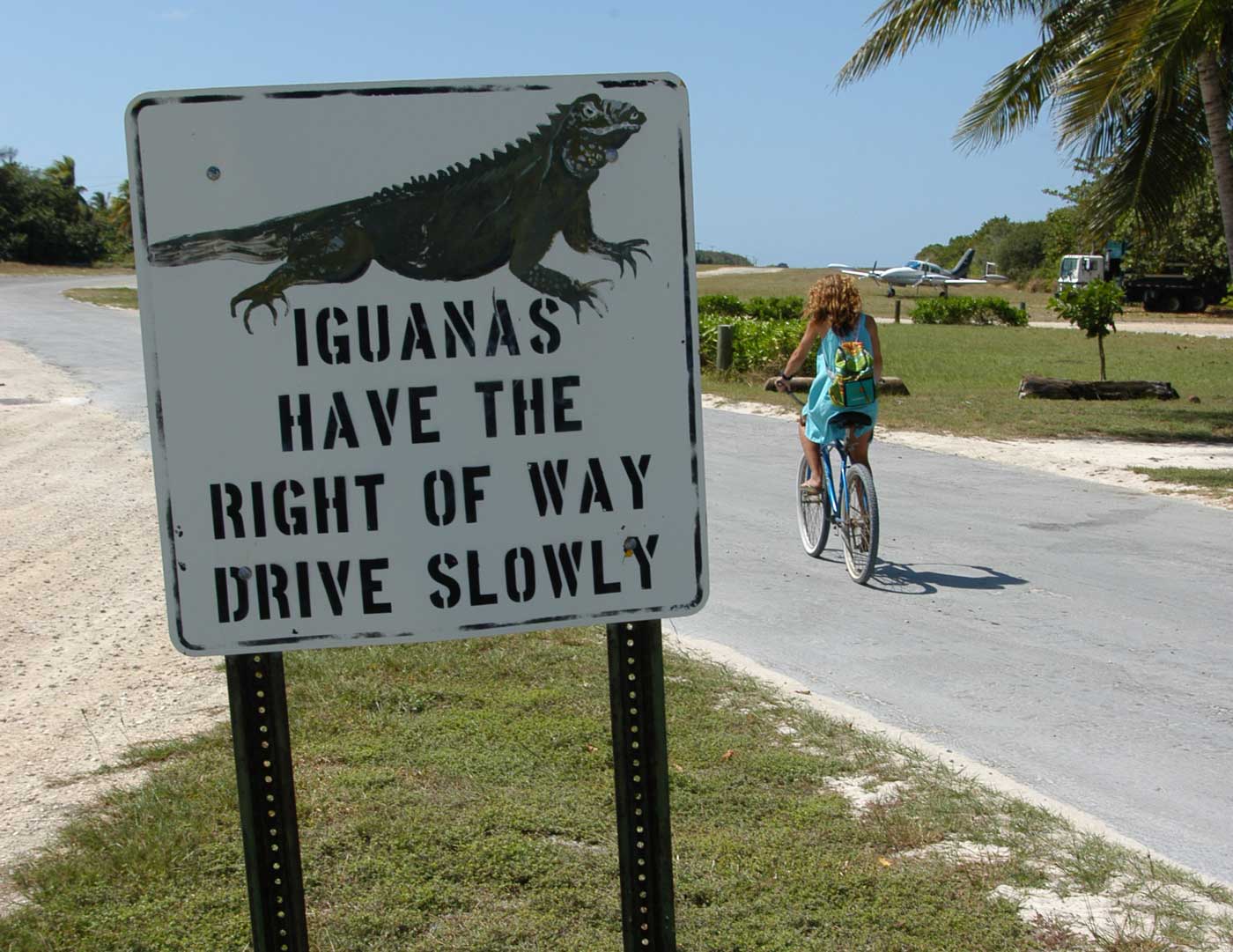
Particularly on Little Cayman – a tiny community of divers, fishermen and nature lovers – there is growing demand for regulations to prevent the island losing its charm. Amid concerns around a new airport proposal and a host of subdivisions, residents in the smallest of Cayman’s three islands are asking to be first in line when ‘area plans’ are rolled out as part of Plan Cayman.
The Compass reported earlier this year that residents are promoting a 33-year-old document – unearthed from the last time they were consulted on development – as a start point for a new plan that focuses on protection of its “peaceful ambience”.
That document notes, “Caymanians and foreign tourists go to Little Cayman to experience a natural beauty and quiet lifestyle which is difficult to find on the other two islands. It can be safely assumed that the type of experiences visitors enjoy now on Little Cayman, the tourist of two decades ago cherished on Grand Cayman.”
Kirkham said the need was becoming more urgent as Little Cayman bids to become a UNESCO World Heritage site. While the key part of the bid is its pristine reefs and marine protected areas, the absence of any controls over how the land is developed is considered a major hindrance.
“For the entire island to be a world heritage site would be a major boost and a feather in our cap. Are we really going to mess that up because we don’t have a development plan?”
Similarly, on the Brac he said there were no coastal setbacks and currently no means for residents to effectively determine what the future of the islands should be.