


It is that time of year when you get out of your car in the parking lot or you are walking the dog and suddenly, a ching ching bird swoops down and startles you, maybe even making contact with your head.
This is part of the bird’s defensive instinct during breeding season.
“Ching chings breed annually from March to August and during this time, the birds become defensive against anything which they think may threaten their nests,” explained Jane Haakonsson, terrestrial research officer at the Department of Environment.
Haakonsson said that in most cases, this defensive behaviour takes the form of swooping down, close to the head of the intruder.
“Swoops are often accompanied by wing-flapping and high-pitched calls, designed to scare off a potential predator. In some cases, the birds may even make contact with the head. While not dangerous, a strike can be painful and shocking, if it is unexpected.”
Cayman’s unique birds — past and present
Both Grand Cayman and Little Cayman have their own unique ching ching birds, and they are both protected species that should not be disturbed. They are an endemic sub species of the Greater Antillean grackle (Quiscalus niger), and these sub species — the Quiscalus niger caymanensis on Grand Cayman and Quiscalus niger bangsi on Little Cayman — are found nowhere else in the world.
Strangely, there are no ching chings on Cayman Brac, despite there being a ching ching population just 10 miles away on Little Cayman. Meanwhile, there is a red-legged thrush, which is only found in Cayman Brac and nowhere else.
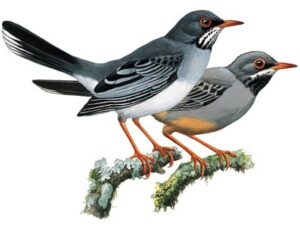
Haakonsson said that competition with the thrush is unlikely to have played a role in the disappearance of ching chings in Cayman Brac, which were last recorded there over 100 years ago in 1911.
“The exact reasons for its disappearance from Cayman Brac are not fully documented, but it’s possible that factors like habitat loss, hurricane damage, or other disturbances contributed to its decline and ultimate extirpation,” she said.
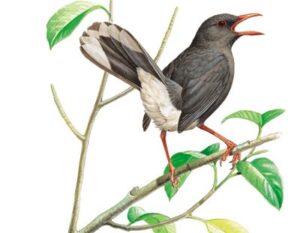
Grand Cayman also used to have its own type of thrush called the Grand Cayman thrush, but now it can only be found as stuffed specimens in certain museums, including the Field Museum in Chicago, the Academy of Natural Sciences in Philadelphia, and the American Museum of Natural History in New York, among others. It also features on the Cayman Islands one-cent coin.
“The Grand Cayman thrush (Turdus ravidus) went extinct sometime between 1938 and 1965,” Haakonsson said.
“It was a full endemic species to Grand Cayman only and while it was described as ‘common’ in 1886, it favoured dry forest on limestone [cliff]. Much of this habitat was destroyed in the 19th century, which very likely contributed to its extinction, together with the 1932 hurricane.”
Ching ching behaviour
The Department of Environment website suggests that the ching ching bird got its local name from its metallic, chiming call.
“It eats insects, lizards and the eggs and chicks of other birds. Gregarious and inquisitive, ching-chings appear quite fearless, especially when food is about,” the website says.
Regarding their habit of swooping down on people’s heads, Haakonsson said, “The level of aggression the birds display increases as their eggs hatch, and they begin to rear their chicks. During this period, they will defend their nests against all intruders, regardless of size. Cats, dogs and humans who venture close by will be viewed as potential predators.”
Ching chings often build their nests in Christmas palm trees and these exotic miniature palms are now quite common in Cayman’s urban landscaping, especially in parking lots and beside walkways and doorways.
The Department of Environment says the point at which the palm fronds attach to the trunk of the tree forms a small, cup-shaped structure, explaining, “This is the perfect shape and size for a ching ching to build its nest. Bringing the birds into close contact with people in this way can trigger their defensive behaviour during the breeding season.”
Learning the ‘ching ching finger wiggle’
If you know where a nest is located and you have to pass the area on a regular basis, the Department of Environment suggests the simplest way to ward off swooping ching chings is to do the ‘ching ching finger wiggle’.
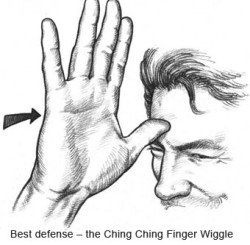
“Ching chings swoop for the highest point on your head. If you put your hand on the top of your head, like a rooster comb, and wiggle your fingers, the birds will not make contact,” the DoE says.
Adults have a responsibility to behave calmly around wildlife and set a good example for children, the department adds.
“Children are very susceptible to irrational fears, and so care should be taken to teach children to respect and not to fear wildlife,” they said.
Chings chings, after all, are part of what makes Cayman unique.
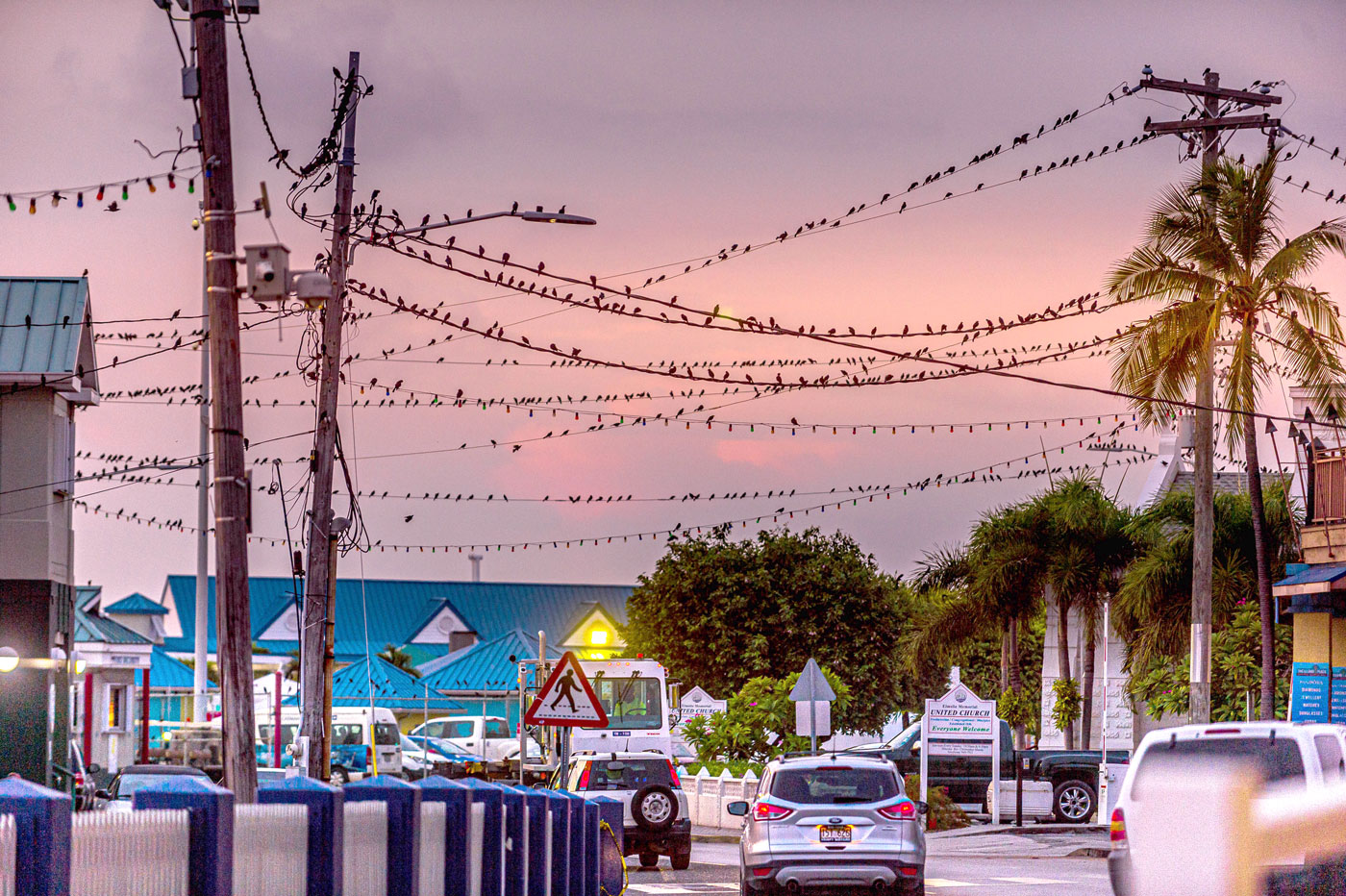
For the fearless who would like to view the bird up close, at certain times of year, hundreds of ching chings gather each night as the sun goes down near Elmslie Church by the harbour in George Town.