


Editorial
Newsday

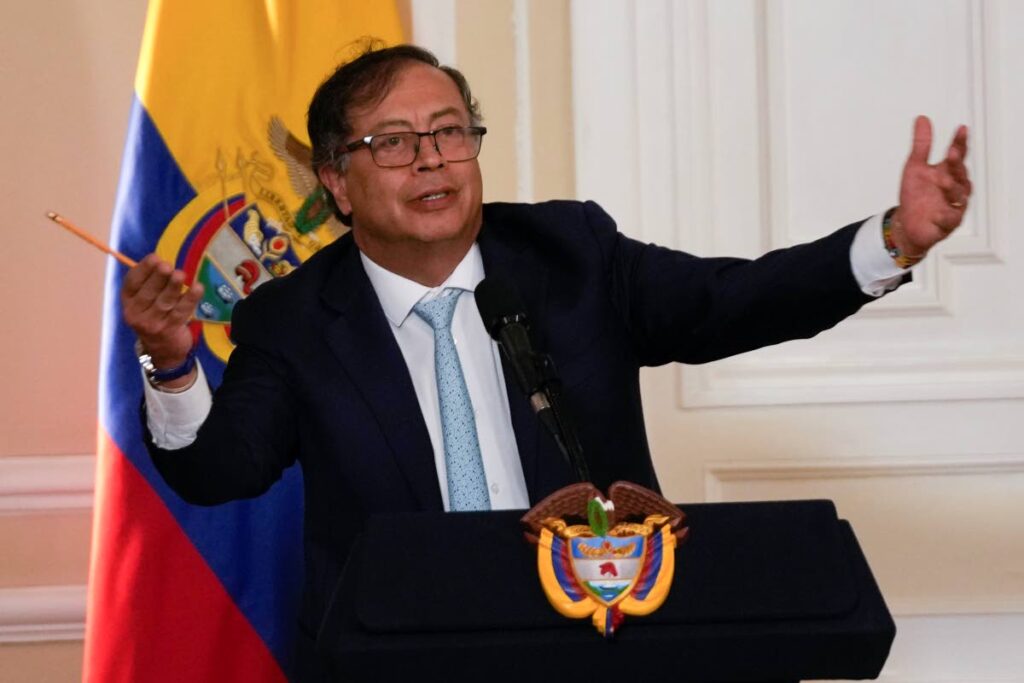
UNTIL this week, Gustavo Petro was a name most citizens of this country might not have been familiar with. On September 9, that changed. Colombia’s president waded into our waters, issuing a broadside against TT’s support of Donald Trump’s “war on drugs” and a reported strike on a vessel which left 11 dead. It was an unexpected, but hardly surprising, intervention.
“It is extremely important that the Caribbean republic of Trinidad and Tobago search for remains of the civilian dead from the US bombing of a civilian vessel, about which we do not know if it was carrying drugs, and if it was, it should not have been bombed,” said Mr Petro in Spanish on social media.
“The bombing took place in the territorial waters of Trinidad and Tobago; did the island’s government give permission? Life comes first always and everywhere.”
Wasting no time, the Prime Minister responded, saying the boat was not civilian and that she would prefer to see traffickers “blown to pieces.”
“Our coast guard resources will be utilised for the protection of our borders, not to look for dead drug traffickers,” Ms Persad-Bissessar said. Her comments echoed Marco Rubio’s declaration that interdiction does not work: “What will stop them is when you blow them up.”
In office since 2022, Mr Petro, who is controversial at home, has blown hot and cold on Nicolás Maduro. He has criticised the Venezuelan leader on elections but nonetheless opposes regime change. And Colombia and Venezuela restored diplomatic ties when Mr Petro, who is leftist, assumed power. As a result, he has no fondness for Mr Trump.
Earlier this year, the Colombian leader, who is prolific on social media, trolled the American president and refused to take in US deportees. In response, Mr Trump threatened to slap Colombia with a 50 per cent tariff. Mr Petro backed down. His swipe at TT is a continuation, by proxy, of his White House spat.
In contrast to this week’s leader-led rancour, Colombia’s ambassador William Sidney Bush Howard in July paid a courtesy call on Minister of Foreign and Caricom Affairs Sean Sobers and both spoke of “enhancing bilateral relations” in trade, education, agriculture, sport, and culture. In 2023, the same ambassador stopped in on minister of national security Fitzgerald Hinds, and there was talk of “fruitful co-operation” on law enforcement. Longstanding is a 1994 Colombia-Caricom economic integration deal. TT has a history of a trade surplus with the country; it is a billion-dollar market.
Whether late-hour tweets to Mr Petro’s 8.3 million followers will translate into fallout remains to be seen. What’s clear is Colombia, with ties to Venezuela and Guyana, is making its presence felt in the region’s new sphere of influence.