


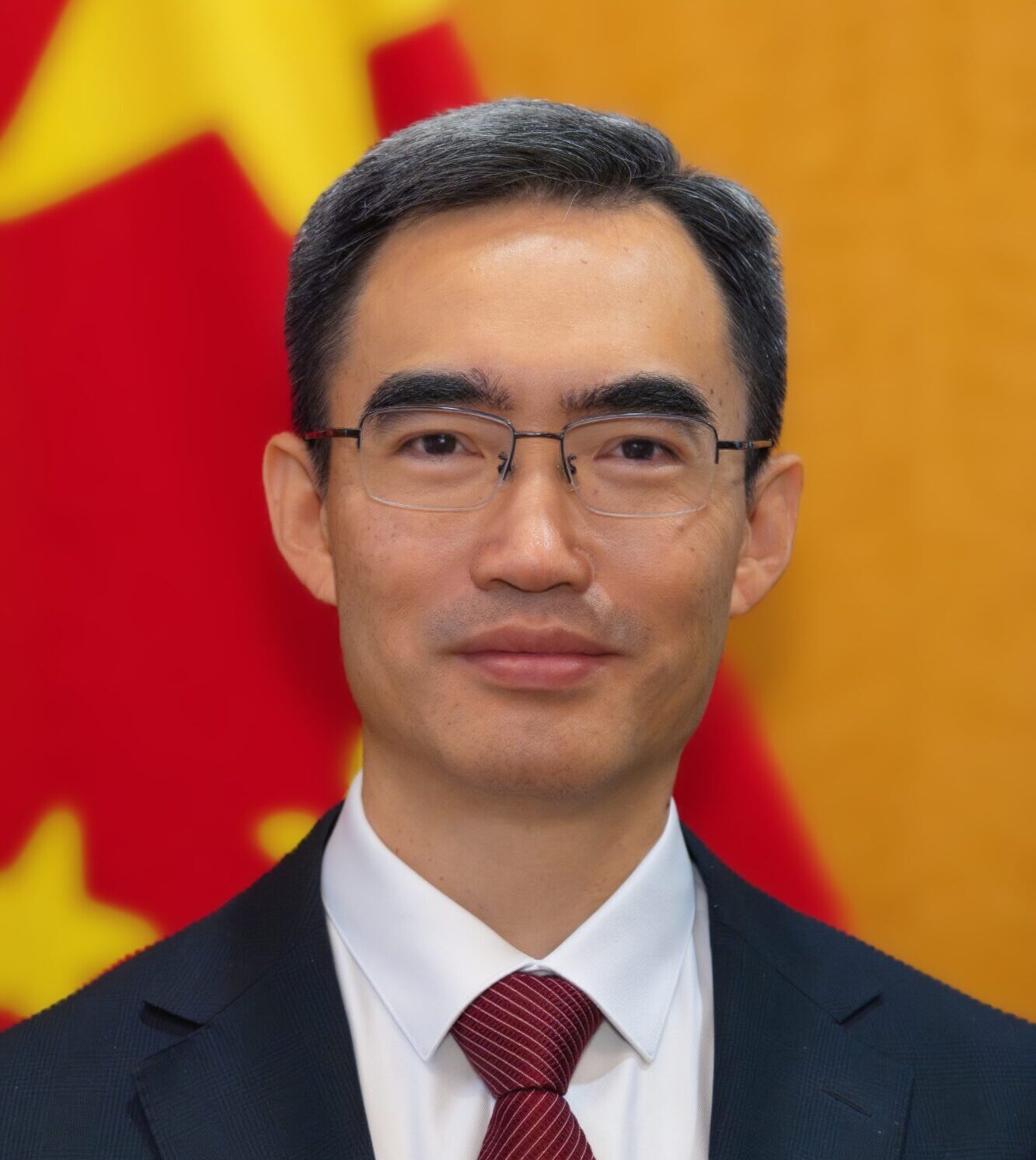

by H E Ambassador Yang Shu
Later this year, China will host the Global Leaders’ Meeting on Gender Equality and Women’s Empowerment in Beijing, an event that has already drawn wide international attention.
Leaders and representatives from numerous countries will take part in the gathering. The meeting provides a valuable platform for women leaders around the world to celebrate progress in advancing women’s rights, exchange experiences, and chart the course for future gender equality development. It also underscores China’s commitment to promoting gender equality and empowering women.
Throughout history, women have played an essential role in shaping human civilisation and have made immense contributions to social progress. However, women across the world also have long faced deep-rooted discrimination, and China was no exception. In the country’s long feudal past, women were regarded as subordinate to men. They were largely confined to household roles, denied access to education and work opportunities, and often subjected to various forms of abuse.
This situation began to change with the founding of the Communist Party of China (CPC) in 1921. From its earliest days, the CPC championed women’s liberation, gender equality, and active social participation. After the establishment of the People’s Republic of China, a series of laws and regulations protecting women’s rights were enacted, leading to historic improvements in women’s status. Women gained the rights to participate in social development, access education, engage in employment, exercise suffrage, choose their own marriage partners, and gradually attain equal standing within the family. Chairman Mao strongly advocated gender equality, famously stating that “Women hold up half the sky” and penned a memorable verse: “When men and women progress together, society rises like the morning sun.”
With its development, China has continued to make remarkable strides in women’s rights. In recent years, President Xi Jinping has emphasised safeguarding women’s lawful rights and interests and promoting gender equality and women’s well-rounded development as integral components of Chinese modernisation. Upholding gender equality, among other basic national policies, has been incorporated into the CPC’s political program, and promoting women’s well-rounded development has been included in the national development plan. The legal system for safeguarding women’s rights and interests also continues to improve. The result was striking. The cases of women and children being abducted and trafficked had fallen by 95% from 2013 to 2024. By 2024, women accounted for 50.76% of all students enrolled in higher education — 14% higher than that in 1995. The maternal mortality rate has dropped by 76.9%, from 61.9 per 100,000 in 1995 to 14.3 per 100,000 in 2024 — far below the global average. Women’s life expectancy has risen to 80.9 years, reflecting improved health services and living standards.
Chinese women also actively participate in government initiatives, serve as advocates of civic virtues, fight for their dreams, and excel across all professions. We have witnessed the nation’s first female Nobel laureate in science, the first female astronaut, the first female aerospace engineer, the first female warship captain, and countless other trailblazers shaping the country’s progress. The digital economy has opened new frontiers for women. Today, women account for over half of Internet entrepreneurs in China, and one-third of the workforce in emerging industries such as live streaming and cross-border e-commerce. Truly, women are holding up half of the sky, whether in society at large or even within our embassy, where half the staff are women. In many sectors, including education, hospitality, human resources, women in fact hold more than half of the sky. Family lives are also improved; 90% of married women participate in decision-making on major family matters, an increase of approximately 15% compared to 2010.
As the saying goes, “When you empower a woman, you empower a nation.” Guided by this belief, China actively supports the United Nations in prioritising women’s development, promotes cooperation with countries around the world, and builds international consensus on gender equality through dialogue, exchange, and mutual learning, striving to foster a global environment that advances women’s development, safeguards fairness and justice, and contributes to a brighter future of peace, security, prosperity, and progress. By integrating women’s development into major initiatives such as the Belt and Road and South-South cooperation, China has maintained close exchange with more than 140 countries, over 420 women’s organisations and institutions, and trained more than 200,000 women from more than 180 countries and regions, and offered employment support for women in more than 100 countries. Through the Global Development and South-South Cooperation Fund, China has supported women-focused projects worth nearly US$40 million across more than 20 countries. Here in Grenada, China also partners closely with the government to promote women’s empowerment — for example, by donating sewing machines, computers and offering training courses to help women gain skills, livelihoods, and greater independence.
Gender equality is not merely a women’s issue — it is a human issue, essential for sustainable development and a shared future. While remarkable progress has been made, the struggle for gender equality is far from over. Around the world, women continue to face poverty, discrimination, violence, and barriers to opportunity. As China prepares to host the Global Leaders’ Meeting on Gender Equality and Women’s Empowerment, it is calling for renewed global commitment. The objectives are clear: strengthen legal protections, close gaps in education and healthcare, leverage technology to empower women, expand international cooperation, integrate gender perspectives into global governance, and work together toward a world where all women and girls can thrive.