


Cayman Islands’ immigration and employment problems could be solved by enforcing existing laws rather than passing new ones, says a leading immigration lawyer.
Nick Joseph of Reside Cayman has worked in immigration law in Cayman for 15 years and said he was worried that “history was being rewritten” by government plans to bring back the Caymanian Protection Act.
Enforcing laws
“The law was never fundamentally changed. My perception is that we just stopped following it,” Joseph said.
“We didn’t get rid of the Caymanian Protection Law,” he added. “The fundamental provisions as to the protection of Caymanians and their society have always continued in the legislation. We just renamed the law…the real question is, why haven’t we been consistently applying the law?”
The coalition government’s plan to bring back the Caymanian Protection Act was outlined by Caymanian Employment and Immigration Minister Michael Myles at the 100 days in office celebration on 15 Aug.
“We’re going back to the Caymanian Protection Act,” Myles said. “The goal is that Caymanians have to be protected. Fifty years ago, we had a legislation that protected Caymanians. We’ve gotten rid of it because we turned immigration into a bank. It can’t be that. It has to still be a protection for people and a screening instrument to protect our way of life.”

But Joseph said that the problem was not a lack of legislation, but the failure to enforce it.
“What has happened is it appears that for the last 15 years is that we’ve acted as if the Caymanian Protection Law was no longer the law of the Cayman Islands – but it was, and for half a century, always has been,” he said.
“The damage that that has caused in the society is manifest: the abject reframing of our culture and the displacement of Caymanians from appropriate participation in aspects of our economy and even from geographic areas of our community has seemingly been allowed to happen in breach of our laws.”
He added, “The fundamental problem is not that we did away with … the Caymanian Protection Law; it’s because we stopped enforcing it.”
Joseph suggested that a problem might be the way government is structured.
“There’s a lot of very hard working, very competent civil servants, but if they’re working in silos, there needs to be more joined up thinking,” he said. “Everybody in the civil service knows that there’s a jigsaw puzzle that needs to be put together, but it can appear each one of them is working on their own piece, without regard to how it’s going to fit with the one next door.”
Joseph added, “Maybe this is where the laws need to be rewritten, and that the pyramids of control need to be more directly assigned to somebody. So, for example, you can’t have WORC in one silo and Customs and Border Control in a different silo, and Business Licensing in a different silo…because they all have to intersect and join up perfectly with one another and run like a single well-oiled machine.”
The issue of enforcement was raised by Minister Myles during the 100 days event when outlining plans for immigration reform.
“We need to do [immigration reform] in phases and then we need to make sure that people are comfortable with what that first phase is and then putting the enforcement in place,” he said.
“Because just understand, we are a country of laws. We don’t enforce many of them. We have to be able to enforce the laws. So part of the first phase is looking at how we enforce it.”
Myles said on a Facebook post on Thursday that he was proud to take “swift action” on immigration.
“Our current immigration, labour and pension laws and processes are not as protective or sustainable for Caymanians as they need to be and our NCFC coalition is committed to Caymanians first,” he wrote.
“That does not mean Caymanians only. We will not fix decades of ineffective immigration policy with one bill. NCFC is committed to a multi-faced approach and the approach will be balanced overall but to get to the right balance some changes will need to move significantly more towards protecting Caymanians.”
The hospitality industry in particular was singled out by Myles for needing to employ more Caymanians rather than recruiting from overseas and making sure that local workers were being offered the same salaries as expats.
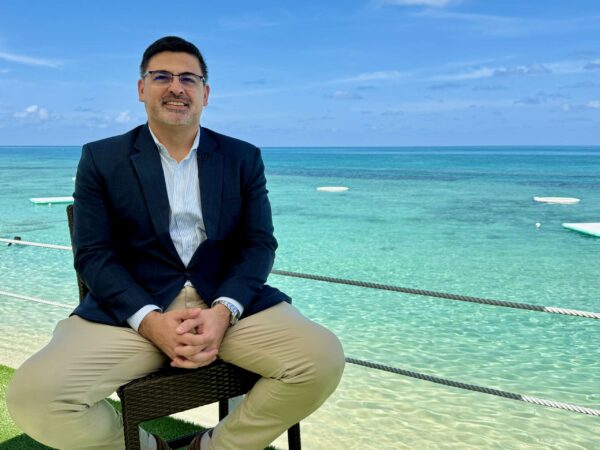
Hermes Cuello, general manager of the Grand Cayman Marriott Resort, said, “The hiring of local talent and having Caymanians in the front lines has been always our objective in our industry and we have been highlighted as one of those model hotels in that aspect.”
He said the Marriott would continue to work on identifying local talent and that it had extensive internship programmes at the hotel and worked closely with the Department of Labour.
He added, “We know that to source every single employee in a hotel locally is extremely difficult, but we need to make more efforts to bring as many Caymanians as possible as well, and that’s our main objective.”
The Compass has reached out to other entities for comment on Myles’ recent statements.