




Third-quarter data from the Economics and Statistics Office reveals rising inflation is being tempered by lower water and electricity prices.
Cayman’s consumer price index for the third quarter in 2025 was just 0.1% higher than the same period in 2024. But those 2025 third-quarter prices were 0.4% higher than in the second quarter, which runs from April to June.
The average CPI index for all items in 2024 came in at 134.3, while in the first nine months of 2025, the average CPI level has been 135.3. That means that, so far this year, Cayman residents have been paying 0.7% more for goods and services.
Residents won’t welcome price rises amid the jurisdiction’s cost of living crisis, yet an average increase of 0.7% is relatively benign compared to the current annualised inflation rate of 3.6% in the UK.
Volatile swings balance out
But Cayman’s staid overall numbers mask much more volatile swings within different segments of the economy.
The biggest increase came in communication, where prices in the third quarter of 2025 were 8.1% higher than in the same period in 2024. The next most significant rise was in education, where average prices rose by 5.2% in the third quarter of 2025, compared to that timeframe in 2024.
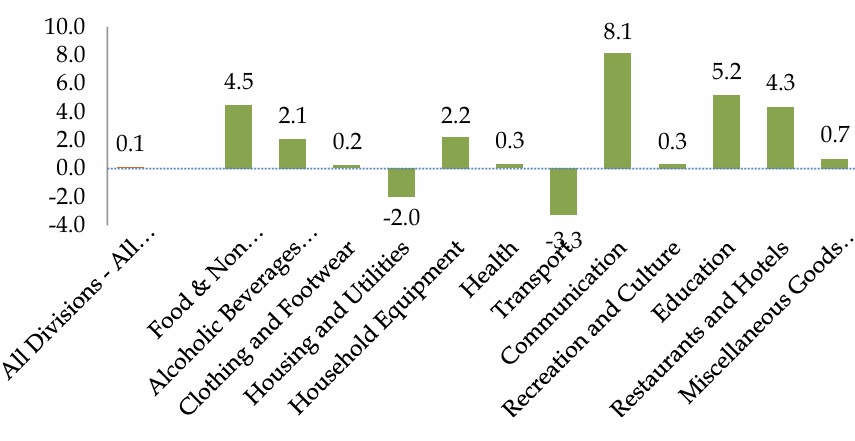
Of course, not everyone in the islands would feel a direct impact from rising education and communication costs. Yet, the fact that prices for food and non-alcoholic beverages rose by 4.5% from July to September 2025, compared to the third quarter in 2024, will have impacted everyone.
But those increases were tempered by some significant price drops. Transport costs fell by 3.3% in the third quarter of 2025 when compared to the same period in 2024. Another fall came in the housing, water, electricity, gas and other fuels segment, where prices were 2% lower in this year’s third quarter compared to the same timeframe a year before.
One external factor helping to push down those last two categories has been the decrease in global oil prices.