


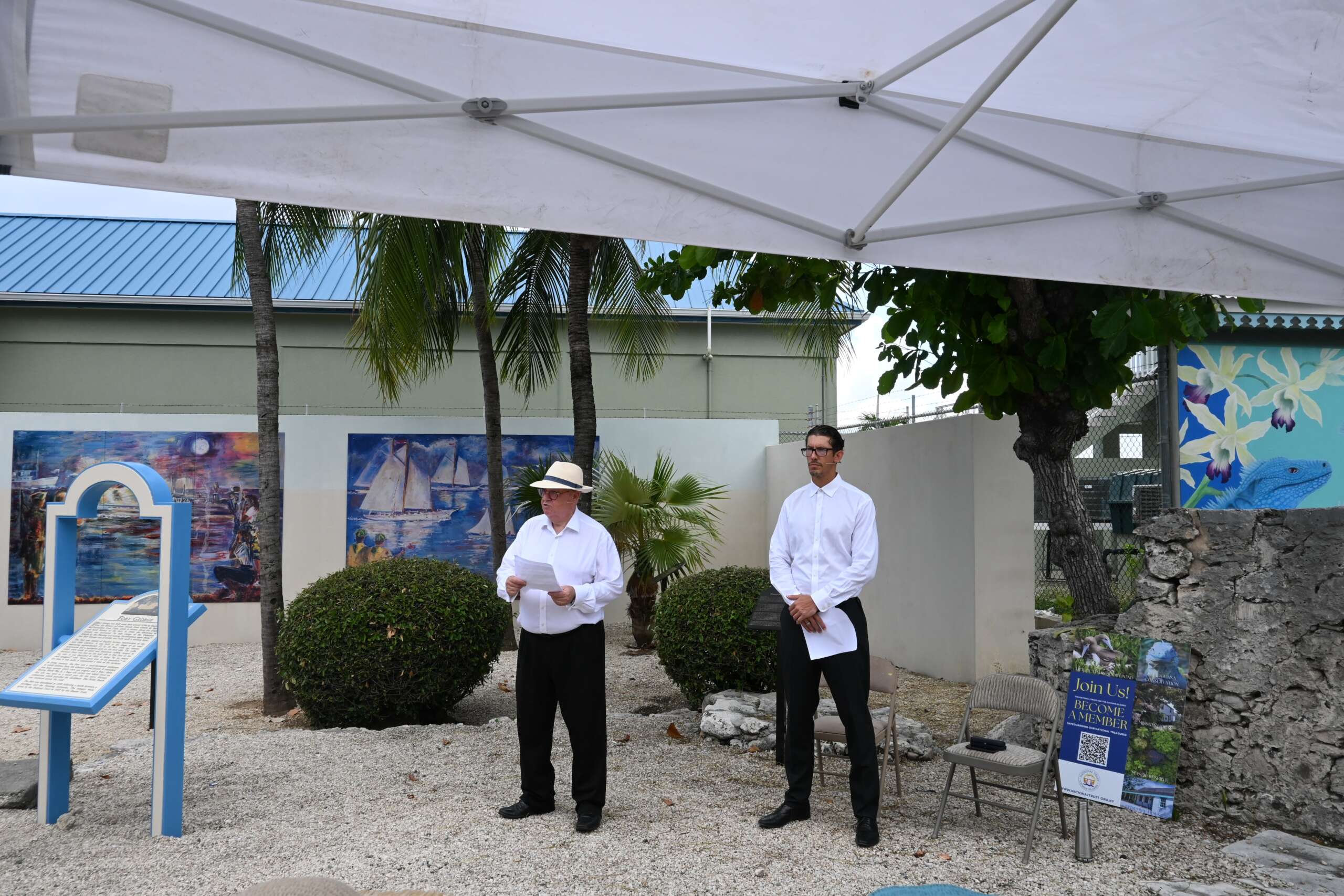
One hundred and ninety years ago, at Fort George on the harbourfront of George Town, British West India Regiment’s Captain Anthony Pack, with Lord Sligo standing nearby, read out the Emancipation Proclamation that declared Cayman’s slaves free.
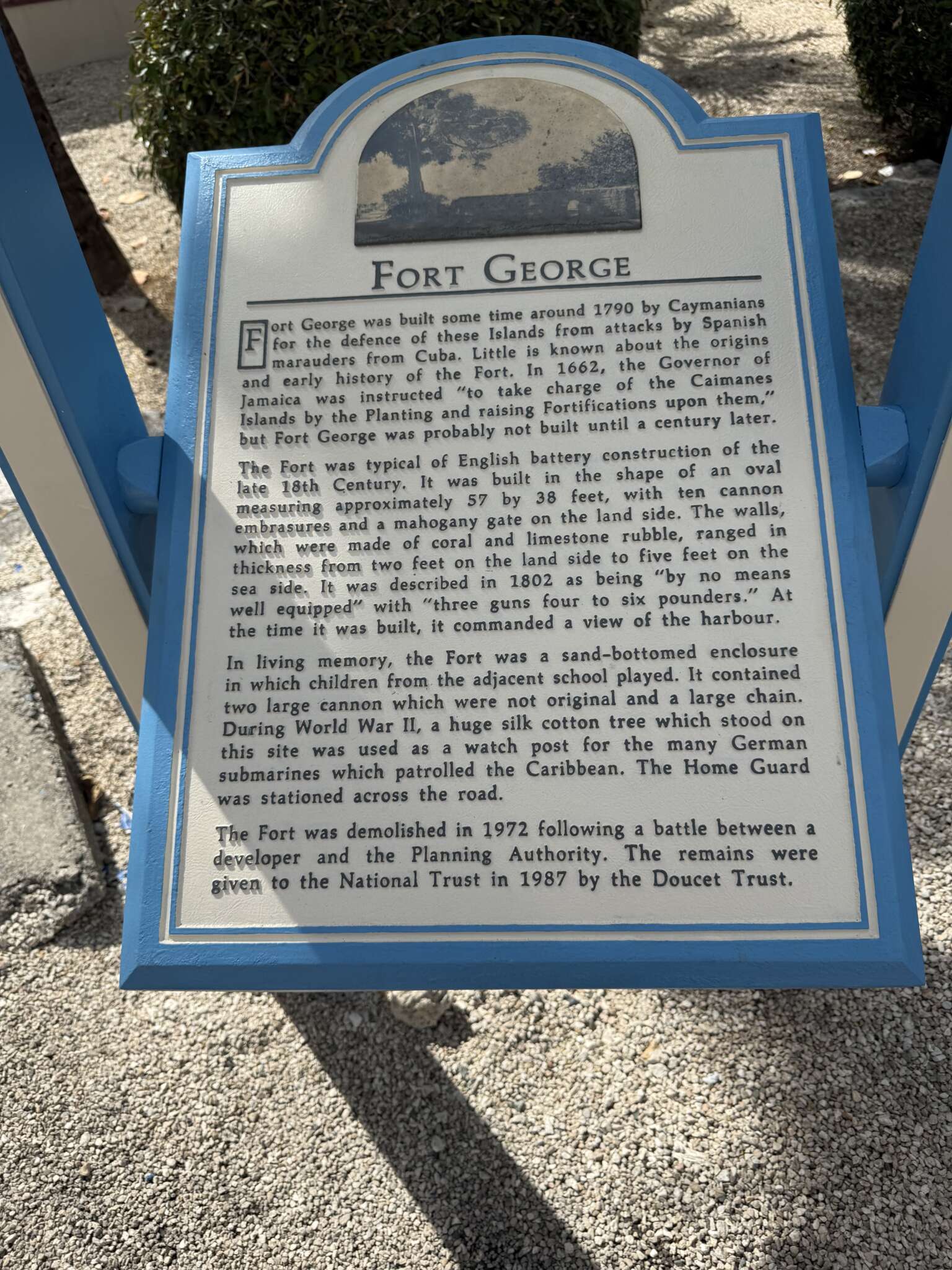
On Monday this week, at Fort George, to mark Emancipation Day in the Cayman Islands, on the very spot where Pack made that proclamation, with the help of the modern technologies of speakers and microphones, that same declaration was again read aloud.
At the request of the National Trust for the Cayman Islands, Adam Roberts, an actor with the Cayman Drama Society, took on the role of Pack, while his fellow actor Adam Cockerill played Lord Sligo – Howe Peter Browne – who in 1835 was governor of Jamaica and the Cayman Islands.
Pack read out the official legal proclamation first, and then Sligo read a separate ‘explainer’ of what it all meant, telling those assembled before him, “You who have been slaves and lately acting as apprentices, are by this decision made absolutely and unconditionally free.”
The proclamation Pack read out noted that under the Slavery Abolition Act of 1833, those who by 1 Aug. 1834, had been slaves should be registered as apprenticed labourers. However, since no official apprenticeship programme for Cayman was ever registered in Britain, all slaves who at the time were working as apprentices immediately became entitled to the “unqualified enjoyment of their personal freedom”, he declared.
Compensation for slave owners, none for slaves
The document went on to state that “owing to the injury” that the former slave owners would suffer having been “deprived of the services of their apprentices”, Parliament would decide what compensation they were owed. No such offer of compensation for the free labour that the apprentices and slaves had provided was forthcoming.
As “the islands of Camanas”, as Cayman is described in the document, were considered “an appendage” of Jamaica, Pack proclaimed, the local owners were entitled to share in the compensation fund of the neighbouring island.
Ultimately, the former slave owners were paid about £19,700 – equivalent to about £1 million today.
Sligo urged former slaves to show ‘gratitude’
In what must have been considered a particularly tone-deaf and patronising comment to the gathered listeners, Sligo told the former slaves that he trusted they would show their “gratitude” to Britain “which has made such great personal and pecuniary sacrifices to ensure your freedom” and be loyal to the king.
Pointing out that the former slaves no longer had their owners to clothe them or give them medical assistance, and that they owned no houses or property of their own, Sligo told them, “Though he who was your master is no longer so, recollect of what service he may be to you. Do not imagine because you are now free, you are independent of one another. No class of the community can be independent of the other.”
He added, “Those of you who have been well treated, recollect that it is now in your power to show your gratitude for past kindness. Those who think that your masters have occasionally felt harshly towards you, recollect that probably you gave great provocation, and show that, if they have been in the wrong, that will not justify you acting improperly.”
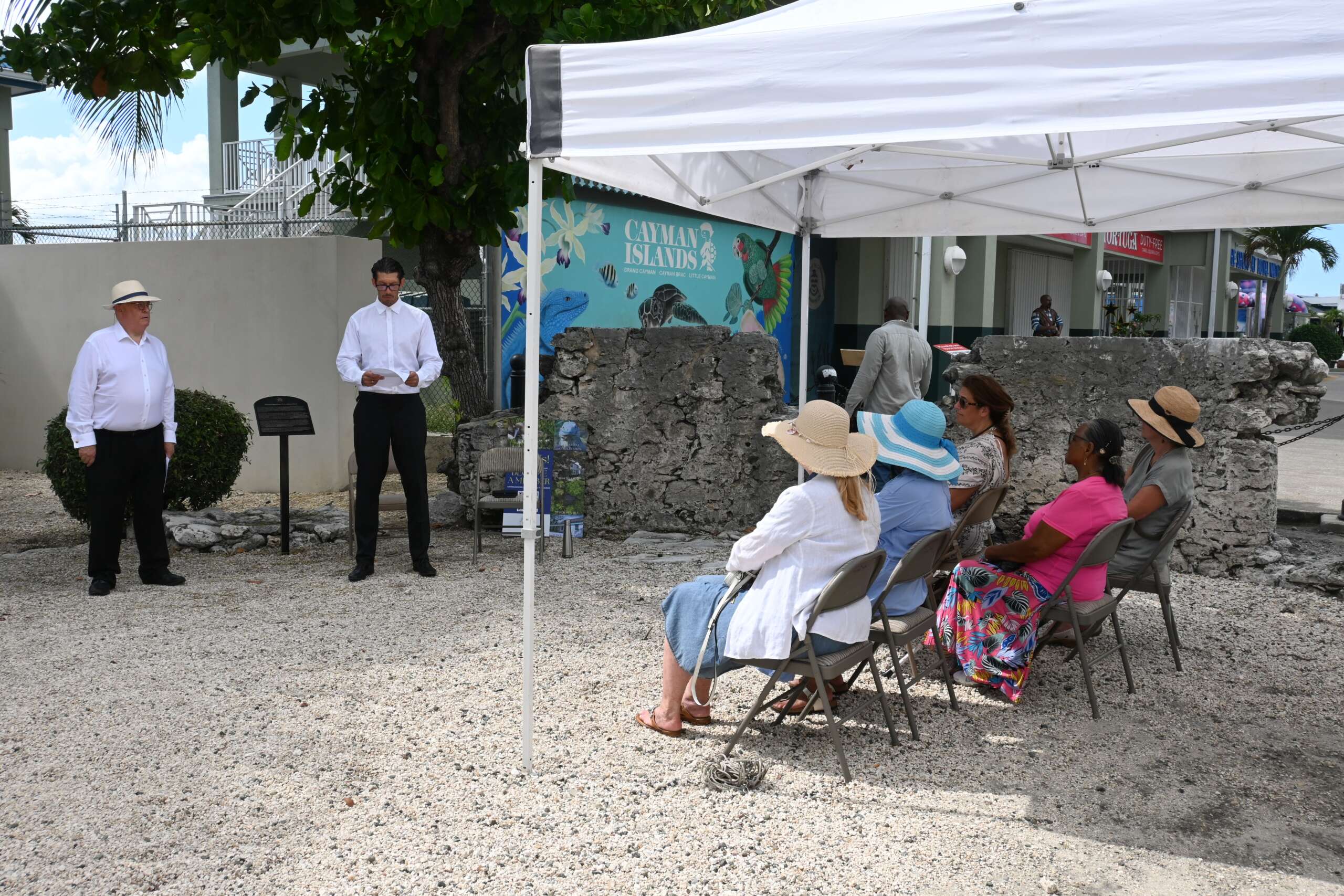
The proclamation and Sligo’s address were both read out four times at Fort George on Monday afternoon, on the hour every hour between 3pm and 6pm, as part of Emancipation Day celebrations in George Town.
Delving into history
Actor Roberts said he was happy to take part in the reenactment, as the event had such historical significance for Cayman and the Caribbean colonies.
The proclamation, he said, appears to indicate that the Cayman Islands was in a “strange position” at the time, because it seems to have “been sort of forgotten about” when it came to the apprenticeship situation.
Cockerill said being able to take on the role of Sligo gave him better insight into Cayman’s history. “You can come along to these types of events and see what’s going on,” he said, “but to play a role in them and make that kind of commitment, you get to be a bit more involved. And it gives you a chance to actually read the material in advance … and understand what’s going on.”
This year was the second consecutive year that Emancipation Day has been celebrated in Cayman since it was announced in late 2023 that it would be reinstated as a public holiday from 2024 after an absence of 62 years.
Emancipation Day was first observed in the Cayman Islands in 1835, before being replaced with the Constitution Day holiday by the Legislative Assembly in the 1960s.
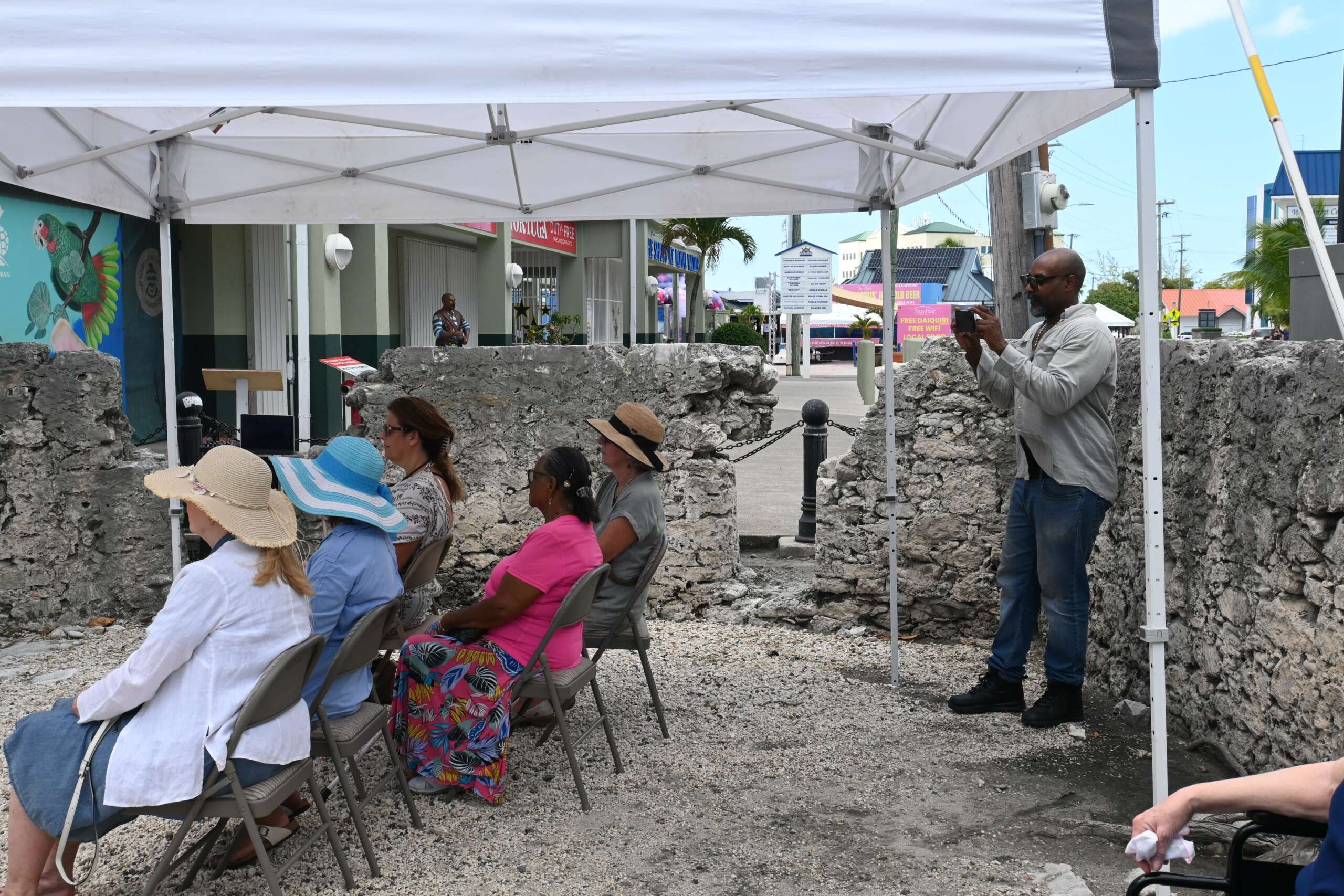
Speaking to Compass Media after the proclamation was read Monday, Stuart Wilson, historic programmes manager of the National Trust, which is the owner and curator of Fort George, noted that the Cayman Islands has a unique history when it comes to emancipation “because there was no apprenticeship period here”.
In other islands and countries where slavery existed, freed slaves had to work for a number of years as unpaid apprentices for their former masters before gaining their full freedom.
Pointing out that Fort George was the site where the original proclamation was read, “I thought [a reenactment] would be an amazing spectacle to put on during Emancipation Day celebrations”, Wilson said.
He added that he hoped this event would help reignite young people and others’ interest in history and national pride.