



– Advertisement –
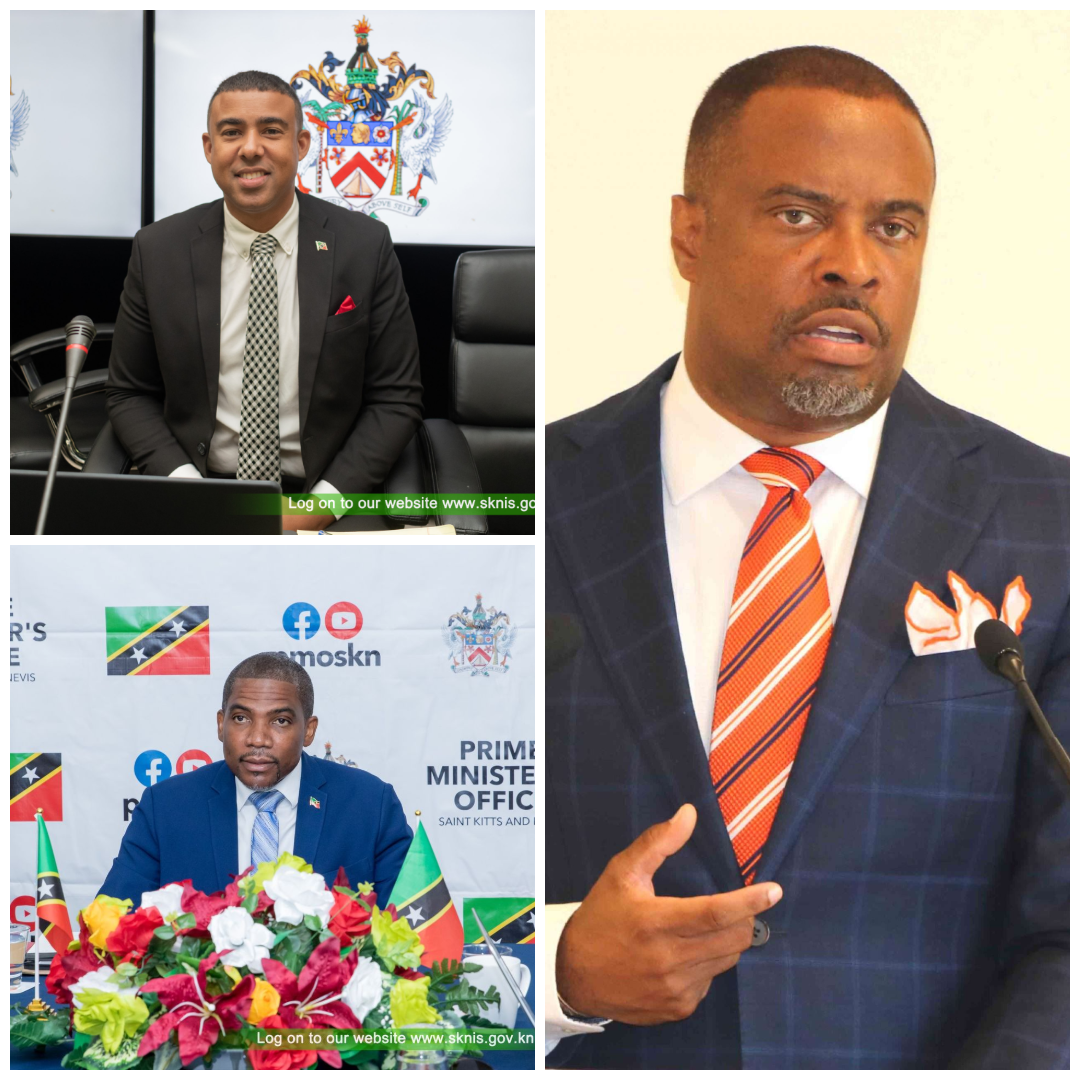
A deepening divide over cannabis policy in St. Kitts and Nevis has brought issues of policing, economic opportunity, and legal reform into sharp focus, as Premier Mark Brantley calls for urgent changes, while Prime Minister Dr. Terrance Drew and Attorney General Garth Wilkin defend a cautious, regulated approach.
Brantley has openly criticised what he describes as a contradiction in government policy, arguing that authorities cannot promote a cannabis industry while citizens continue to face arrest and prosecution for marijuana-related offences.
“I have been concerned about what I am seeing unfolding in the Federation, of people being criminalized for marijuana, while the police continue in their efforts to charge and prosecute people for marijuana,” he said during a recent press conference.
He pointed to what he sees as a growing disconnect between government messaging and enforcement, noting a “disconnect between what the government has been saying in Parliament, in the speeches made by the Prime Minister and others.”
Highlighting the roles of key officials, Brantley noted that the Prime Minister, as Minister of National Security, oversees the police, while Agriculture Minister Samal Duggins has responsibility for the cannabis industry.
“We have mainstreamed this language of a cannabis industry,” he said, suggesting that public messaging has outpaced policy coordination.
Brantley has proposed a 12 to 18-month amnesty on cannabis-related offences, arguing that such a move would remove fear and encourage participation in a developing sector.
“If we are going to develop this industry, let us develop the industry,” he said, adding that cannabis could help diversify the economy and reduce reliance on tourism in Nevis and the Citizenship by Investment Programme in St. Kitts.
He also expressed frustration at the lack of response to his formal proposal.
“I have not yet had a response,” he stated.
Framing cannabis as a natural agricultural product, Brantley downplayed associated risks. “I have never seen a plant kill a man yet… it doesn’t grab anybody, doesn’t kill anybody, doesn’t create any violence,” he said, while calling for “an opportunity, a transition period” to allow the industry to emerge.
However, speaking in the National Assembly on March 31, both Wilkin and Drew pushed back firmly, emphasising that the Federation’s current framework is based on controlled decriminalisation, not full legalisation.
Wilkin described the reforms as “groundbreaking,” noting that they include legal protections for Rastafarian sacramental use, following a High Court ruling recognising Rastafari as a protected religion. He outlined a legislative package that includes the Rastafari Rights Recognition Act, the Cannabis Amendment Act, the Freedom of Conscience Cannabis Act, and the Smoking Designated Areas Act, explaining that part of the process has been public education.
According to Wilkin, 11 applications have already been submitted within the emerging regulated cannabis space. He added that designated consumption areas such as bars, restaurants, and events must be registered with the Chief Medical Officer, and are restricted to approved locations.
He stressed that the Medicinal Cannabis Authority is still being established, and will oversee key areas including doctor training, product testing, safety standards, and the regulation of prescriptions and sales. Until then, cannabis cannot be legally sold outside the developing framework.
Wilkin also warned that full legalisation could expose the country to serious financial risks, particularly in relation to correspondent banking. International financial institutions, he noted, still treat cannabis-related proceeds as illicit, meaning premature liberalisation could threaten the Federation’s financial stability.
“This is why we are pursuing decriminalisation and regulated medicinal use,” he indicated.
Under the current framework, individuals may cultivate up to five cannabis plants in secure private areas, provided access is restricted, particularly from minors. Persons under 18 remain prohibited from possessing or using cannabis, and any legal sale must occur through licensed channels once the regulatory body is fully operational.
Prime Minister Drew echoed Wilkin’s concerns, firmly rejecting the proposed amnesty.
“We cannot send the message… that you can grow cannabis, sell cannabis, just like that,” he said, warning that such a move would undermine the emerging regulatory system.
“If you send a message that one can grow and sell what you want, what you are selling is not properly surveyed,” he added.
Drew also underscored the need to complete the Medicinal Cannabis Authority before expanding access, cautioning that unregulated use could pose serious health risks.
“It’s important that they wait, so you do not sell cannabis under the pretext of a medication without certification,” he said, adding that without proper safeguards, “serious, serious health issues” could arise.
At the same time, the Prime Minister acknowledged the importance of protecting religious freedoms. “We don’t want to see people getting locked up for practicing their faith,” he said, pointing to formal recognition of Rastafarian rights and the registration of places of worship.
While all sides agree on cannabis’s economic potential, the debate now centres on timing and approach. Brantley is pressing for immediate action to unlock the industry, while Drew and Wilkin maintain that regulation, public health protections, and financial safeguards must come first.
The outcome of this policy clash is likely to shape the future of cannabis reform in St. Kitts and Nevis, as the Federation seeks to balance opportunity with oversight.
The debate comes as some high-profile individuals were arrested regarding the matter involving political candidate for the People’s Action Movement, Nubian Greaux.
Greaux who was arrested and charged last week following a raid on his home, claimed that the actions were politically motivated and linked to his affiliation.
“I understand what is going on, and I am cool with it. They have to try their best. To me it’s not about cannabis or the legality or illegality of it. It was a political move. I know they will try their dirtiest tricks, and I will have to be prepared for it.”
– Advertisement –