


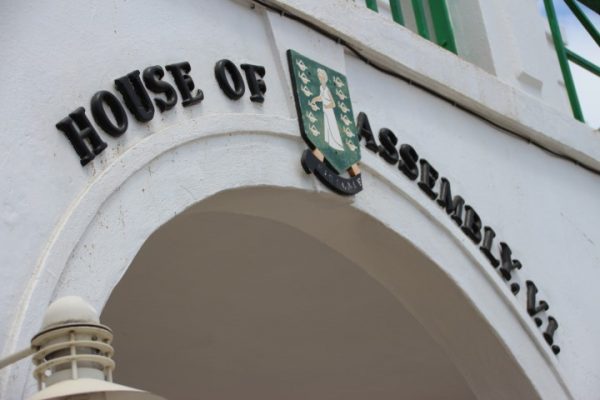



The House of Assembly (HOA) has defended its decision to increase salaries for legislators, following criticism in the Auditor General’s report on the 2024 adjustments.
In a five-page statement issued late at night on September 21, the HOA insisted that “the adjustments to members’ compensation were neither arbitrary nor secretive.”
“They were based on professional advice, tied to a broader public service salary review, and aimed at restoring fairness, parity, and sustainability for the institution of the legislature,” the statement read.
Transparency and oversight
The HOA noted that the review was led by senior public officials under the direction of the Deputy Governor’s Office, with findings produced by PwC Advisory Services Limited. It said the $11.1 million estimate for salary reviews was properly captured in the budget and passed in the House of Assembly.
“There was no secrecy surrounding the adjustments to Members’ compensation,” the statement explained. It added that oversight was provided by the Premier and the Public Accounts Committee (PAC), which requested an investigation into the reported salary overage.
House explanation
In its defence, the House argued that legislators had not received a pay rise since 1995, unlike public servants who benefit from periodic increments. Before the adjustments, the base salary for an ordinary Member was $36,000, which the House described as one of the lowest in the region.
According to the statement, “the adjustment appears large when expressed as a percentage increase because Members’ base salaries had remained unchanged since 1995”.
The statement said the review also sought to restore parity, pointing out that Permanent Secretaries, Department Heads and Managing Directors of statutory boards were earning more than legislators, even though lawmakers carried “higher constitutional responsibilities”.
Findings of the Auditor General
The Auditor General’s report, which was completed in May but only laid in the House in September, found that Members of the House more than doubled their salaries when they voted to adopt the maximum of a new pay scale. PwC had estimated that implementing its recommended minimum range would require about $465,000. Instead, Members opted for the maximum, raising their total emoluments from $681,000 to $1.49 million – a 119 percent increase.
The audit also detailed that allowances, previously a separate part of compensation, were merged into base salaries during the transition. This move significantly raised overall costs and blurred the transparency of how legislators’ pay was structured.
What the HOA left out
Critically, the House’s response made no mention whatsoever of allowances, despite its reported central role in driving up overall compensation. The Auditor General specifically flagged allowances as a cost driver and transparency issue, but the House avoided this subject entirely. This omission leaves a major gap in the official explanation and raises questions about whether the public will ever be provided with a full and honest account of the increases.
The audit further highlighted other issues not addressed in the House’s statement, including the effect of the higher salaries on pensions and retirement benefits. These long-term financial implications were never disclosed when the increases took effect.
Financial impact
The House stressed that legislators’ increases accounted for only 2.9 percent of the $27.7 million salary package across the public service. “The bulk of the funding was directed toward increasing salaries across the wider public service,” it said.
The statement closed by pledging “accountability, transparency, and due process” while assuring residents and the international community that concerns about the increases were being taken seriously.
Copyright 2025 BVI News, Media Expressions Limited. All Rights Reserved. This material may not be published, broadcast, rewritten or distributed.
