



– Advertisement –
Governments in Latin America are losing control over gangs and organized crime, and public trust is collapsing.
Crime is spreading fast, reshaping societies and making once-safe countries like Chile and Ecuador as risky as Mexico, Brazil, and Colombia. Weak government responses have deepened people’s doubts about whether their leaders can protect them or uphold the law.
According to the 2025 Latin America Country Risk Index by Florida International University’s Adam Smith Center, crime now connects security, politics, and economics into one major crisis of state authority. The study surveyed 765 experts and conducted 360 interviews across 12 countries, revealing how deeply organized crime has infiltrated daily life.
Modern criminal groups are no longer just drug traffickers. Mexico’s Sinaloa and Jalisco New Generation cartels, Brazil’s Primeiro Comando da Capital, and Venezuela’s Tren de Aragua now operate across borders and industries—illegal mining, cybercrime, human trafficking, and money laundering.
In some countries, they have built alliances with politicians, police, and business leaders, forming “hybrid sovereignties” where legal and illegal power merge.
Governments have mostly failed to respond effectively. Some are too weak; others are unwilling to confront criminal networks. Many citizens now believe their states have abandoned the basic duty to ensure safety and justice.
Public trust in institutions is at record lows. The report’s “Trust-O-Meter” shows faith in political parties, legislatures, and courts has collapsed, especially in Paraguay, Brazil, and Bolivia.
Corruption and favoritism have made politics seem like “a self-perpetuating machine of distrust.” Even so, most Latin Americans still believe in democracy and see elections as the rightful way to change power, even when they distrust the politicians themselves.
Economic struggles make the crisis worse. Inflation, joblessness, and high food prices continue to rise, while the pandemic recovery has not reached ordinary people. This feeds crime and unrest, creating a cycle where insecurity blocks growth and poverty drives recruitment into gangs. Many young people now see crime as their only opportunity.
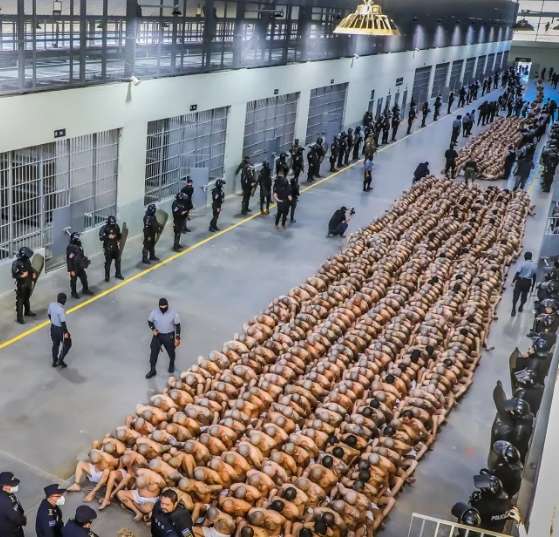
El Salvador stands out. President Nayib Bukele’s harsh crackdown has made the country safer but at the cost of civil liberties. His success raises a question for the region: can security be achieved without undermining democracy?
The report concludes that rebuilding trust and legitimacy is key. Latin American governments must treat organized crime as a political problem, not just a police one. The balance between safety, trust, and economic recovery will decide whether the region rebuilds or breaks apart.
Source: America's Quarterly.
– Advertisement –