


Lindsay Kirk Watler, 55, who was convicted earlier of stabbing Ian Duffell to death in West Bay, was jailed for life, with no possibility of parole for 30 years, on Thursday.
A Grand Court jury had found Watler guilty in February this year, after hearing that his DNA had been found under the victim’s fingernails.
Prosecutors had described how Duffell, 51, had been stabbed multiple times in the yard of a house on Birch Tree Hill Road, and died later in hospital. Two of the wounds – to his neck and chest – were fatal.
The court had heard that on the night of the murder, police had responded to a report of a disturbance at Kelly’s Bar on Birch Tree Hill Road at about 9:30pm, and had told Duffell, who seemed to have been drinking, to leave. He was last seen by police walking along Stadium Drive.
Justice Cheryll Richards, describing the evidence on which Watler was convicted prior to passing sentence, said Duffell had been seen about 10:30pm, running from an assailant, on nearby Swallow Road.
Shortly after, a 911 call was made about a stabbing on Birch Tree Hill Road, where police officers found Duffell bleeding heavily in the yard of a house.
A post-mortem found the cause of death to be “multiple sharp force injuries”, and that the victim had defensive wounds on his hands. Fingernail scrapings revealed DNA material that, according to a forensic expert witness, was 430 trillion times more likely to be from Watler than an unknown person in the population.
In a victim impact statement from Duffell’s sister, Harvon Ebanks, who said she was lost without her brother, she described being “tortured” by the way he had died, and the horrific injuries he received.
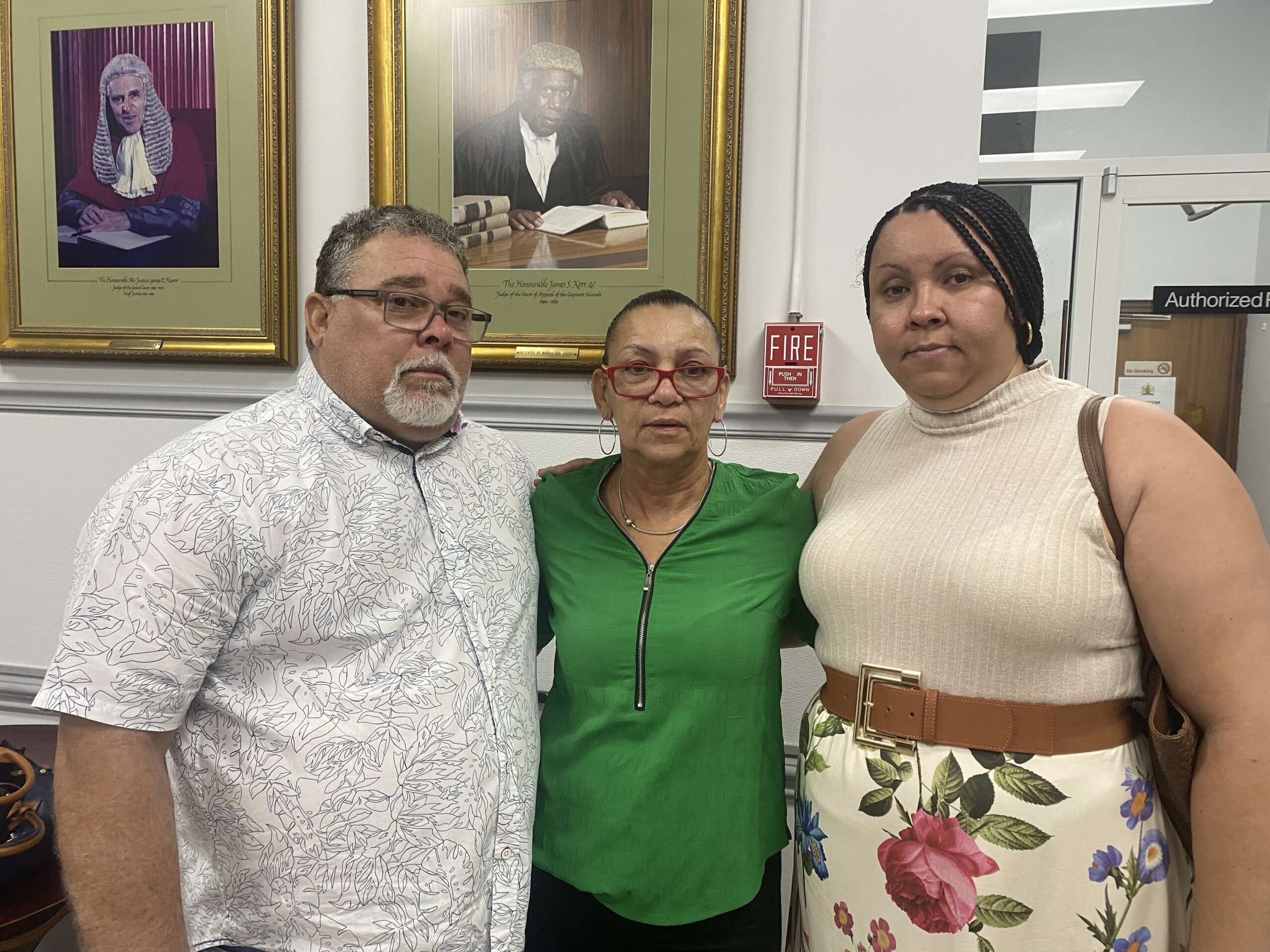
As Richards passed sentence, Ebanks, who was in the courtroom, along with her daughter and cousin, sobbed.
The judge, when calculating the sentence, said she had taken the aggravating factor of previous violent offences, including wounding, into account, as well a mitigating factor that Watler suffers from asthma and chronic obstructive pulmonary disease (COPD) which are likely to get progressively worse in prison. She added one year to his sentence for the aggravating circumstance, and subtracted one year for his health condition – which left her back at the starting point – a minimum of 30 years in prison before he could be considered eligible for parole.
Watler had earlier told the court that his respiratory conditions were worsening because of second-hand smoke at Northward prison.
Richards noted that the murder had been committed one year into a two-year suspended sentence for wounding.
‘Immeasurable harm’
The judge told the court that the harm caused by Duffell’s murder was “immeasurable, in that a life lost can never be replaced. Families are distraught and relatives left to mourn, as do the parents and siblings of Mr. Duffell in this case.”
She added, “This was such a violent assault, in which Mr. Duffell was left for dead, under cover of night. Had he not been found quickly, and scientific evidence secured, his assailant may have remained unknown.”
Noting that Watler had been in custody since his arrest on 29 Nov. 2023, Richards said the 505 days – one year and four months – that he had spent in prison would be deducted from the 30-year minimum term.
Sentence ‘won’t bring Ian back’
Following the sentencing, Duffell’s niece Melissa Rankine-Seymour, daughter of the victim’s sister Harvon Ebanks, told the Compass, “It is in line with what we anticipated, but regardless of the sentence, it will not bring Ian back. His life was taken and nothing that has been done, even though we feel that we have got justice, will bring him back.”
She added, “It’s almost as if two lives have been lost, my uncle … as well as Mr. Watler who has lost his freedom, lost his rights, and we don’t know exactly over what because that was not revealed.”
She said she was not aware of the background between her uncle and Watler, but added, “With substance abuse, anything could have taken place … Obviously, there were grievances between the two of them that resulted in this, in him losing his life.”
In her victim impact statement, Duffell’s sister had said Duffell had become involved with drugs in 1995, when “his life took a downward turn”, after having previously been a fire fighter, a construction worker and a coconut seller in West Bay.
The family thanked the Royal Cayman Islands Police Service and the Office of the Director of Public Prosecutions for finding justice for Duffell.