


The population of Sister Islands rock iguanas on Little Cayman has tripled in the past three years after a cull of feral cats on the island, a recent census of the reptiles has shown.
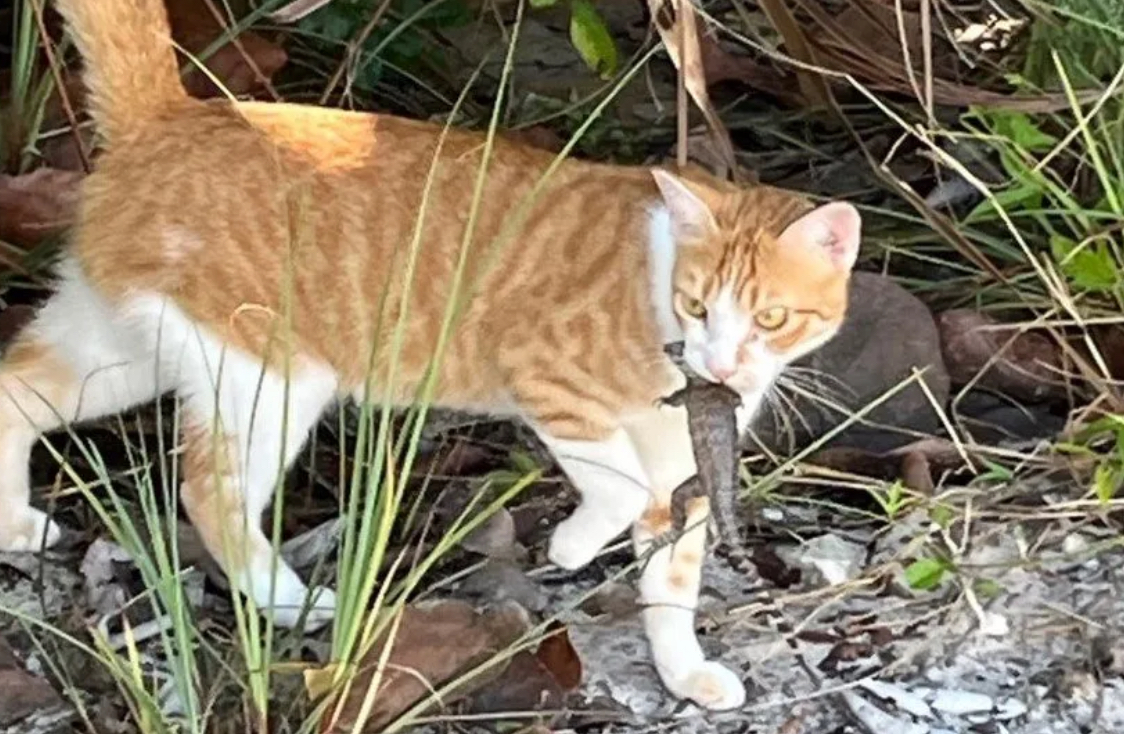
Surveys of the iguana population, which have been carried out on Little Cayman since 2014, had indicated steadily declining numbers. In 2022, the Department of Environment, with funding from a Darwin+ grant, began capturing and culling cats, which had been hunting young iguanas.
“After removal of most of the feral cats on the island, the rock iguana population on Little Cayman has more than tripled in three years, from a low of about 1,000 individuals in 2022 to about 3,500 in 2025,” the DoE noted this week.
The department, in a statement on Monday, said the Little Cayman community had rallied together to ensure 100% of domestic pet cats on the island had been microchipped, vaccinated and de-sexed – the first of the Cayman Islands to achieve this milestone – thus “eliminating the causal link between pet cats and the feral population”.
According to a report on the resurgence of the critically endangered iguana population, 176 feral cats were culled between June 2022 and May 2024.
Prior to the cull, efforts to safeguard the dwindling iguana population had included keeping dozens of young iguanas in cages until they were old enough and big enough to no longer be a target for hunting cats.
DoE scientists involved in surveying the population said in their report that there are now more Sister Islands rock iguanas on Little Cayman than when surveys of the animals first began just over a decade ago.
In 2014, 3,487 of the iguanas were counted in that year’s survey. That number dropped to 2,915 the following year, and to as low as 1,000 by 2019. Numbers started to rebound in 2023, when 1,834 were counted. And this year, a total of 3,501 of the animals, which are unique to the Sister Islands, have been recorded on Little Cayman.
The scientists also noted that the number of hatchlings counted was “significantly higher” than seen in previous years since counting began in 2014 and represents “the highest hatchling proportion observed to date”.
“The increase in the hatchling and sub-adult age classes in 2025 continues to provide evidence that reducing the feral cat predation pressure through removal trapping in 2022-2024 has had a positive impact on hatchling survival in the 2023 and 2024 hatchling emergence seasons,” the report stated.
It added, “The resultant increase in the sub-adult age class observed in 2025 indicates that survival rates of hatchlings from 2022 and 2023 remained high and supported the growth of the sub-adult age class over that time.”
The report cautioned that there is still a population of feral cats in the wild of Little Cayman, and also in Cayman Brac – the only other place in the world where this species of iguana can be found. It noted that “continued management of this threat on both islands is necessary for the continued increase in the younger age classes and the long-term viability of the overall population size”.
It advised continuing to monitor the Sister Islands rock iguana population in Little Cayman every year and using the estimates “to inform conservation management decisions”.