


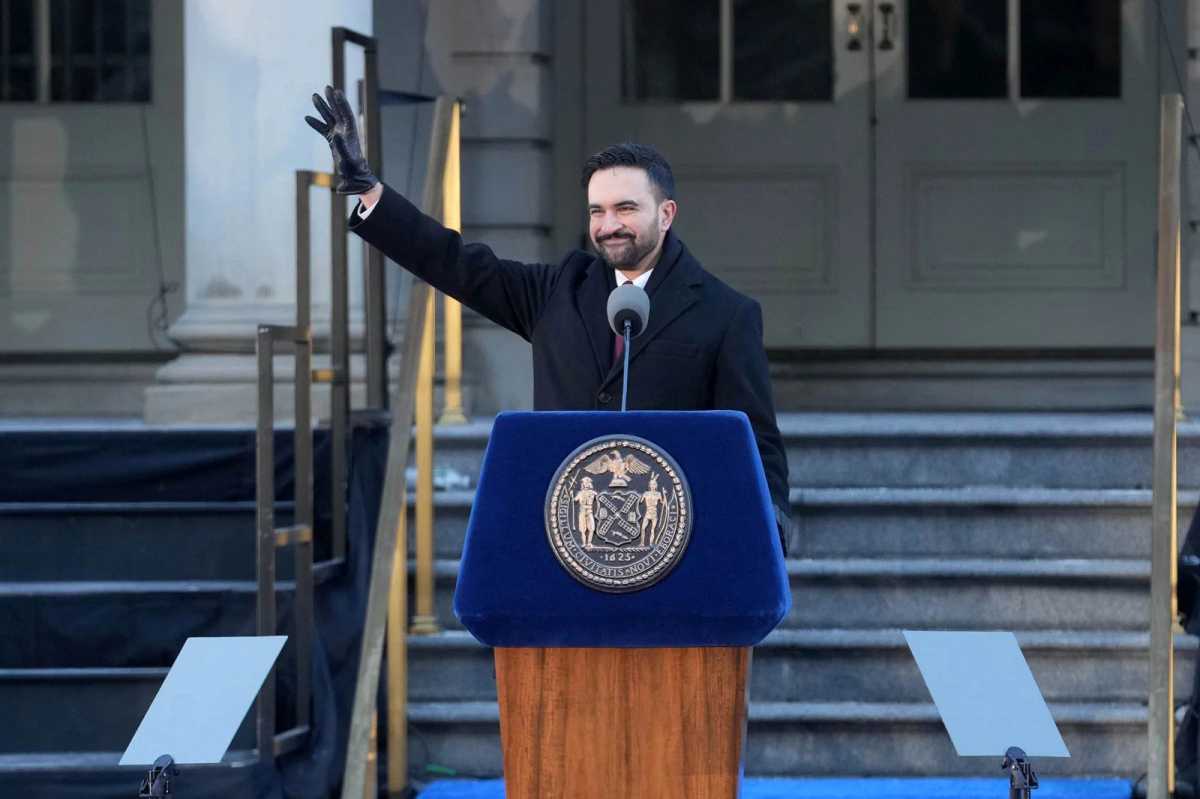
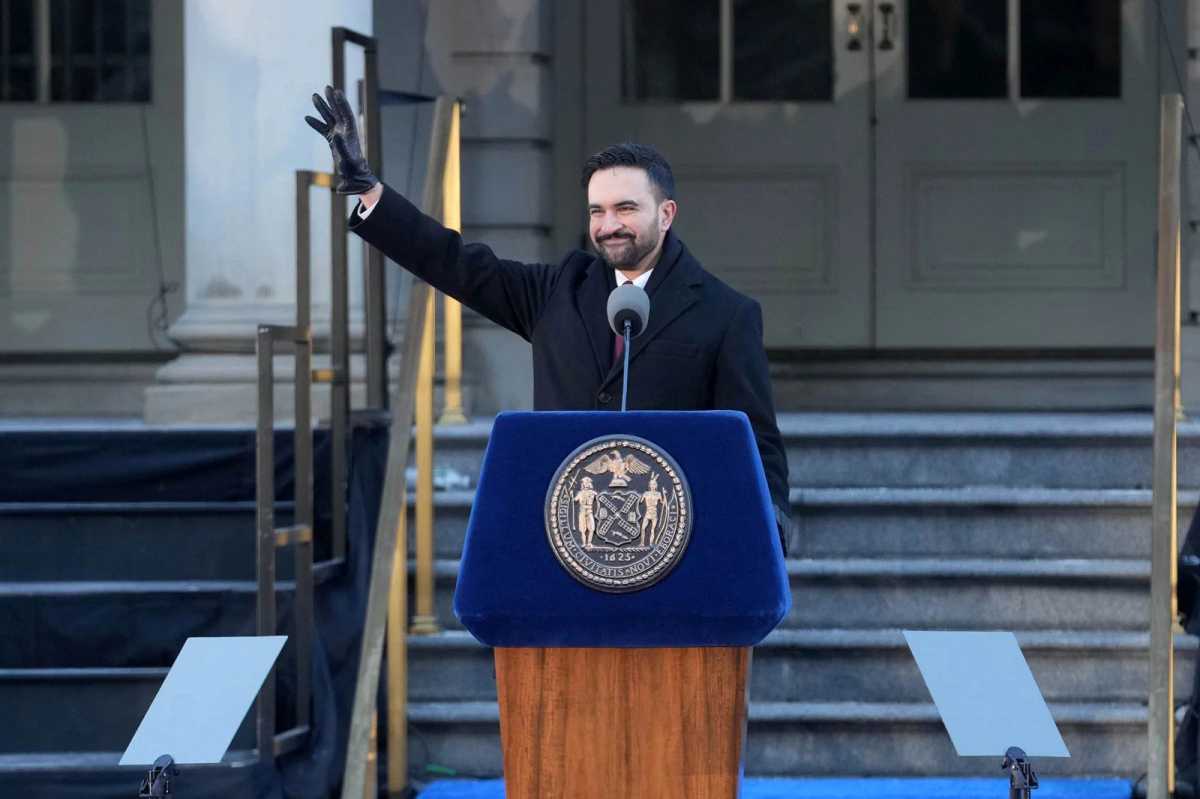
Mayor Zohran Mamdani delivers Inaugural Address on Jan. 1, 2026.
Photo courtesy Office of the Mayor of the City of New York
New York City Mayor Zohran Kwame Mamdani says his first 100 days focused on delivering “bold, unapologetic actions” to protect New Yorkers, with policies centered on health, safety, and dignity for the most marginalized communities.
“Protecting New Yorkers demands action rooted in justice, equity, and care,” said the mayor on Tuesday, April 7. “In our first 100 days, we took concrete steps to increase public health and safety, protect vulnerable and historically disenfranchised communities, and reaffirm New York as a place of refuge and possibility.”
Mamdani said he advanced a comprehensive approach to public safety — “one that prioritizes prevention, transparency, and fairness.”
He said that, in the first three months of his term, actions included driving crime to historically low levels, with record-low incidents of murder and shootings.
He said he appointed the City’s first Deputy Mayor for Community Safety and created the Office of Community Safety; strengthened accountability by releasing body-worn camera footage within 30 days of critical incidents; ended criminal enforcement for low-level traffic offenses involving e-bike riders and cyclists; and took decisive action to defend immigrant communities and uphold New York’s sanctuary city legacy in response to federal threats.
Mamdani said he launched a Know Your Rights campaign in 10 languages, distributed 30,000 flyers through houses of worship, and signed Executive Order 13 to reinforce sanctuary protections by prohibiting ICE from entering City properties without a judicial warrant, strengthening data privacy, and ordering agency audits and a crisis-response task force.
The mayor said he is committed to closing Rikers Island while advancing immediate reforms to ensure humane conditions for those in custody and those who work in the system.
He said actions include: Ordering full compliance with the City’s ban on solitary confinement and Board of Correction minimum standards; appointing Stanley
Richards as Department of Correction commissioner, the first formerly incarcerated person to lead the department; and opening the first Outposted Therapeutic Housing Unit at NYC Health + Hospitals/Bellevue, expanding access to specialized care for the most clinically vulnerable at Rikers Island.
Reflecting on the timeline since taking office, the mayor said that during one of the harshest winters in recent years, his administration mobilized a large-scale response to keep New Yorkers safe and the city operational.
During this winter period, he said actions included expanding NotifyNYC to nearly 1.5 million subscribers; implementing the first-ever 24-hour Code Blue; opening new warming centers; deploying new warming buses; and transitioning approximately 2,000 placements of unsheltered New Yorkers into shelter between Jan. 19 and March 4.
The mayor said his administration prioritized access to care and services that allow all New Yorkers to live with dignity.
He said actions include: Closing the dilapidated 30th Street Shelter, while maintaining overall shelter capacity; opening the City’s first-ever pet inclusive family shelter at Magnolia Gardens and a new HELP Women’s Intake Shelter in East New York; investing $20 million in perinatal and early childhood mental health through the
Strong Foundations Initiative; and launching a $1 million public campaign to promote vaccinations.
Mamdani also said he expanded overdose prevention services and opened new youth health clinics in Brooklyn and Queens, and protected LGBTQIA+ New Yorkers.
The mayor said he established the Office of LGBTQIA+ Affairs to lead policies and programs supporting LGBTQIA+ New Yorkers.
He said he appointed civil rights attorney Taylor Brown — the first openly transgender person to lead a New York City agency — to head the office, marking a historic step toward inclusive leadership.