


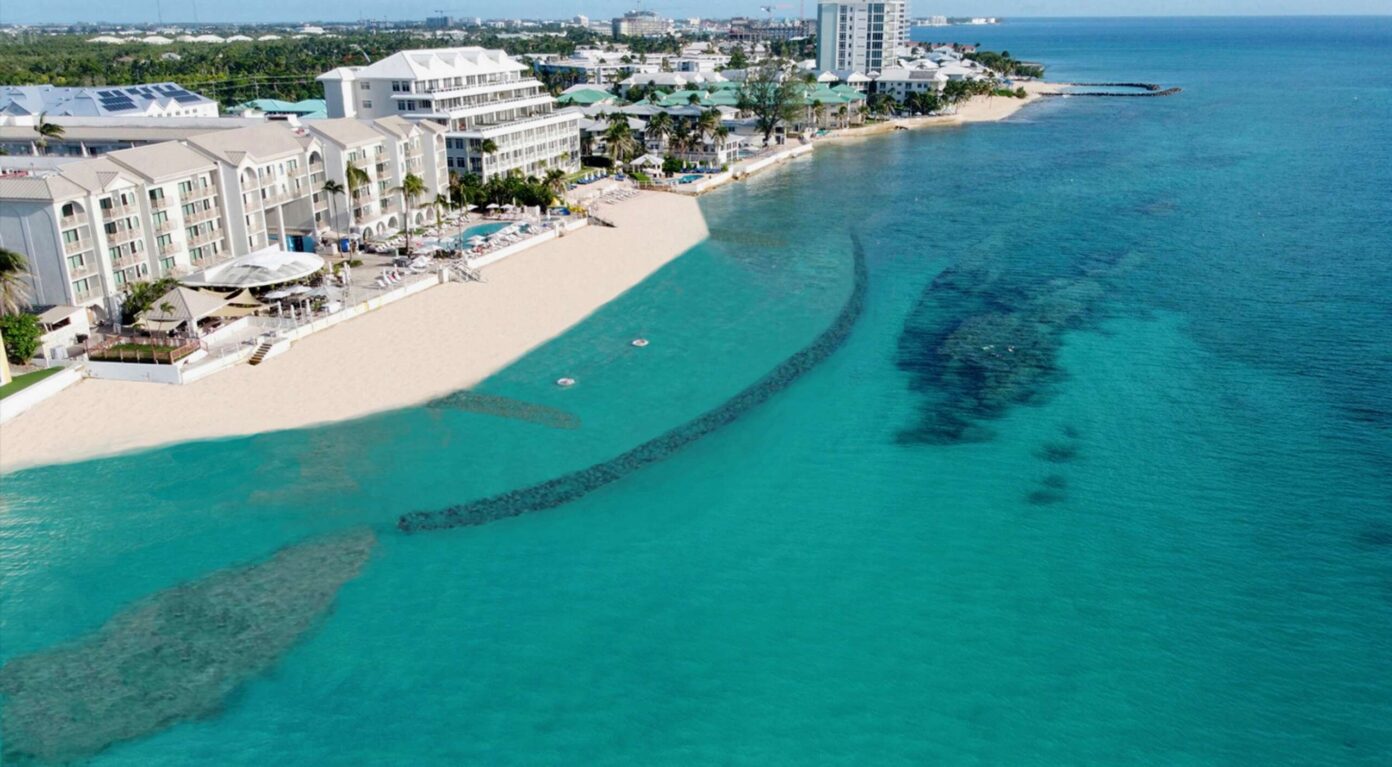
The Grand Cayman Marriott Resort has been granted permission to restore its storm-battered beach in a project that could serve as a test case for a much-wider response to erosion on Seven Mile Beach.
Government leaders approved the plans, which involve depositing up to 8,000 cubic yards of fresh sand on a stretch of shoreline fronting the hotel and two neighbouring properties, at a Cabinet meeting on 6 Aug.
The proposal includes placing two, 135-foot low-profile rock groynes on the shoreline to help prevent the sand from being swept away in future storms.
The resort has lost significant business because of the loss of sand along that stretch of coastline and has even had to stop branding itself as a ‘beach resort’.
Despite citing potential aesthetic concerns around the use of rock structures on the beach, the Department of Environment recommended the project be approved in an advice paper to Cabinet that highlighted increasing urgency around the loss of prime beachfront.
Fears over ‘irreversible loss’
Officials caution that a much-wider replenishment project will still likely be needed to address worsening erosion across a mile-long stretch of beach at the southern end of Seven Mile.
“This has the potential to lead to the irreversible loss of one of the Cayman Islands’ most valuable natural assets,” the report cautions.
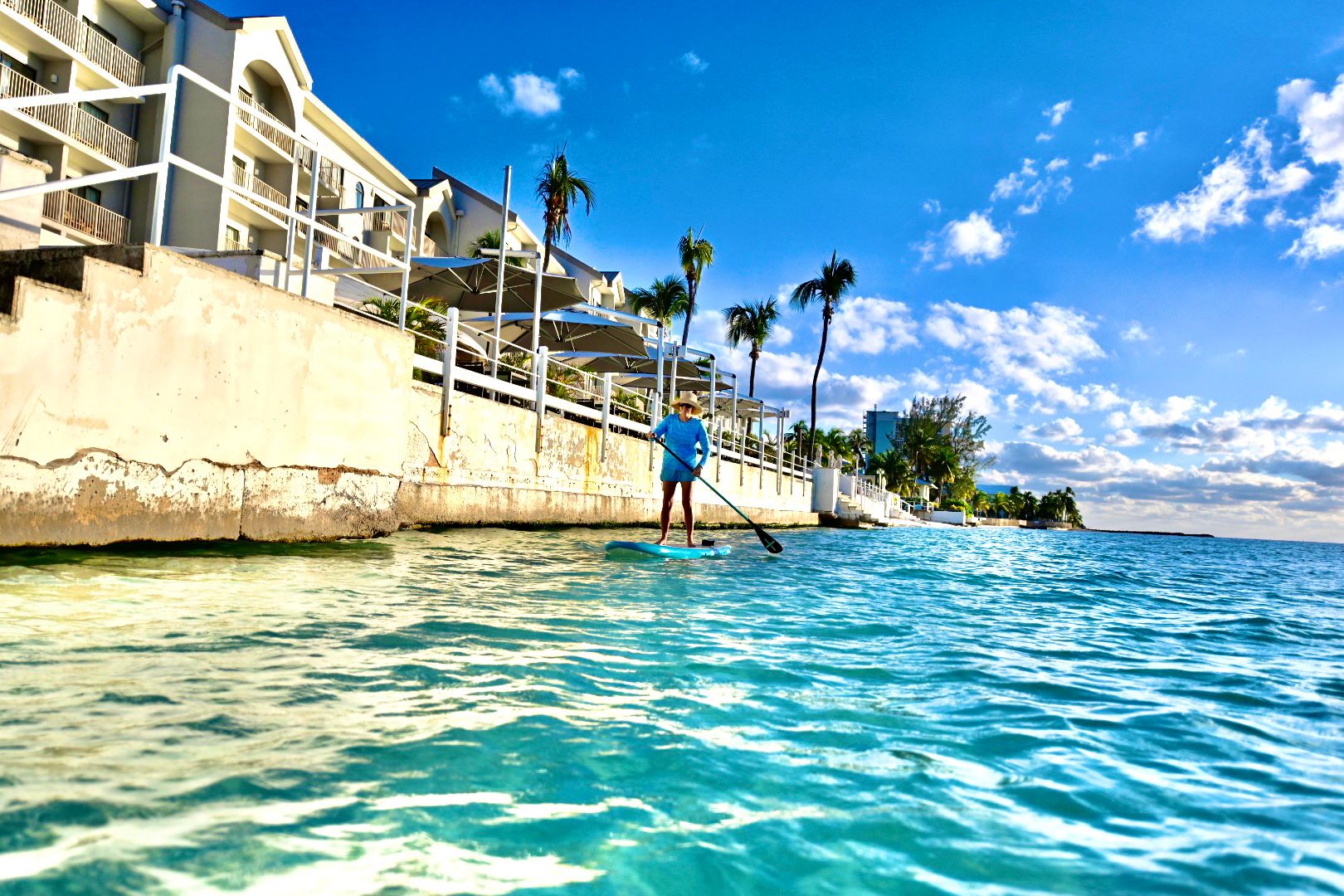
Storm activity, loss of protective reefs, rising sea levels and the impact of sea walls have all contributed to “chronic erosion” and the beach is unlikely to recover naturally, according to the report.
The analysis highlights concern around the “precedent setting” element of allowing physical structures – in this case rock groynes – on Seven Mile, creating potential aesthetic issues if others follow suit.
It also highlights “piecemeal solutions” to beach erosion as generally ineffective, warning they can lead to more problems for neighbouring properties. However, it acknowledges that plans for a wider re-nourishment project have stalled and that hoteliers and condo owners are facing pressure to act.
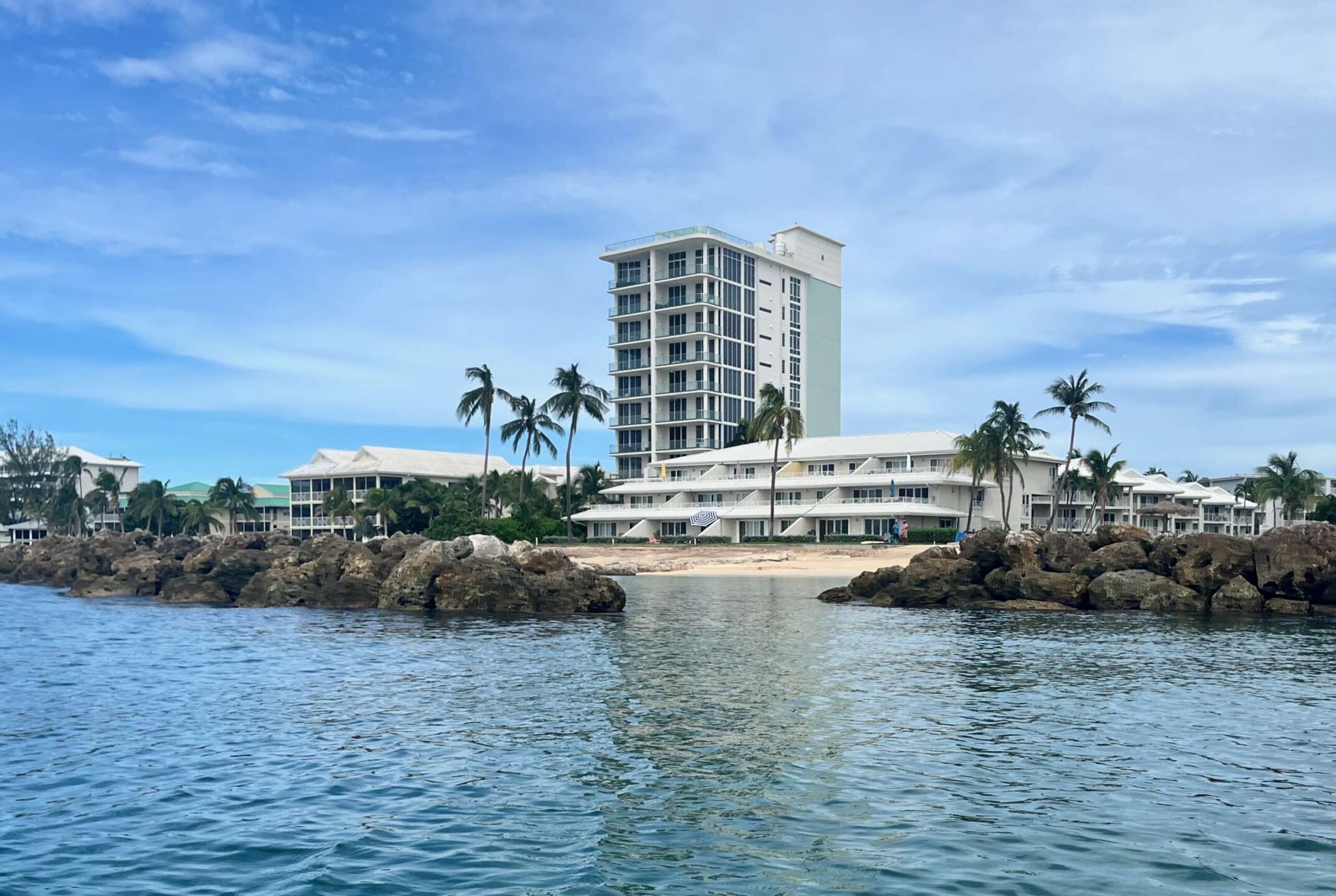
The approval for the Marriott project is conditional on it being flexible enough to be integrated with a wider solution – if and when that moves forward.
The analysis notes, “While it is certainly understandable that individual property owners may feel pressured to act independently, a comprehensive regional beach nourishment project remains the best solution.
“It remains the recommendation of the DoE that beach renourishment should be done as a large-scale project, preferably by the Government as they are best placed to balance the needs of multiple stakeholder groups. Additionally, in general, larger-scale re-nourishment projects also tend to be more stable over time.”
The department adds a note of caution about the potential for setting precedent around the use of hard structures on Cayman’s famously pristine beach. And it suggests the Marriott should be considered an exception rather than a blueprint for neighbours to follow.
“One of the worst outcomes for Seven Mile Beach would be where uncoordinated and suboptimal groynes are placed all along Seven Mile Beach, changing the islands’ image permanently,” the department says.
It suggests Marriott should be considered an outlier because it has been a staple of Seven Mile Beach since the 1980s and the applicant has agreed to make the structures removable if necessary.
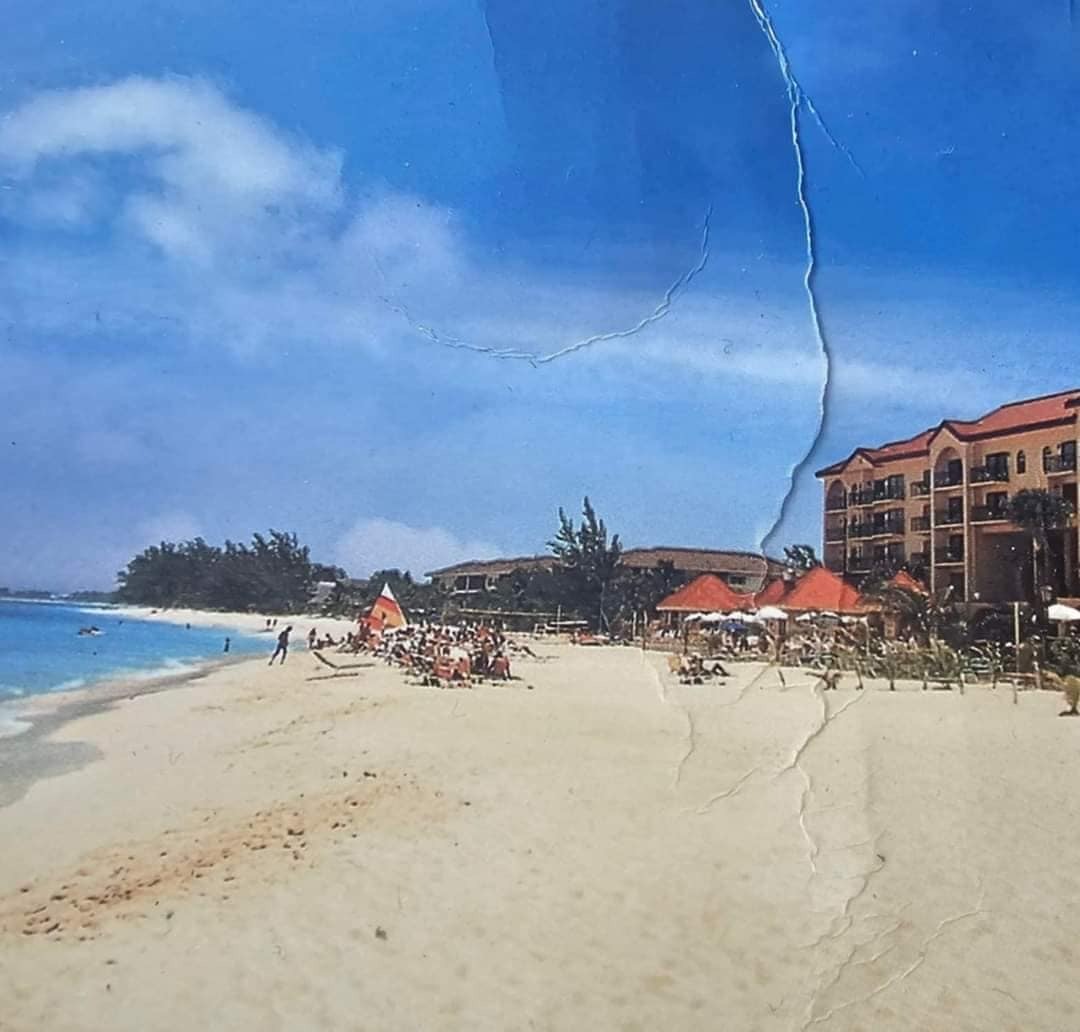
It adds that the hotelier has worked with the DoE to ensure the lowest impact design and agreed to post construction monitoring that could help assess the effectiveness of the project and any resulting impacts on the rest of the beach. It also acknowledges that placing the sand without stabilising structures would likely be wasted efforts.
“The groynes should be considered temporary and part of a time-bound trial,” it states.
“Should a larger Government beach restoration project be contemplated, either with or without additional groynes, the groynes subject to the current proposal could be incorporated, relocated or removed.”
The project aims to use sand excavated from construction projects on Seven Mile Beach. If further sand is required to be imported, it will need to be approved by the DoE.
The plan also includes relocation of 231 ‘reef balls’ on the seabed – a relic from a previous effort to prevent erosion.
Government went out to bid late last year to find a consultant to help design a beach nourishment plan for the southern cell of Seven Mile Beach. The future of that project is understood to be part of ongoing discussions by the new coalition government ahead of the two-year budget plan, which will be presented to Parliament later this year.