


Non-US travelers who are heading to the United States are facing added hurdles as new requirements for travel authorisation under the US Visa Waiver Programme roll out alongside higher application fees and stricter visa vetting for those not eligible for a visa waiver.
While Cayman is not a Visa Waiver Program country, citizens of the United Kingdom and 40 other countries that fall under the programme are currently eligible to apply for an Electronic System for Travel Authorization to enter the United States for business or leisure travel of up to 90 days.
For Cayman passport holders and others who require a visa to travel to the US, the US visa requirements have become increasingly stringent.
US travel policy changes for ESTA applicants
One of the more recent policy changes implemented by the US State Department is with respect to a new photo requirement for ESTA applications.
In addition to possessing a biometric or electronic passport, ESTA applicants must provide a travel photo and pay an application fee. Once approved, the ESTA is valid for two years.
Travellers who previously uploaded a copy of their passport photo instead of an original, recent picture of themselves might have seen their ESTAs cancelled.
“We have been advised that US Customs and Border Protection are cancelling previously approved ESTA applications where the photo that is required as part of the application process is a picture of a traveler’s passport photo,” read a notice from Travel Pros, a full-service travel agency based in Cayman.
The new policy, which began a gradual roll out earlier this year, requires applicants to submit a clear, up-to-date photograph taken at the time of application. Photos must show the full face, head and shoulders on a plain background and must not include sunglasses, hats, masks, filters or edits.
“Please ensure that the photo you provide as part of the application process is an up-to-date original photo, taken at the time of application,” Travel Pros said.
This update brings the web application in line with the ESTA mobile app, which has required users to take or upload an ID photo since its launch.
Travel Pros is advising anyone travelling on an ESTA, including cruise passengers stopping over in the US, to check their ESTA status before departure.
Travellers who already hold valid ESTAs with compliant photos do not need to reapply until their current authorisations expire.
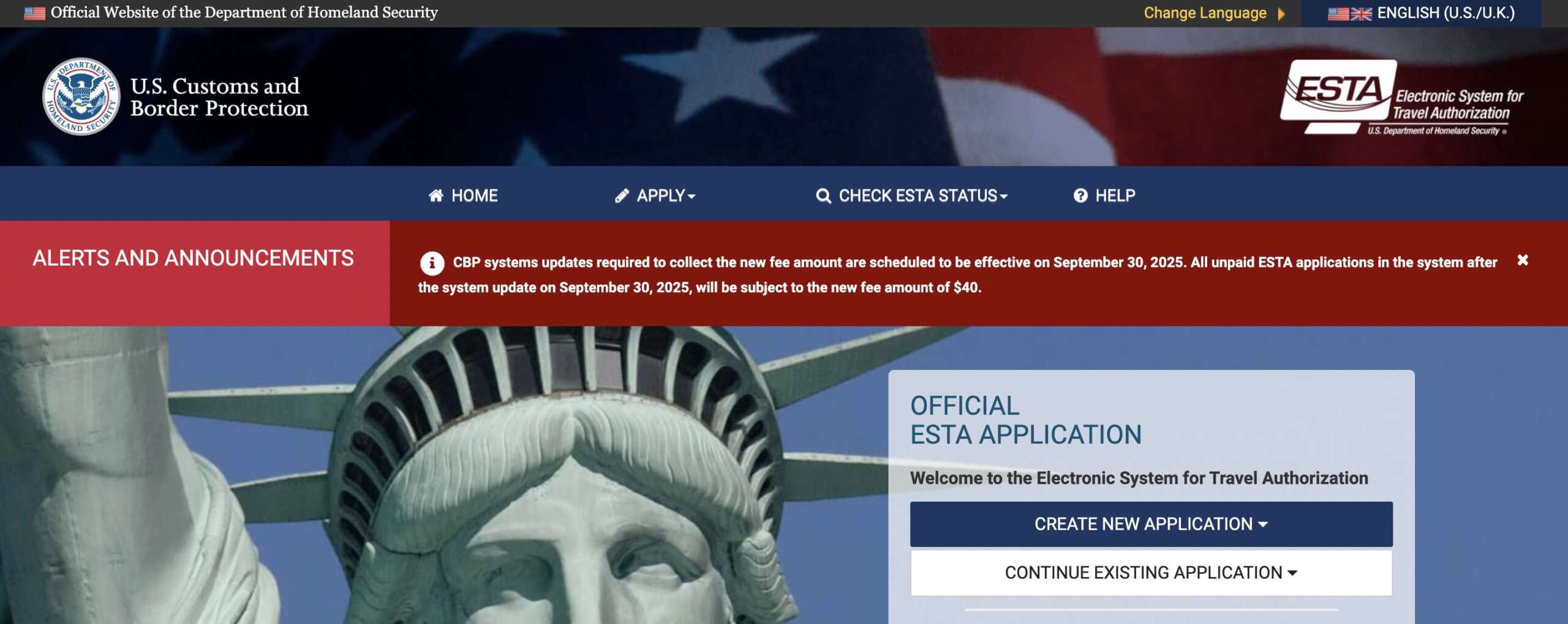
Alongside this change, fees for applying are about to jump. On 30 Sept., the cost of an ESTA will almost double from US$21 to US$40. According to US Customs and Border Protection, most of the increase will be directed to the US Treasury’s General Fund, which was put in place under the ‘One Big Beautiful Bill Act’, with the remainder going toward operational expenses.
More stringent Visa vetting
Not all travelers from Visa Waiver Program countries qualify for an ESTA. Those with criminal records, past deportations, visa overstays or certain travel histories, including visits to Cuba after January 2021 or to Iran, Iraq, Libya, North Korea, Somalia, Sudan, Syria or Yemen since 2011, are barred from using an ESTA and must instead apply for a visa.
The Cayman Islands is not a Visa Waiver Program country, so citizens of the Cayman Islands are not eligible for the ESTA when traveling to the United States and must apply for a nonimmigrant visa by completing the DS-160 application and attending a visa interview at the US Embassy in Jamaica.
Those requiring a visa are navigating a far more rigorous system, which has gotten increasingly stringent under the Trump administration. Visa applicants are facing stricter documentation requirements and longer processing times than in the past. They must also schedule interviews in their country of residence (or Jamaica for Cayman residents) and can no longer book interviews in third countries to avoid long waits.
In August, the US State Department confirmed in a note to the Associated Press that it is now continuously vetting its 55 million visa holders for any signs of overstays, criminal activity or security risks.
The heightened security rules fall under Executive Order 14161, “Protecting the United States from Foreign Terrorists and Other National Security and Public Safety Threats” and may include reviews of social media accounts and law enforcement records both in the US and in applicants’ home countries.
Students and exchange visitors applying for F‑1 (academic), M‑1 (vocational) and J‑1 (exchange) visas have been subject to these new requirements since June.