


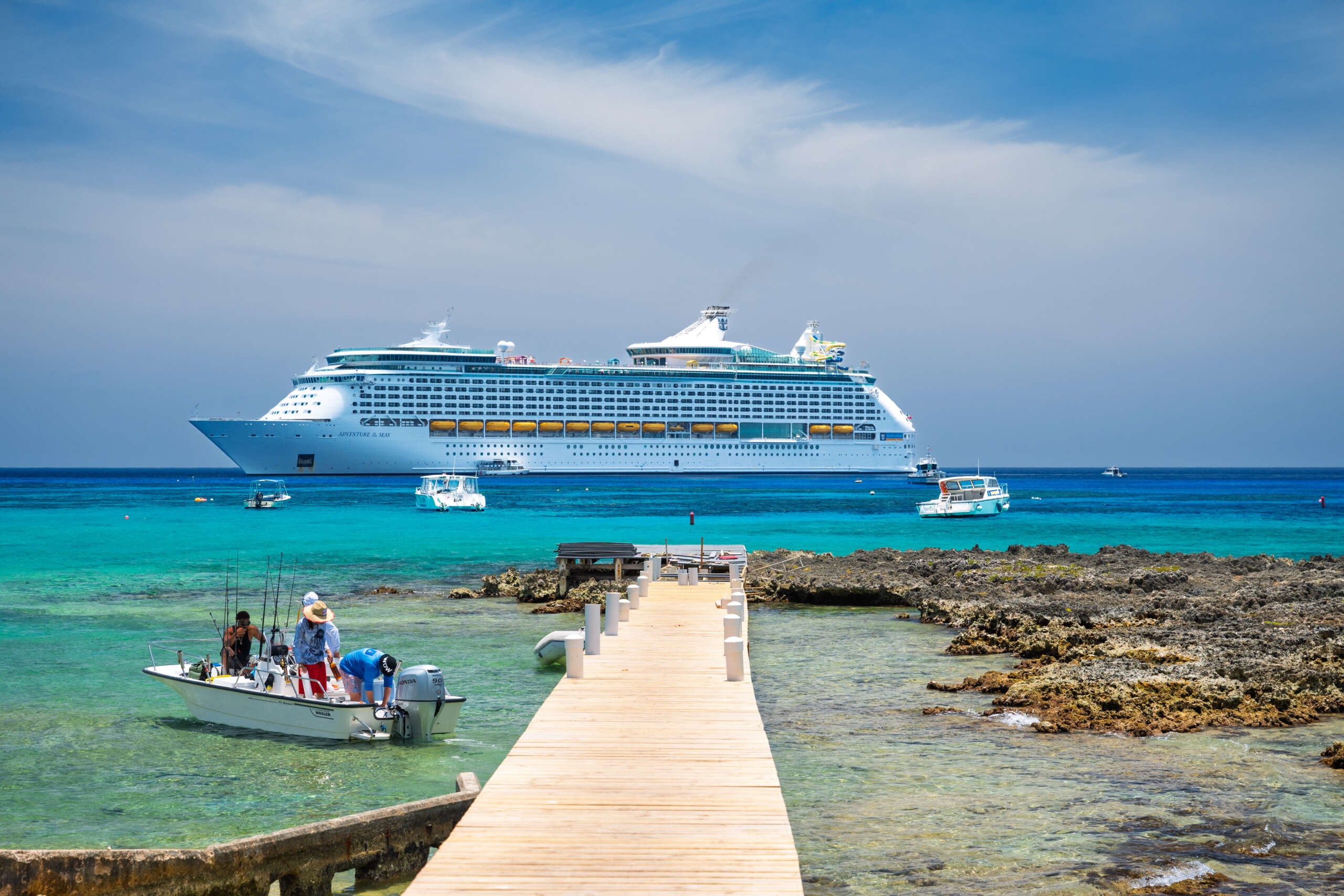
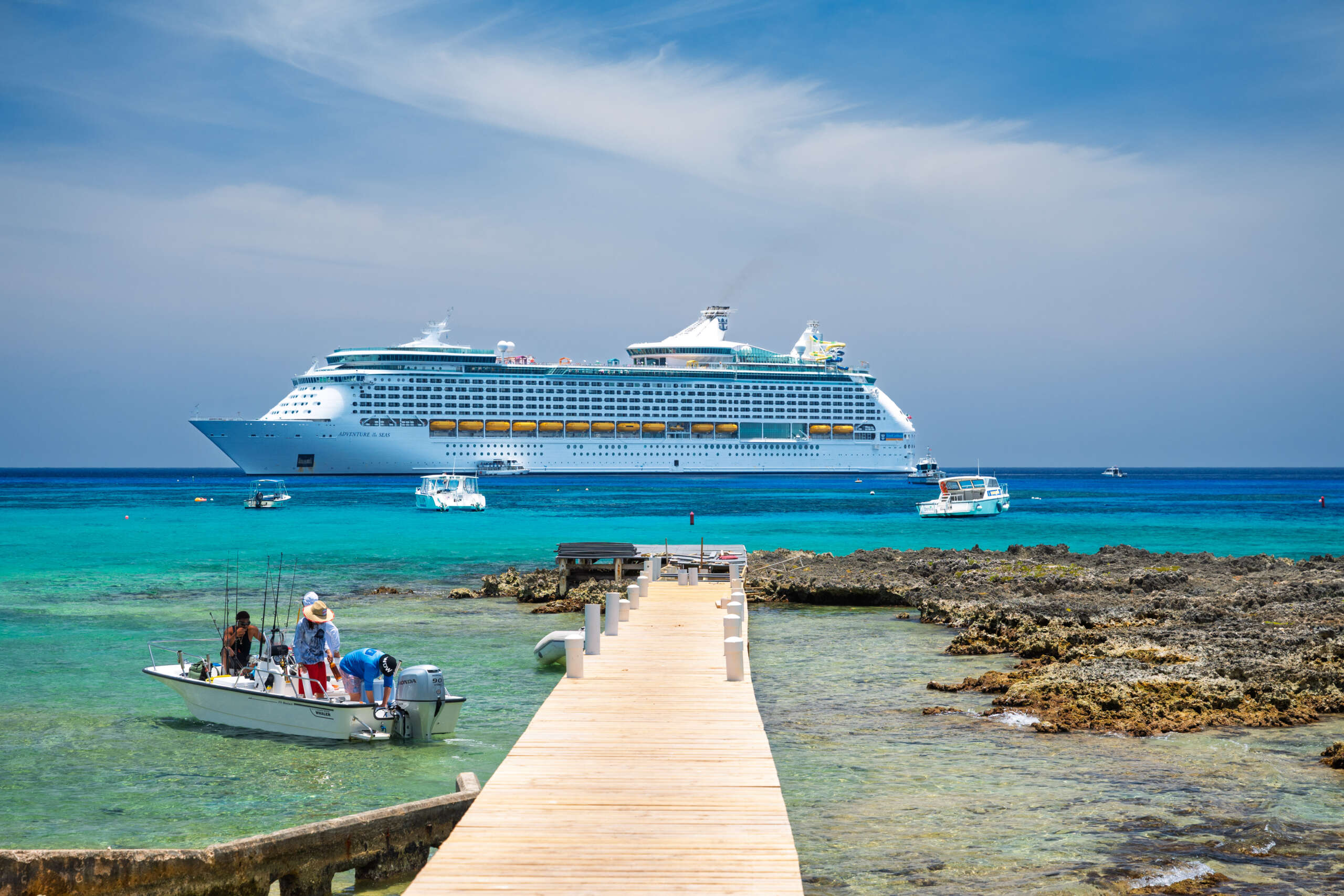
Predictions of the demise of the cruise industry in the Cayman Islands may have been premature, new figures suggest.
Forecasts from the Port Authority of the Cayman Islands, based on advanced bookings from cruise lines, indicate that almost 1.7 million passengers could visit the island in 2027. That would be the best year for the industry since before the pandemic and a significant recovery from the lows of 2024 when less than 1.1 million passengers arrived in Cayman.
The data comes amid one of the slowest periods in memory for cruise tourism on the island and serves as a sign of a silver lining ahead for struggling businesses.
It also suggests that the long-term consequences for Cayman of choosing not to build a new cruise pier may not be as severe as some had predicted.
While it is true, says Roylee Moore, cruise manager at Port Authority, that large mega ships are bypassing the Cayman Islands, the island remains a “demand destination” for many cruise operators and the industry is projected to experience a significant bounce back in the coming years.
“The lack of a pier does affect the numbers significantly, because we’re not seeing the 6,000-plus passenger ships,” Moore acknowledged, suggesting Cayman would be looking at arrival figures in excess of 2 million if it did have a pier.
However Caymanian voters delivered a firm no vote to berthing infrastructure at a referendum in April with some opponents concerned about overtourism, among other issues.
Some of the rhetoric in advance of the public vote had suggested that without a dock Cayman would be out of the cruise industry completely.
And cruise arrivals dipped dramatically after the pandemic reaching a low point last year that continued through this summer. Recently published figures from the Department of Tourism show just 49,129 arrivals in August, the worst performance for that month since 2000, excluding the two years during the COVID-19 era when there were no cruise arrivals during August.
But Moore says there are signs of an imminent recovery in advance bookings both for later this year and over the next two years.
“We haven’t fallen off the radar,” he said.
“On the western run we are still a desired stop. We are not doing as good as we could be with a dock, but we are still holding our own.”
According to Moore, the latest projections show cruise passenger numbers climbing steadily over the coming months and building rapidly over the next few years.
Cruise passenger projections
- 2025: 1,141,239
- 2026: 1,376,467
- 2027: 1,693,484
- Figures courtesy of the Port Authority
The numbers are based on bookings and could increase closer to the time. This far out, Moore projects they are likely around 90% accurate for 2027.
The revival, Moore explained, is being driven in part by the return of mid-sized vessels from major lines such as Norwegian and Carnival.
“We’re seeing some of the bigger ships coming back, Carnival Dream and others, and when you add just a couple of ships like that, the total can change very quickly,” he said.
Redeployments of Norwegian’s smaller ships to the Caribbean are also expected to give Cayman an additional boost.
Even without the mega ships, Moore believes the outlook is bright.
“If we were getting the Icon class and the World America, we could realistically be looking at close to two million passengers a year,” he said. “But even without those, we’re still doing well and 2027 is shaping up to be our best year since 2019.”
Cline Glidden, the chairman of the Port Authority, said a number of factors are helping drive the cruise rebound including instability in Haiti and rising port fees in Mexico.
Glidden, a former tourism minister, added that passenger demand is also playing a role.
“Cayman is still a demand destination for cruise, and I would expect that there is some pressure from travellers when Cayman is not on the itinerary,” he said. “They [cruise lines] are probably responding to a drop in demand.”
Glidden said the definitive choice of the country, via a national referendum, not to proceed with cruise berthing facilities had given the Port Authority the clarity it needed to proceed with upgrades to the existing infrastructure.
The authority is now seeking planning approval for improvements including shaded awnings and water stations between the Royal Watler Pier and the South Terminal. Modifications to the dock are also being designed to allow passengers on double-deck tender boats to disembark from both the upper and lower decks.
Negotiations are underway with cruise lines to enable shore-side security screening, which would allow multiple security lines to operate simultaneously rather than a single-entry point aboard the ship. The goal, Glidden said, is to reduce wait times, increase efficiency, and improve the overall passenger experience.
“With the clear instruction to not move forward with the port, we are able to go ahead and do what we need to do to make the best of the facilities we do have,” he said.
Glidden cautioned, however, that cruise’s gain may be cargo’s loss, with port officials struggling to manage both industries in a limited space. Government estimates suggest the existing cargo port has a lifespan of less than a decade at current import volumes, a timeline that could shorten further if cruise activity remains high, reducing the time and space available for handling cargo ships.
The Port Authority has already produced a strategic outline case for a new dedicated cargo facility, with Breakers identified as a possible location.