


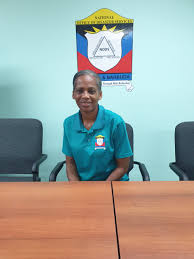
By Deslyn A Joseph
National disaster officials are currently auditing the results of the Caribe Wave 2026 tsunami drill, with a focus on refining emergency protocols and expanding tsunami-ready designations across the twin-island state.
Over the weekend, the Public Relations Officer for the National Office of Disaster Services (NODS), Midcie Francis, told Observer Media that while the final evaluation data is still being processed, the agency has identified key successes and ongoing technological challenges.
Regarding the extent of the participation in the exercise, Francis noted that the final count for the evaluation is still being finalized. While she acknowledged that the number of participants involved in the evaluation was close to 5,000 people, she clarified that a confirmed figure for the entire exercise was not yet available.
“I think it’s 4000 something close to 5000,” Francis stated regarding the evaluation pool, adding that because the team has not yet reviewed what happened collectively, she prefers to speak in rough terms rather than providing a direct total.

Despite the pending data, the exercise highlighted progress within a UNESCO-coordinated “tsunami ready” project. To achieve this designation, districts must meet specific criteria, including the implementation of tsunami plans, the erection of signage, and the execution of regular drills.
“While St. John’s and several other districts have already secured this status, we are currently working to include more areas, such as Barbuda. This expansion involves close collaboration between the Barbuda Council, volunteers, and district disaster coordinators,” Francis explained.
The drill also tested the nation’s multi-layered alert system and the Antigua and Barbuda Meteorological Office serves as the national focal point, receiving notifications from the Pacific Tsunami Warning Center to trigger public alerts.
During the exercise, NODS utilized the Common Alerting Protocol (CAP) app and radio interrupters, though Francis admitted that challenges with the app persist.
The response also brought emergency services on stream, including the Antigua and Barbuda Royal Police Force (ABRPF), Antigua and Barbuda Fire and Rescue Services (ABFRS), and the Antigua and Barbuda Red Cross.
Looking toward future infrastructure, Francis revealed that NODS is seeking to implement standing community sirens, similar to systems used in Japan and Anguilla.
“Unlike vehicle-mounted sirens, these would be permanently erected at strategic points within communities,” she added.
In terms of participation, Francis observed a shift in the demographics of this year’s drill. While some schools reportedly withdrew at the last minute compared to the previous year, there was a notable increase in workplace participation across the island. Francis concluded by urging all organizations to ensure their disaster plans are comprehensive.
“I want to encourage schools and workplaces to ensure that their disaster plans cover tsunamis,” she noted, adding that institutions should implement their own central alarm systems to supplement national alerts.