


By Deslyn A Joseph
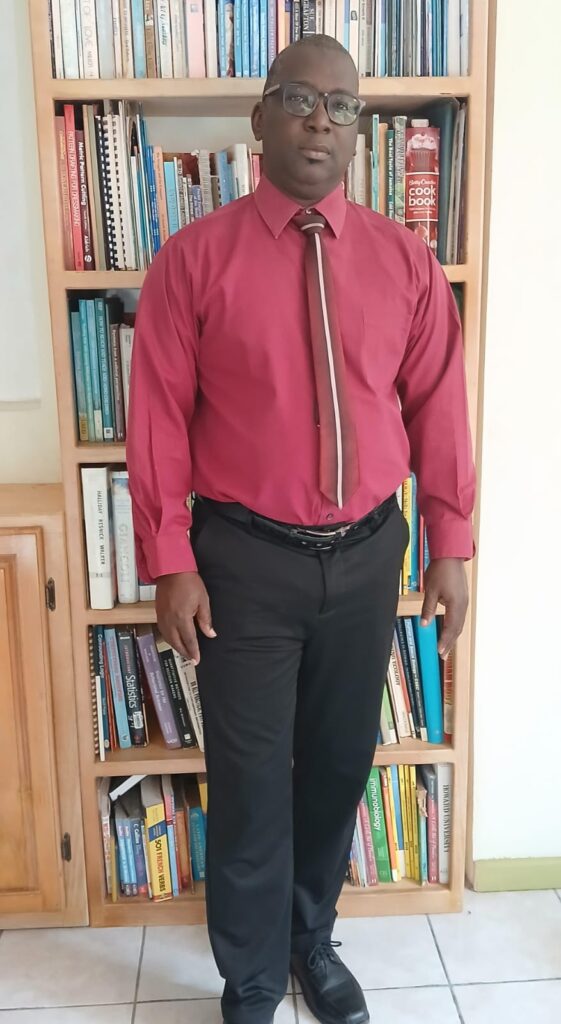
To celebrate the International Day of Women and Girls in Science, Observer AM hosted a powerful dialogue between two pillars of the Antiguan educational landscape yesterday: Dr. Karen James-Scholl, Associate Dean of Curriculum and PhD Microbiologist, and Anthony Spencer, Education Officer for Curriculum in Natural Sciences on the Ministry of Education, Science and Technology.
The conversation highlighted a unique local trend that while global data suggests women remain under-represented in Science, Technology, Engineering, and Mathematics (STEM), Antigua and Barbuda is seeing something different.
Dr James-Scholl opened the segment by citing United Nations (UN) statistics showing that while more women enroll in higher education globally, only about one-third enter science-related fields. Locally, however, Spencer revealed a different reality.
“In Antigua and Barbuda, females outnumber men about four to one as science educators. At the Dr Alister Francis Campus, slightly more females are currently pursuing science degrees and there is no significant barrier to women entering science in our local context,” he stated.
Despite the high enrollment of women, both experts agreed that the image of a scientist needs a radical makeover. Spencer shared a story about his female colleague, noting that when primary school students are asked to draw a scientist, they usually draw an elderly man in a lab coat.

“She would then return with an image of a lady in high heels, well-made up. The students could not link that image with a scientist as we tend to see science as an isolated activity in a laboratory, but nature is the biggest laboratory,” he explained.
Dr James-Scholl echoed this sentiment, emphasizing that representation at the highest levels of research and administration is the next frontier. “I hope seeing women in leadership signals to students that anything is possible. We need to ensure that women and girls know that nothing is off limits,” he noted.
The discussion turned to the medical necessity of having women at the research table with Dr James-Scholl arguing that female researchers are vital to ensuring that women’s health issues receive proper advocacy and funding.
“Whoever I am, I’m not saying male researchers only look at men’s problems; but advocacy matters,” James-Scholl explained. “If you don’t have a woman there, a woman’s needs are not necessarily going to be the main focus of research. We need female researchers in the Caribbean because issues in the Caribbean are not going to be at the forefront of scientists in other parts of the world,” she added.
Both guests, who shared a “full circle” moment as graduates of the Ottos Comprehensive School, credited early exposure for their success. Dr James-Scholl recalled her first science fair, an initiative of the Ministry of Education that sparked her lifelong passion for microbiology.
Spencer concluded by reminding listeners that science is an equal-opportunity field in Antigua and Barbuda, citing the “Girls in STEM” workshops and environmental science initiatives as key pathways for the next generation. “If it’s not enjoyable, it’s not worth pursuing. The more we expose persons to the practical world of science, the better,” Spencer remarked.