


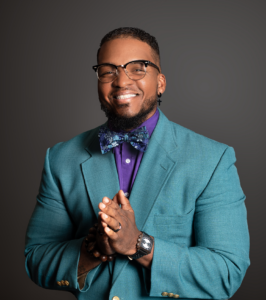
 In his biweekly column, Langley Shazor speaks to issues important to men within the territory.
As we have wrapped up another Carnival season (for St. Thomas), I know that there are elements of the culture and heritage in the territory that should give us a great sense of pride. In the context of loving who we are, what we have overcome, man-made and natural disasters in modern history, along with emancipation and the trials that came with slavery. I recently talked about being built for anything, that we are and can continue to be resilient, though we shouldn’t have to be constantly. We can be proud of who we are and what we represent.
However, like the conversation between arrogant and confident, a fine line exists between having pride and being prideful. We must be careful not to cross the threshold into becoming difficult to deal with, unwilling to listen, unwilling to learn, and thinking too highly of ourselves. This is not only a slippery slope but also perilous territory. Many of us have heard the phrase, “Pride comes before the fall.” History is littered with leaders and civilizations that have succumbed to their own hubris. I have seen this firsthand in my life and in the lives of others. We were, in fact, humbled and brought back “down to earth.”
A good friend of mine once told me that ego stands for “Edging God Out.” Now, we won’t get into the weeds of religion in this column, but suffice to say that whatever you believe, it is typically rooted in being humble and serving/supporting/helping your fellow humans. However, to the point of the quote, when you begin to believe solely in your own ability, skills, talents, education, etc., you unknowingly begin your descent into the valley of unnecessary struggle and catastrophe. Life, the world, the universe, karma, or whatever label you want to give it, has an interesting way of reminding us that we are all interconnected and that we all need each other.

Pride is often defined as “a feeling of deep pleasure or satisfaction derived from one’s own achievements, the achievements of those with whom one is closely associated, or from qualities or possessions that are widely admired.” [Oxford Dictionary]. We can see that it is a collection of things and people that give us a sense of self-respect, gratitude, and self-admiration. This is directly related to the quality and quantity of one’s self-esteem. Understanding your worth without being arrogant is a high character trait that allows you to step into spaces and connect with people willing to help you achieve your goals and dreams. Notice that it relies on the collective knowledge and experience of others as well as yourself to plot a course befitting of the destination that has been determined.
Prideful, by contrast, is quite literally being full of pride. If you are full of something, you don’t have room for anything else. Those other attributes that get dismissed are often empathy, compassion, accountability, gratitude and other positive character traits. This equates to being “full of yourself.” Being prideful is idolatry of self, putting yourself above all else. I want to draw a distinction here because some may say, “I thought we have to put ourselves first.” You all have heard me talk about not being able to pour from an empty cup and that you have to take care of yourself first in order to serve others. The difference in context is that you are putting yourself first with the explicit intention of being able to have a greater impact on those around you. The other is only being concerned with yourself and what you have to gain, often stepping on the very people we are called to help.
When you can’t see anything but your own goals, you become blinded by your own ambition. You can’t grow, evolve, or develop because you believe that you don’t need to do any of those things. Development requires mentorship, which you are unwilling to undergo. Evolution requires introspection, which you are unwilling to do. Growth requires change, which you are unwilling to become, let alone willing to endure. The unplanned consequences of this lifestyle range from isolation to becoming ostracized, to possibly being labeled as a liability. I may have quoted this once before, but it bears repeating; Ryan Dunlap once said, “You can’t burn bridges and expect people to show up with a boat.” Whatever instant gratification you obtain on the backs of others will also be temporary. Do not be your biggest obstacle. Pride in the extreme can cost you everything.
We can most certainly be proud of who we are as people, as a race, a culture, and of how far we have come. We can be proud of our spouses, children, friends, colleagues, countrymen (and women), and those who represent themselves and us well. We should congratulate ourselves and others for their accomplishments, contributions, growth, and impact. Celebrate one another because our stories are varied and powerful, and our journeys are still underway. But let us not forget that wherever we have come from, we are often one choice from returning to. That no matter how high up the mountain we have climbed, we are one misstep from stumbling back down to the valley. Let us not be delusional in believing that whatever we have accomplished was done completely on our own. Whether practical or supernatural, we have had a hand, a boost, a key, or some assistance in getting where we are.
Remember where we came from as proof that all things are possible. Also, remember that there is someone in that position currently that we can help. A reputation will crumble under the weight of a poor character.
Langley “Casual-Word” Shazor is a poet, author, publisher, entrepreneur, public speaking coach, podcast host, and pastor who is an advocate for youth and men. His goal is to enlighten, empower, and liberate those who are silenced, marginalized, and enslaved to self-destructive thoughts and behaviors. Visit thecasualword.com.
Editor’s Note: Opinion articles do not represent the views of the Virgin Islands Source newsroom and are the sole expressed opinion of the writer. Submissions can be made to [email protected].
