The Planning Appeals Tribunal has quashed a Sister Islands planning board approval of a 47-lot subdivision on Little Cayman.
Greg Locher, a neighbour of the proposed subdivision, had appealed the February 2024 decision by the Development Control Board — which is the Sister Islands’ equivalent to Grand Cayman’s Central Planning Authority — after Cayman Development Group was granted permission to subdivide a plot of land in the west end of the island.
One of the grounds for his objection was that the planning board failed to consider that there is insufficient infrastructure on the tiny island to accommodate the number of people who could ultimately build homes on the 55-acre site.
The Department of Environment, in its input on the original planning application, had noted that as of November 2021, there were 1,067 undeveloped subdivisions under the size of one acre across the island. It stated that, if all were developed for housing, it could add at least 2,257 people to the island’s current population of about 300.
The Development Control Board, in outlining its reasons for granting permission to the subdivision off Sam McCoy’s Drive, had noted that because the application was for a subdivision, and not actual construction, it felt the concerns about infrastructure were not significant enough to reject of the project.
Little Cayman guidelines
Lawyers Kate Murray and Kyle Broadhurst of Broadhurst LCC law firm, who represented Locher at the 29 Jan. tribunal hearing, had argued that the granting of permission to create the subdivision was contrary to the 1975 Guidelines for Development Control for Little Cayman, which are included as an appendix in the 1997 Development Plan that is currently under review.
The tribunal, in its 7 May decision, pointed out that the planning board’s remit only covered what the developer actually applied for – permission to lay an access road, install utility poles and settle parcel numbers, sizes and locations. It could not consider the eventual use of the subdivisions or potential future planning applications relating to it.
Locher’s legal team, in its submissions, argued that the planning board’s decision was unreasonable, that it had failed to consider and/or apply the Little Cayman guidelines, and that it had failed to comply with the National Conservation Act.
Cayman’s Development and Planning Act states, “Except where otherwise provided for by this Act, permission shall not be given which would result in a development at variance with a development plan and in particular in the case of development in Cayman Brac or Little Cayman at variance with the guidelines therefor contained in any such plan.”
The tribunal noted that, in the context of this case, “development” included the subdivision of land on the island.
It agreed with the objector’s contention that the board had failed to take the Little Cayman guidelines into consideration, in part, because the board had not mentioned those guidelines in its reasons for granting planning permission. Instead, it had only mentioned planning regulations that primarily address development on Grand Cayman.
This omission had left “grave doubt in this tribunal’s members’ minds that the DCB properly considered the LC guidelines sufficiently or at all”, the tribunal judgment noted.
It added that the board had also failed to mention which part of the regulations it applied to this application, “leaving deep uncertainty about their approach to these Regulations which they say guided them”.
As a result, the tribunal ruled, the board’s decision was “erroneous in that regard”.
‘No empirical evidence’ from DoE argument rejected
In its reasons for granting planning permission, the Development Control Board also had stated that “no empirical evidence” had been provided from the Department of Environment that the project would hinder migration of species or provide easier access for invasive species.
The DoE, in its input on the application, had recommended that the board not approve the subdivision, due to concerns that land clearances would impact local wildlife, like the endangered Sister Islands rock iguana, and over the abundance of undeveloped subdivisions already on the 10-square-mile island.
The tribunal noted that the DoE is accepted to be an expert in matters concerning native species and their habitats.
“By their very experience in this field, their opinions are empirical in nature,” the tribunal stated in its ruling.
It added that while the planning board was entitled to disregard the DoE’s opinion after proper consideration of all relevant matters, “to reject the DoE’s opinion for lack of ’empirical evidence’ is a failure to understand the nature of the DoE’s expertise and, therefore, erroneous”.
Future development
Regarding the objector’s argument about the lack of infrastructure on the island to accommodate future development of the subdivision, the tribunal ruled that the planning board was not unreasonable or erroneous in failing to take this into consideration, as it had the option of refusing planning permission for a residential development on the site in the future.
While it did find that the board had failed to explain how its decision was consistent with the Little Cayman guidelines, the tribunal noted that, because the application was for a subdivision only, it was not at variance with the Development Plan.
The tribunal concluded that the errors it had identified “clearly played a material part of the DCB’s reasoning”, and that some of the board’s reasons were “so inadequate that we cannot be certain about the DCB’s approach on several material issues”.
It added, “These two factors lead us to conclude that the only reasonable course is to quash the DCB’s decision to grant planning permission and to return the application to the DCB for proper consideration and provisions of satisfactory reasons for their decision.”
Call for ‘full transparency’
In a final observation in its ruling, the tribunal stated, “We feel compelled to once again remind the DCB that they must act with full transparency and that this can only be achieved by providing fuller reasons. We also strongly urge the DCB to publish the policies/considerations they are applying when determining applications.
“Doing these two things may prevent unnecessary appeals or at least reduce the length of appeal hearings and give clarity to applicants and objectors in future.”
Tribunal decision welcomed
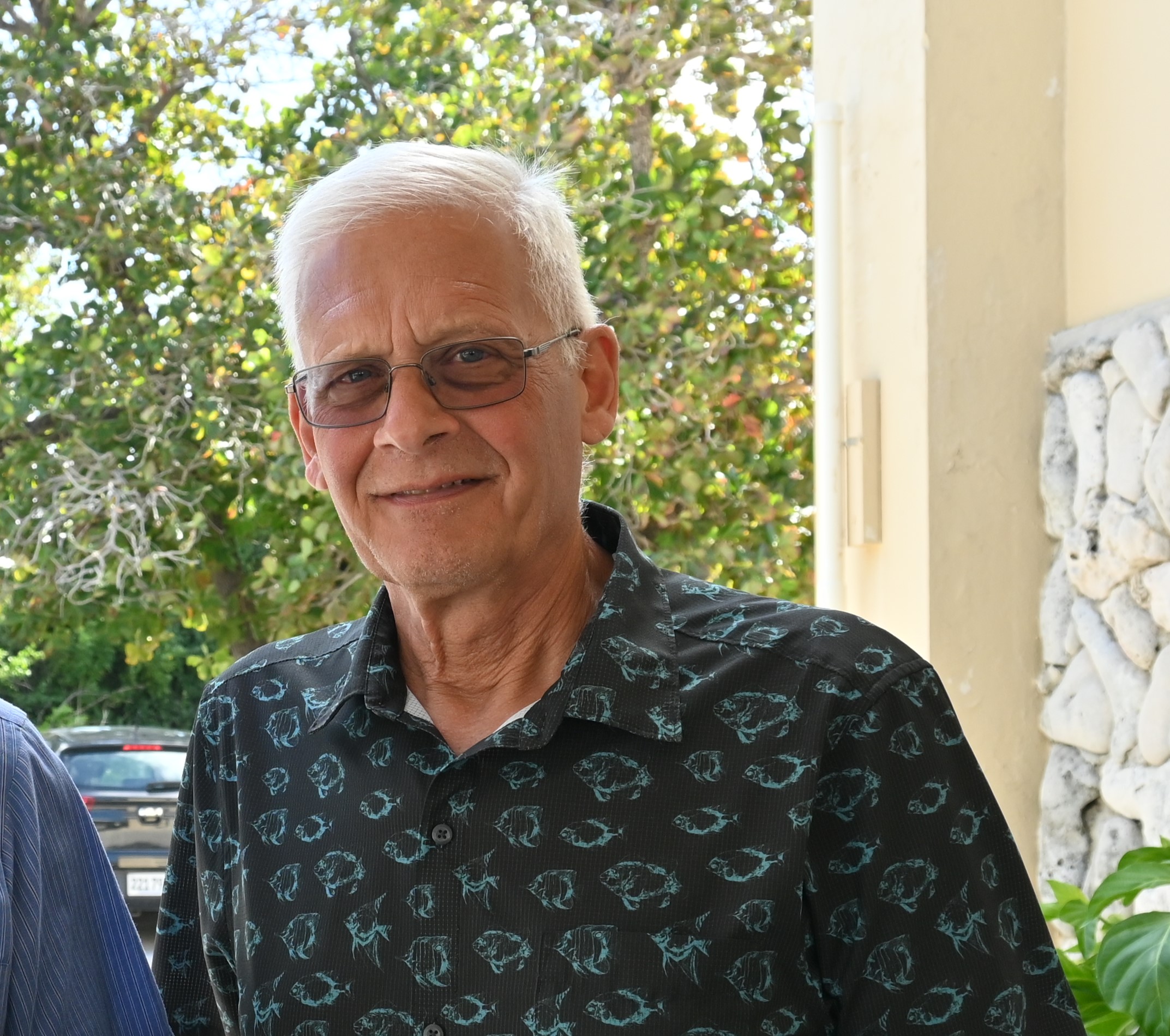
Locher, speaking with the Compass on Monday, welcomed the tribunal’s decision, saying he was “cautiously optimistic” about the ruling.
“I think the most important thing on this is the point that the Planning Appeals Tribunal put forward, that you have got to follow the rules of the Little Cayman guidelines and give them due consideration,” he said.
“And,” he added, “you can’t just disregard the expertise of the Department of Environment and dismiss it as not being empirical evidence. These are our scientific experts who are mandated to provide scientific rationale towards a decision.”
He reiterated the sentiment that was widely aired during meetings on the Sister Islands involving updating the National Development Plan, that Little Cayman and Cayman Brac, had to be treated differently to Grand Cayman when it comes to development.
“We need to keep development sustainable on Little Cayman,” Locher said, “so we can protect this little gem of an island.”
A review of the outdated National Development Plan, which has not been updated since 1997, is currently under way.