


Strong police action is needed to ‘force’ motorists to improve ‘abject’ national driving standards, Cayman’s most senior officer has acknowledged.
Police Commissioner Kurt Walton said wider enforcement and tougher sanctions were needed to back up the island’s new, lower limit for drinking and driving.
And he said speed cameras, demerit points on licences and increased, targeted action from an expanded traffic department were all part of the plan.
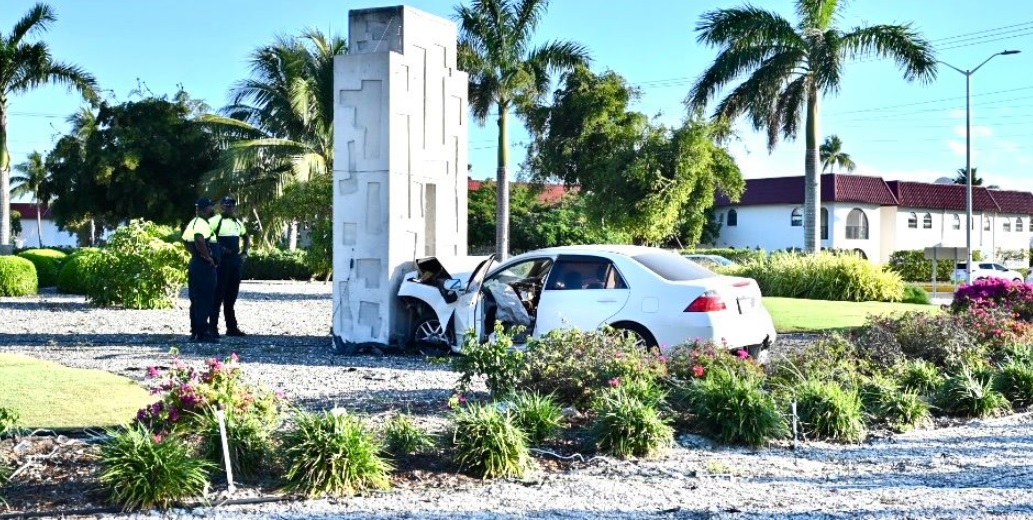
The commissioner blasted deteriorating standards, citing speeding, cellphones and inconsiderate driving alongside alcohol as the major reasons Cayman is averaging 10 road accidents a day so far in 2025.
“The culture and driving on the roads is absolutely abject,” Walton said.

“There has been a deterioration of discipline on the roadways. We really need to force people to change their driving habits.”
Following revisions to the Traffic Act last year, he said Cabinet is expected to approve much heavier fines for road infractions alongside a system of ‘demerit’ points – where repeat offenders risk losing their right to drive.
He also outlined plans for speed cameras to be introduced and said the complement of traffic officers would be almost doubled over the next three years.
Speaking on the CompassTV talkshow Forefront on 27 Nov. the commissioner acknowledged he had been given the money he needed in the budget to begin to address longstanding staffing issues – numbers in the Royal Cayman Islands Police Service were the same in 2024 as in 2008. During that time, the commissioner said the population and the number of cars on the road have almost doubled and the remit of the police has expanded.
Police have been promised an additional $7 million over the next three years, with a large chunk of that going towards personnel.
Despite Cayman’s small size, Walton said there are “400 miles of road” on the islands, making it difficult for his officers to cover every section.
Drink-driving enforcement
Asked about perceptions of low enforcement on drink-driving outside of the festive period, he cited a quarterly campaign – Operation Clyro – and insisted officers are regularly out and about on weekends policing the roads.
He acknowledged that more could and would be done in future saying, “We have had a challenge all year as far as staffing levels in our traffic department. We have been down significantly there.”
He said the department had 15 officers, and the goal is to increase that to between 25 and 30.
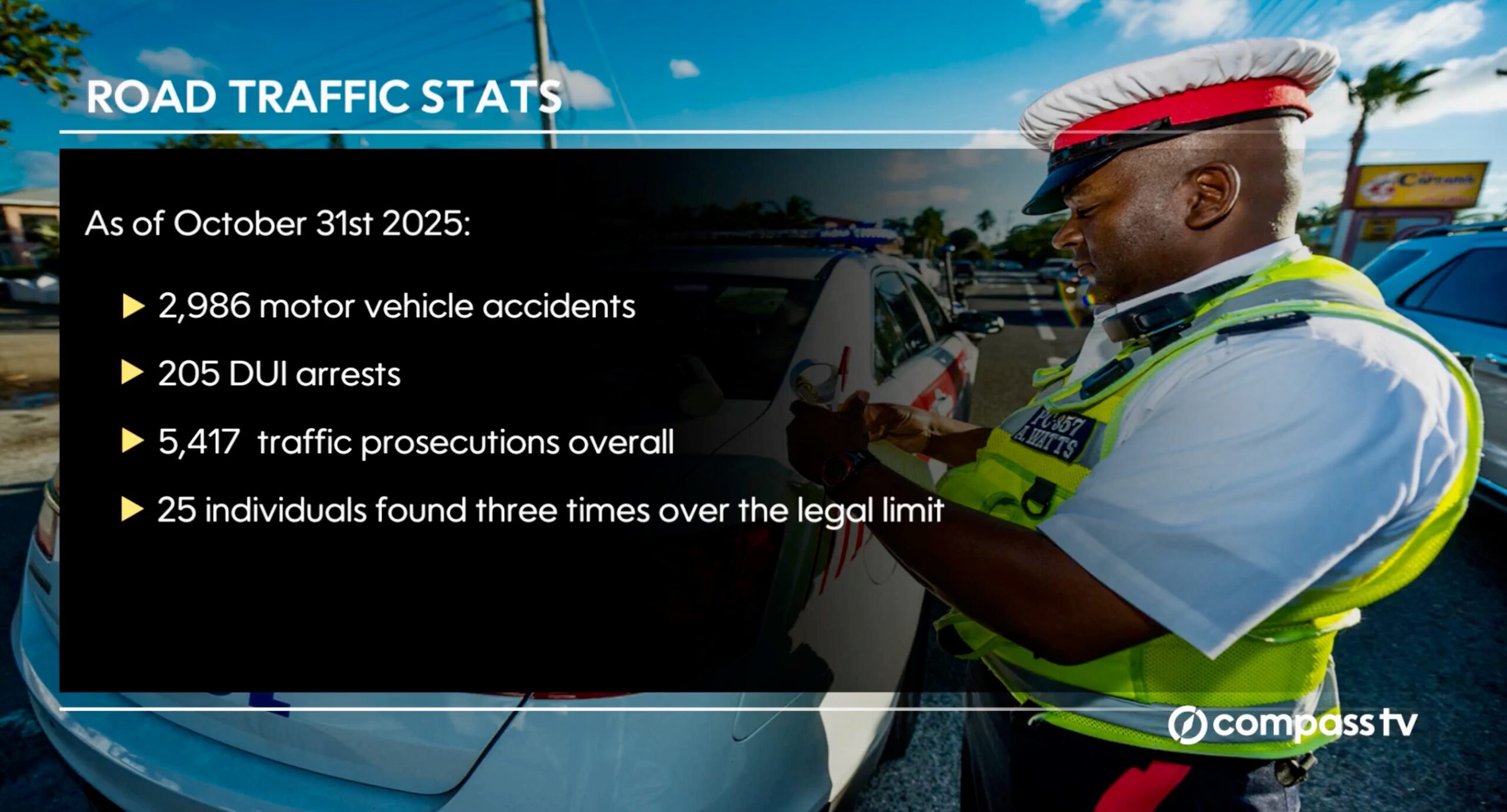
Chief Superintendent Brad Ebanks, who appeared alongside Walton on the show, said this year along 25 people had been caught driving at more than three times the legal maximum rate for alcohol consumption.
And he urged people to make sensible decisions over the Christmas period and help avoid a repeat of last year’s tragic festive season when four people were killed on the roads in December alone. The police will be out in force over the holidays as part of their annual Operation Winter Guardian safety campaign.
Ebanks also hit out at motorists undermining police efforts by putting out social media warnings of enforcement actions or flashing their lights to alert other drivers to speed traps.
“The public are asking us what are you doing about driving and speeding, and then you have the other half, who is telling the offenders where we are trying to curtail this kind of behaviour,” he said.
Walton referenced the cross-government national road safety strategy which targets reaching zero fatal accidents by 2038. He said the strategy was a partnership that looked at engineering solutions, education campaigns and the use of technology and infrastructure as well as legislation and enforcement.
Timing on the introduction of speed cameras and the demerit points system lies with the Ministry of Infrastructure, which is spearheading the ‘Road to Zero’ initiative.
Walton praised the partnership, insisting that going from an average of nine road deaths a year to zero is a realistic aim.
“We are not just looking for a reduction in deaths. We want absolutely no deaths on our roads,” he said.
Enforcement key to changing culture
Global research suggests the single most effective strategy in transforming a culture of drink-driving is through consistent enforcement and strong penalties.
Australia, Estonia and Sweden are cited in international literature as three of the most successful countries in cutting alcohol-related accidents. In all three cases, random breath testing and low alcohol limits were key to that change.
Estonia has the highest drink-driving enforcement levels in the European Union. The most active year was 2019, with 696 roadside drink-driving checks were carried out per 1,000 population. The Baltic state – which has a near-zero tolerance drink-driving limit of 0.02 blood alcohol content – cut drink-driving related deaths by 90% in a decade, according to a European Transport Safety Council report.
We have asked for similar data on roadside drink-driving checks from the RCIPs through the freedom of information process.
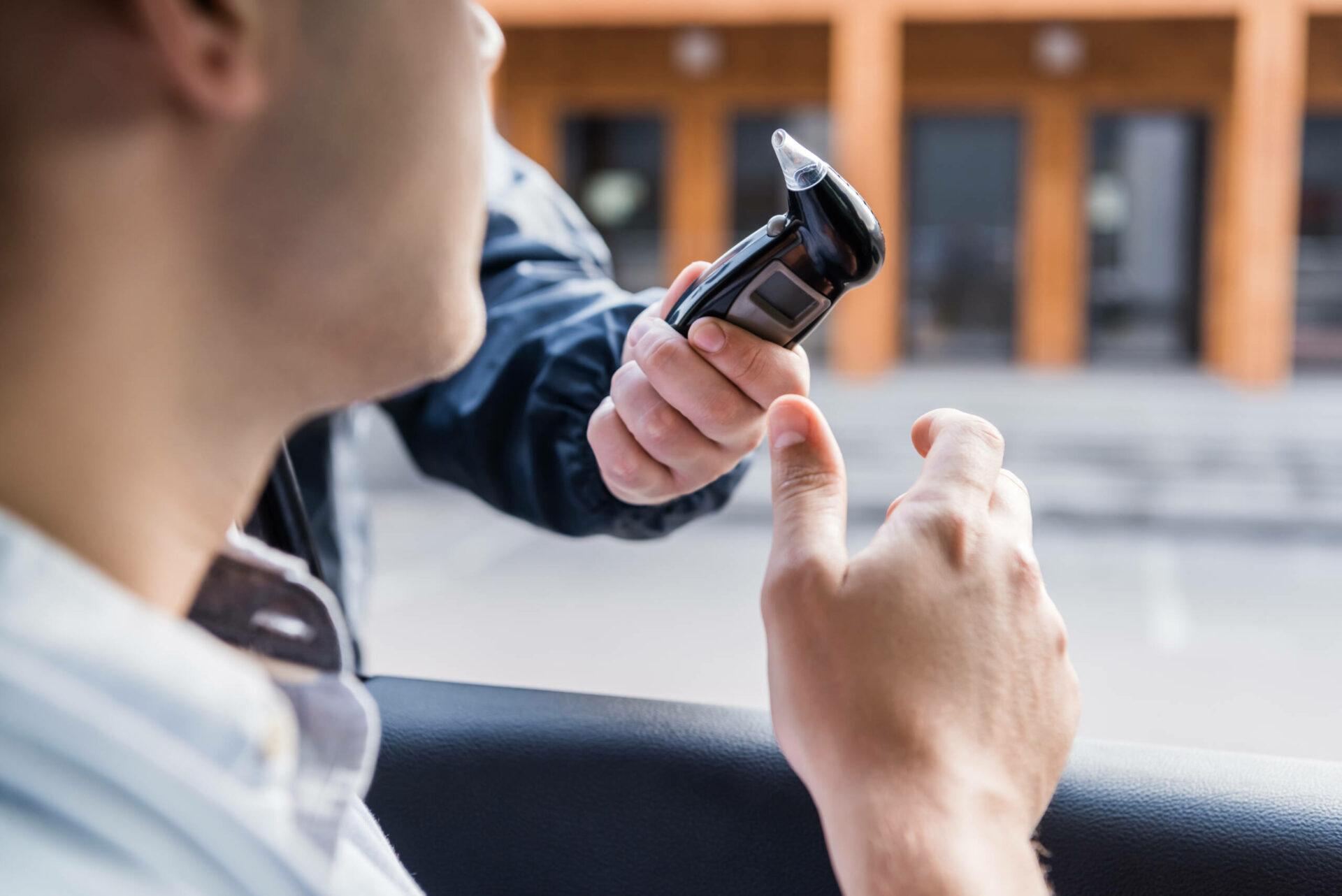
In his Forefront interview, Walton said Cayman law does not currently allow for random breath testing, but officers have wide discretion on determining if there is ‘reasonable cause’ to breathalyse a motorist. He said it was routine to request a specimen for alcohol testing in accidents where there has been an injury or fatality.
David Sleet, an accident and injury prevention specialist, who was influential in the movement to reduce the drink-driving limit in all 50 US states, said a lower threshold was statistically proven to save lives. He said Cayman’s decision to bring the blood-alcohol content limit down to 0.07 BAC, in line with global norms, was a step in the right direction.
He added that designated-driver programmes, media campaigns and education were all important.
But consistent and targeted enforcement of an appropriate blood-alcohol content limit is key to changing behaviour.
Sleet, a former director in the US National Center for Injury Prevention and co-author of the World Report on Road Traffic Injury Prevention for the World Health Organization said, “Effective change also requires legislation and enforcement. High-visibility enforcement efforts such as roadside breath testing and enforcement patrols have been proven to reduce impaired driving.”
He said Cayman’s Road to Zero strategy – particularly the inclusion of increased commitment to enforcement – was a promising start.
Other impactful strategies in the US have included sobriety checkpoints, graduated driver’s licences – which can include initial night-time driving curfews for new drivers and ‘ingestion interlocks’ that physically prevent convicted offenders from starting their vehicles without first passing a breath test.
Even one drink can make a difference, Sleet says, pointing to studies that show the relative risk of being killed in a single-vehicle crash for drivers with BACs of 0.05 to 0.08 is at least seven times that of drivers who have zero alcohol in their system.
In that context, he endorses suggestions that Cayman’s limit could be lowered further.
“Reducing the … BAC limit to 0.05% or below would be an important first step, accompanied by strong enforcement and swift and sure punishment.”
Powerful campaigns helped change UK culture
Henry Yeomans, director of research and innovation at Leeds University, is the lead investigator on a research project charting the massive decline in drink-driving in the UK and the reasons behind that “generational change”.
Road collisions involving alcohol fell by 76% between 1979 and 2022, with casualties falling by 77% and fatalities by 82%.
The research is in the early stages but he believes, in the UK at least, it has not all been about policing.
“This huge, sustained fall in drink-driving is not obviously connected to changes in the law or law enforcement,” he said, citing a long-term shift in social norms and cultural attitudes around driving.
Survey data in the UK shows attitudes to drink-driving became much less permissive from the 1970s onwards, he said.
“Drink-driving was widely tolerated and regarded as ‘not real crime’ for a long time – but that attitude seems to have shifted.”
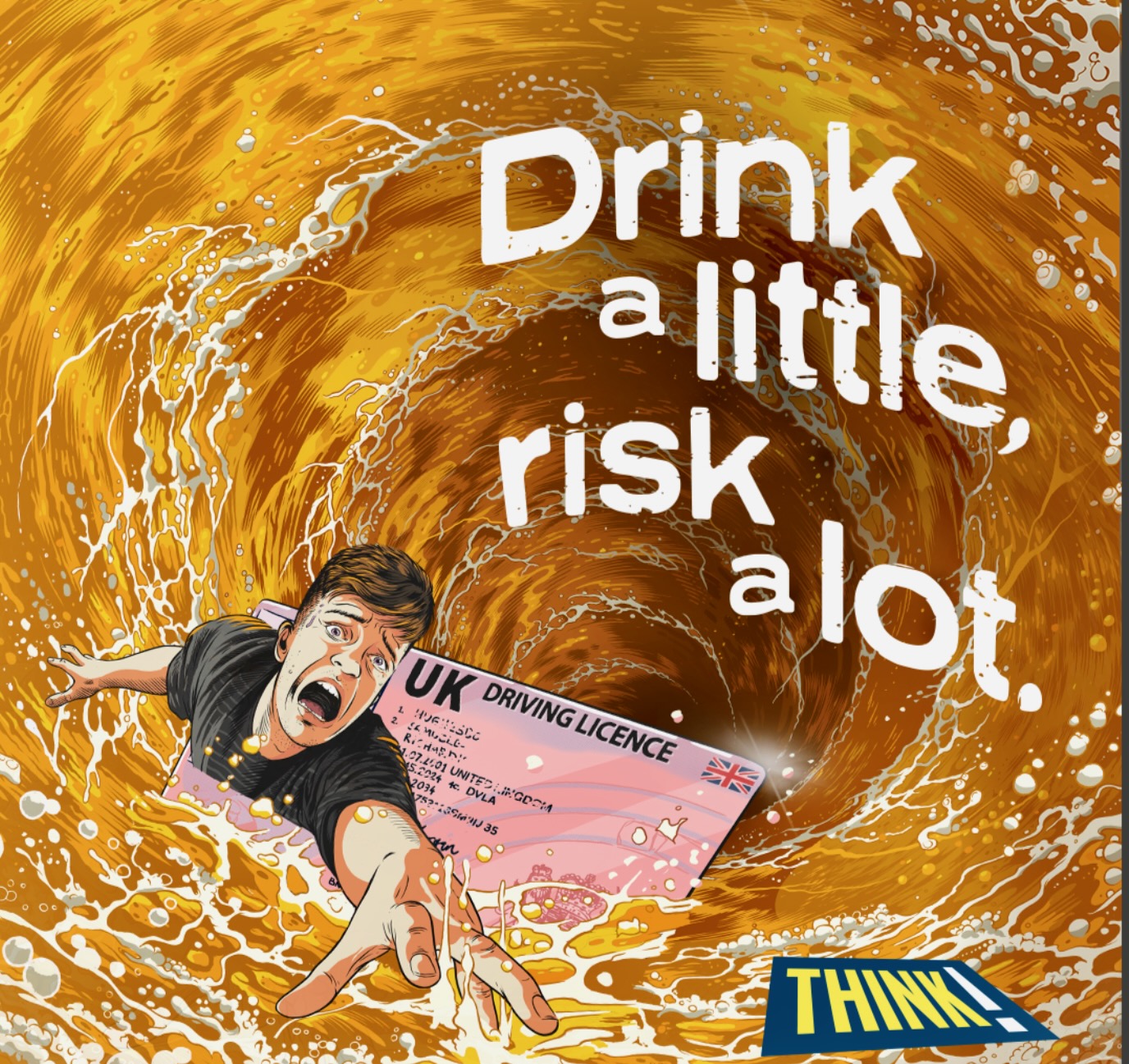
The UK approach focused on hard-hitting emotional – and sometimes shocking – advertising campaigns. And while he acknowledges that law enforcement and legislation played a role, he says this was not as pronounced as it was in Europe and the US.
“In the UK, I think the key factor behind the decline has been the erosion of the idea that drink-driving is not a big deal. It used to be a ‘social crime’ – it was illegal but most people did not think it was immoral or likely to harm anyone.”
His comments chime with remarks from Cayman’s former Chief Medical Officerm Dr. Nick Gent about the permissive culture around drink-driving in Cayman today.
In his last speech in the role earlier this year, Gent said, “The prevailing view, it appears to me, is that when a person is caught driving under the influence of alcohol or drugs, they’re thought to be unlucky – not that it is what it is, a just criminal conviction where the privilege of holding a driving licence has been misused to endanger others.”
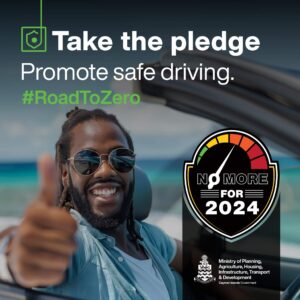
While Cayman has begun a multimedia campaign as part of the Road to Zero campaign, the approach so far is not as hard-hitting or direct as some of the UK strategies.
Walton, in his Forefront interview, acknowledged that survey research in Cayman showed that people believe more emotional campaigns based on the impact on victims would be effective in targeting the ‘hearts and minds’ of drivers. But he said it was a sensitive issue in a small island and would need to be handled tactfully.