


Caymanians could miss out on huge savings on monthly bills and the islands will struggle to meet clean energy targets if a plan to commission new fossil-fuel-powered generators goes ahead.
That is the warning from the Caribbean Utilities Company as it grapples with a contentious decision from energy regulators to approve 90.1 megawatts of new ‘thermal generation’ – a term for fossil fuel powered engines – to help meet Grand Cayman’s electricity needs.
A growing population, new hotels and a thriving business community have sent power demand surging and CUC needs to replace old generators and add new power supply to the grid.
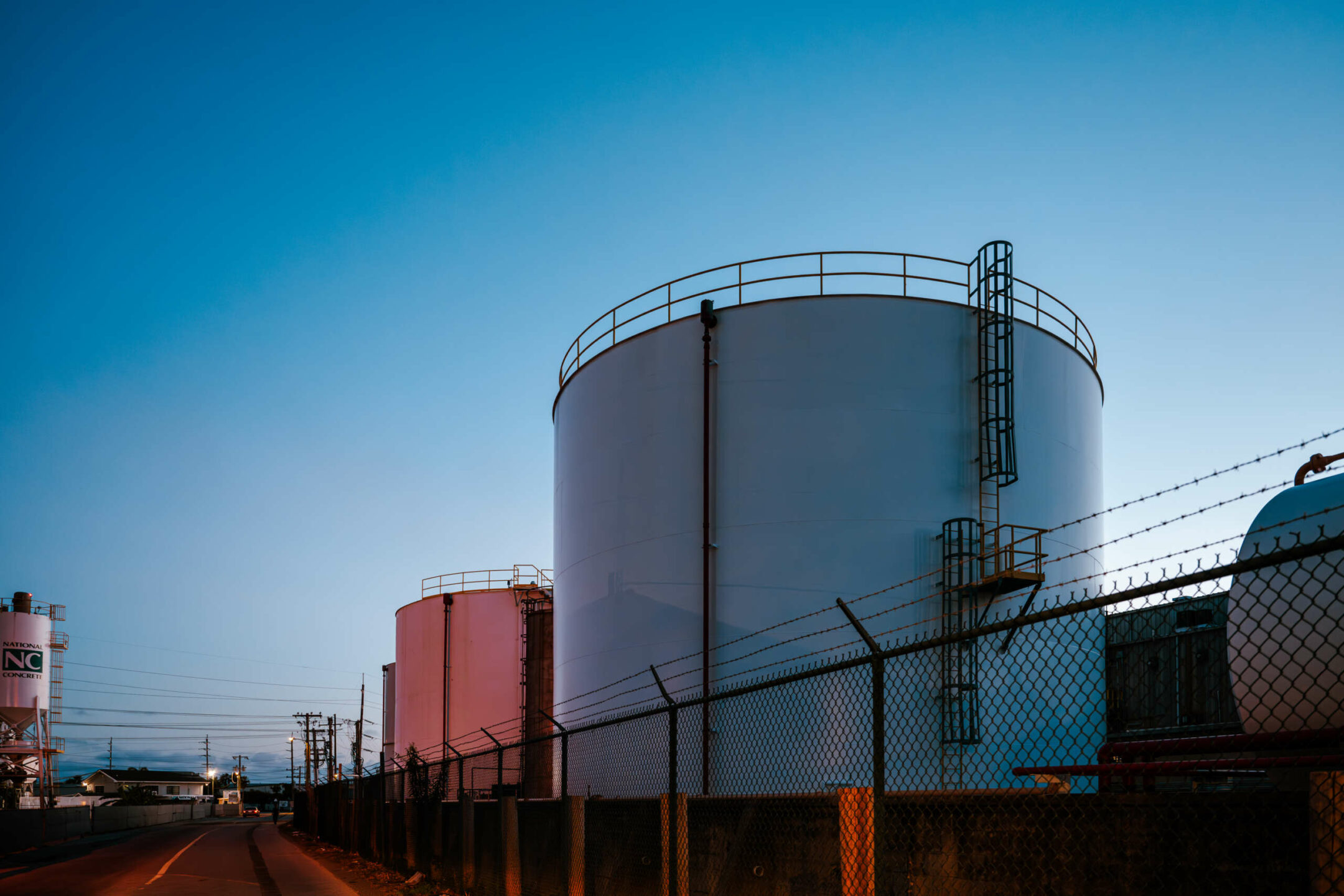
Diesel-powered generators at the North Sound power plant currently can pump out around 166MW to meet all of Grand Cayman’s electricity demands.
At peak time last Friday, as Cayman residents returned from work, switched on their televisions and cranked up the air conditioning, the island was using almost 80% of that. CUC is required to have surplus power capacity in case of spikes in demand or dips in supply – for example, when generators must be repaired.
And with some of CUC’s diesel engines reaching the end of their useful life, the need for new power supply has become urgent.
“We have to keep the lights on,” says Sacha Tibbetts, vice president of CUC.
There is little argument on that point. Where things get more complicated is how the island achieves that.
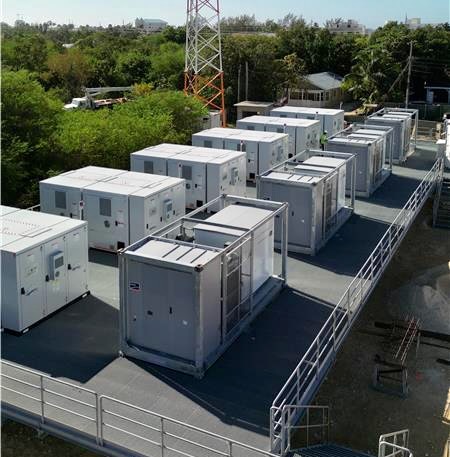
CUC had proposed a mix of new engines and large-scale solar and battery storage projects to meet the demand. But regulators rejected three proposals from the utility for this kind of ‘hybrid generation’, saying they did not meet the definition of ‘firm power’ that could be supplied day and night.
Instead, the Utility Regulation and Competition Office approved a fourth option for a ‘certificate of need’ – the precursor to a public bid process – to generate 90.1MW from ‘thermal’ capacity, similar in nature to what has been used for over 60 years. It said ‘firm power’ – such as that provided by diesel engines – is needed to replace the 37.2MW of existing capacity that is being lost and to meet growing demand.
Given the estimated 25-year life cycle of diesel engines or similar technology, that represents a long-term commitment to fossil fuels that runs counter to the islands’ National Energy Policy.
Moving targets
The document initially set a target that Cayman should source 70% of its power from renewable sources by 2037. That was revised last year to include a new target of reaching 100% renewables by 2045.
CUC’s Tibbetts says the utility is concerned that the decision from the regulator could mean a large step in the wrong direction. He refutes claims that the power company is to blame for the outcome, and argues that approving its proposal to seek 100MW of solar power with battery storage would have taken Cayman a third of the way towards its renewable energy goals in one fell swoop.
It is not just about climate targets any longer, Tibbetts says; rather, it’s solar plus storage powerplants that can provide much needed capacity while lowering costs.

Technology has evolved to the point where massive solar and battery storage projects could cut the cost of electricity drastically and keep the lights on through the night.
“The recommendation that we put forward would save the country in the order of $25 million on fuel costs. What does that mean for you and me as electric bill payers? Hundreds to thousands of dollars every year,” Tibbetts says.
Regulators insist they are not turning their backs on renewables and that their hands were tied by CUC’s licence and the tardiness of its request for new power generation.
CUC has noted it has requested generating capacity from the regulator since 2019, and did again in 2021 and 2024, none of which materialised, according to CUC.
The challenge for OfReg is to manage concerns about market fairness and anti-competitive practices alongside the policy directive from government to move towards renewable energy.
OfReg board chair Samuel Jackson said the decision had been driven in part by the need to “protect the public interest” by “promoting competition in energy generation”.
Regardless of the bureaucratic blame game – and CUC refutes much of what the regulator has said on this – the impact for the man on the street is the same. According to Tibbetts, the introduction of solar farms will take longer if the 90MW thermal plant goes ahead and the possibility for reduced bills from lower-cost solar energy will be delayed as a result.
“There are rapid savings on offer with the technologies that are available. We just have to adopt the technologies to make that happen. If we don’t adopt the technologies, we don’t get that benefit,” he says.
Implications for energy plan
The Compass understands that responsibility for government’s relationship with OfReg, which is an independent body, has been moved to the Ministry of Finance, headed up by Rolston Anglin, who is making inquiries on the decision, which was announced just days before the general election.
The National Coalition For Caymanians government is understood to be committed to a renewable transition. The need to switch to solar, both for environmental and cost-of-living reasons, was highlighted most starkly in the manifesto of The Caymanian Community Party, which is part of the coalition.
The party, which includes Premier André Ebanks and Sustainability Minister Katherine Ebanks-Willks, vowed to champion renewable energy investments “to reduce household costs and improve sustainability”.
For Cayman’s National Energy Policy, the consequences of the decision are enormous. The island currently only derives 3% of its energy supply from renewable sources.
The target of hitting 100% by 2045 was always likely to be a challenge, especially with the population continuing to grow.
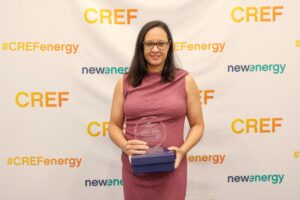
Kristen Smith, senior policy advisor and project lead on the plan, said the ministry of sustainability was “fully committed” to the targets and would be bringing all parties together to assess how to stay on track.
“In the coming weeks, the ministry will be engaging with OfReg, CUC and Island Energy to discuss the necessary steps for transitioning away from diesel and advancing the implementation of renewable energy, in alignment with our National Energy Policy,” she said.
Meanwhile, inroads are being made on the demand side, she insisted, through energy efficiency projects that are helping to cut usage.
Solar is the best economic move
An investment in new diesel generation does not necessarily curtail the renewable transition completely.
The economics of solar mean that projects will continue to march forward, albeit at a slower rate. OfReg is in the midst of a procurement process for a 23MW solar farm with battery storage – the largest renewable project in the country’s history.
And Tibbetts says CUC will continue to be interested in adding solar to the grid.
“Solar will remain a very compelling solution, and there will still be a strong desire for that, because the cost of solar energy is less than half of the cost of energy from a thermal solution,” he says.
The fuel surcharge on CUC power bills, which reflects the global price of oil, has fluctuated between 14 cents and 20 cents per kilowatt-hour over the past year and is prone to spikes linked to conflicts and other geopolitical issue beyond Cayman’s control. Jamaica recently awarded a project for a large solar farm at less than half that price. Tibbetts estimates power could be supplied from a utility-scale solar farm in Cayman at less than 10 cents per kWh.
While CUC will bid for the thermal generation contract (it is required to do so under the terms of its licence), he suggested this would be investing in moribund technology.
“Everybody’s saying we need to do solar. CUC is saying it, the public are saying it, the regulator is saying it, our national energy policy is saying it,” he says.
“So, it’s probably going to happen. In the future, we’re going to go to solar; why not take the opportunity and go now?”
Firm power and market competition
There appears to be little argument that Cayman should be moving to renewables.
Even as it issued its decision to green-light procurement of new fossil-fuel generation, the Utilities Regulation and Competition Office insisted this was not a “step back from renewable energy adoption”.
It added, “The Office is just weeks away from launching its [Request For Proposal] for the largest renewable solicitation project ever in the Cayman Islands and there will without a doubt be future solicitations for renewable energy project.”
It indicated in a press release that CUC’s alternate proposals – that the island should procure a mix of diesel engines, 100MW solar and storage – did not qualify as ‘firm power’ as required by its licence.
Sonji Myles, of OfReg, said, “CUC’s own submissions makes the distinction between firm and hybrid generation clear. If CUC believes it is time to redefine what qualifies as firm capacity, that requires a formal, transparent process to amend the licence – not a request to reinterpret it midstream to fit a preferred outcome.”
He added, “This is not a rejection of renewables – it is a defence of process and fairness.”
There’s disagreement from CUC over this. Tibbetts said firm power is not defined in CUC’s licence or contract, and that solar and battery storage were now globally accepted as providing dependable capacity, which, with the right grid management, is equivalent to firm power.
A further issue for the regulator was its role as a market watchdog. OfReg board chair Jackson said its decision was influenced by a “duty to protect the public interest by promoting competition in energy generation”.
This approach is supported by some renewable energy advocates, despite the possible consequences of the decision.
‘Land banking’
James Whittaker, of GreenTech Solar and the Cayman Renewable Energy Association, has challenged what he sees as “pre-emptive land banking” by CUC in order to stack the odds in its favour, carried out without regulatory approval years ahead of any public bid process on solar farms.
He said the utility was attempting to swap a fossil-fuel monopoly for a renewables monopoly.
Tibbetts refutes this logic. He acknowledged CUC had purchased large tracts of land in anticipation of bidding for solar farm contracts as early as 2020. But he said this was a calculated risk open to any investor who read the National Energy Policy or the Integrated Resource Plan – both public documents issued several years earlier that indicated a solar market in the Cayman Islands would develop.
Tibbetts added that the core issue at this point, regardless of differences of opinion over process, is that Cayman is at risk of taking a major wrong turn in its energy procurement.
“We need to march forward,” he said. “Oftentimes, I think you have situations where you look at the tools that are standing in front of you and maybe feel like they aren’t the best tools, and so you don’t do anything.
“But when you’re in the middle of a transformation, you need to make bold steps and make moves in that direction. So, that’s really what’s needed right now. The priorities for the island’s energy sector are clear, we should not be making decisions that are contrary to those priorities.”
Editor’s note: James Whittaker of CREA and James Whittaker of the Cayman Compass are not related.