


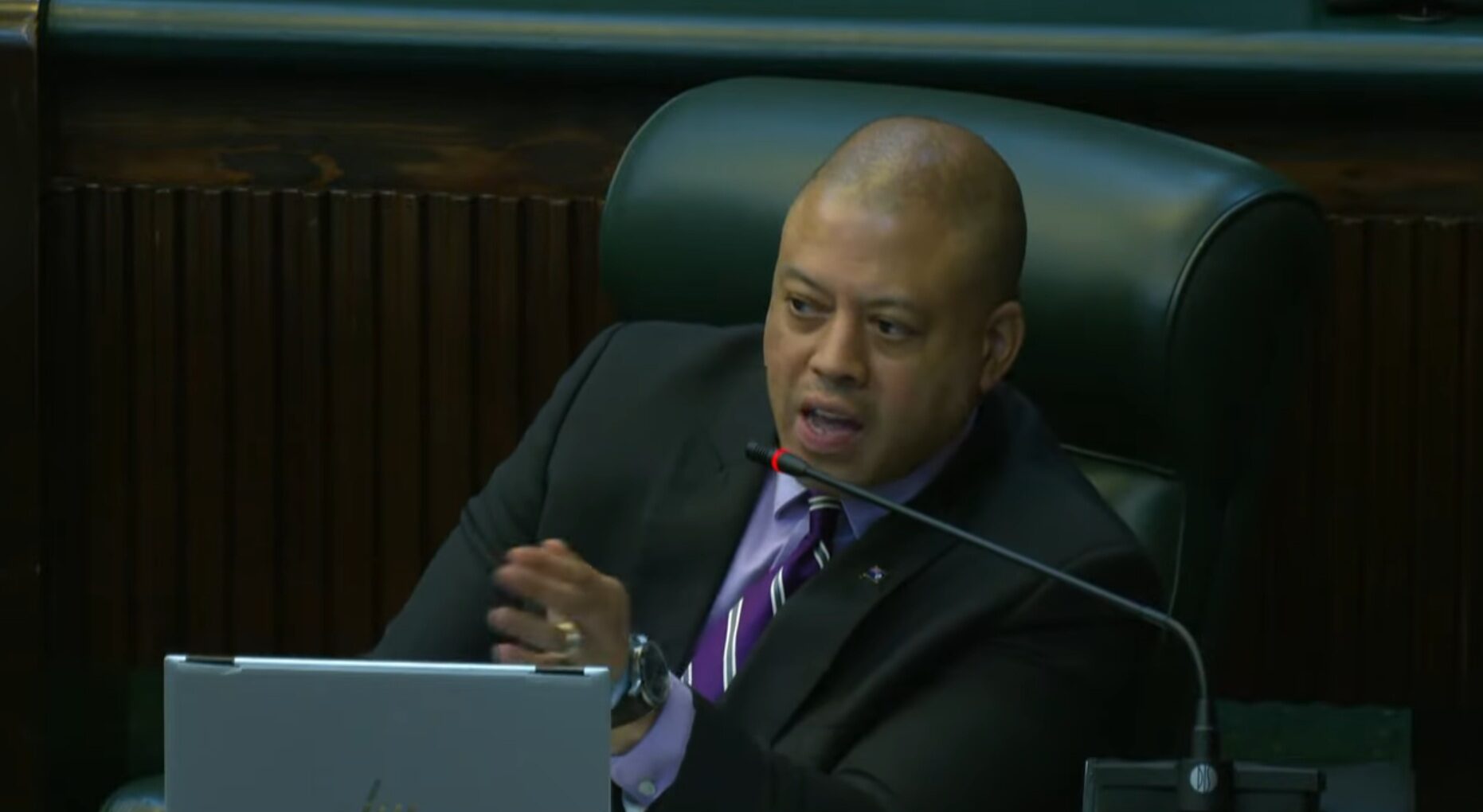
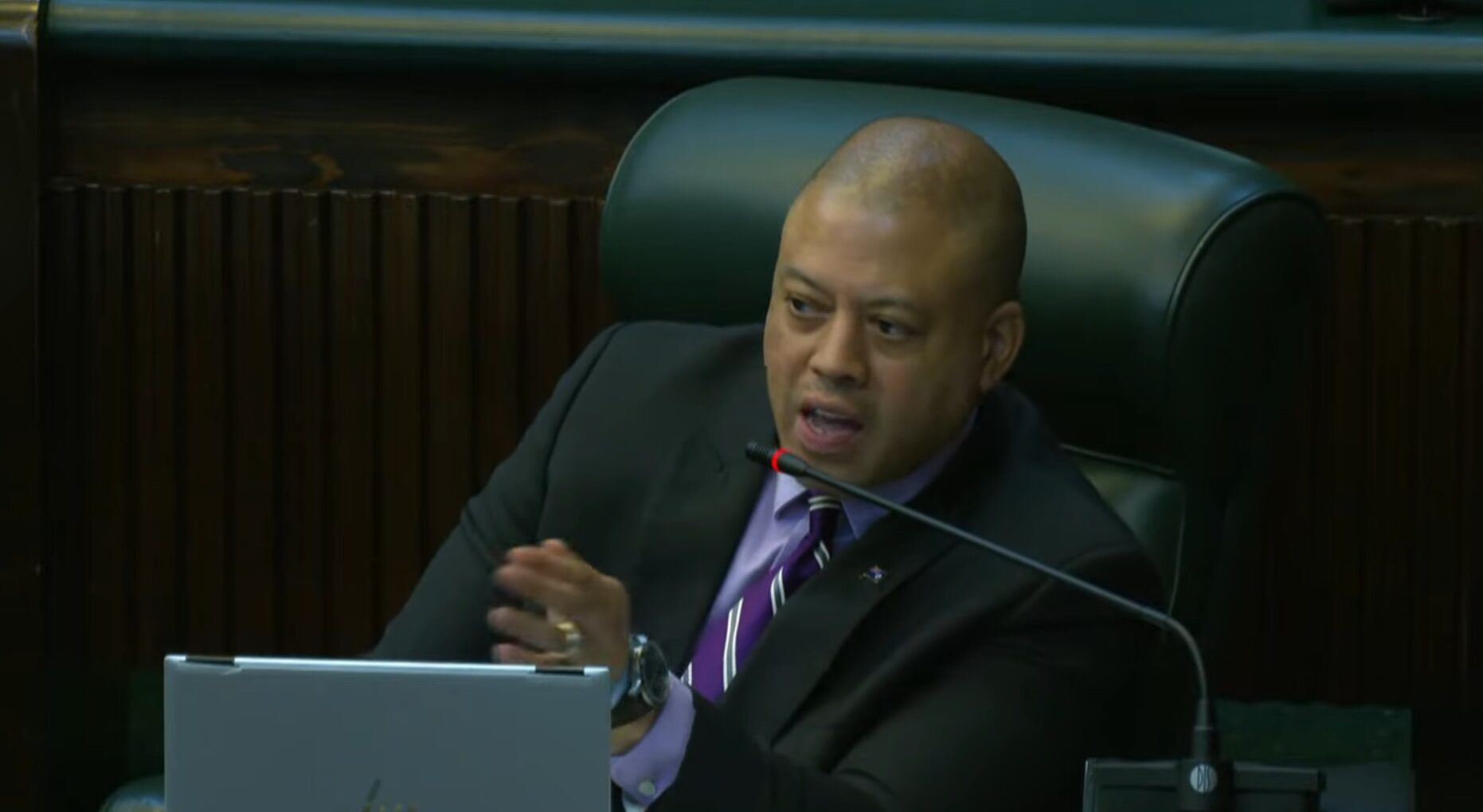
Cayman’s Class A banks came under the spotlight at a Finance Committee meeting in Parliament on 14 Nov.
Senior officials signalled that the government is exploring new fee structures to force banks operating locally to pay more to government and create jobs for Caymanians.
Rolston Anglin, minister for finance and economic development, presented a schedule of proposed fee increases across 25 categories, which included increasing bank and trust licences.
Licences for banks with assets between $1 billion and $3 billion, will rise to $1.2 million in 2026 and $1.5 million in 2027, from the current level of $1 million. Licences for banks with assets worth more than $3 billion, will climb to $1.5 million in 2026 and $1.7 million in 2027, again up from $1 million today.
The government estimates those fee increases will raise $1.9 million in 2026 and $3.25 million in 2027. But while discussing that fee proposal, both Anglin and Premier André Ebanks made it clear that the government would look for additional, innovative ways to influence banks’ business decisions and fee payments.
Banks facing scrutiny
Chris Saunders, the independent MP for Bodden Town West, initiated the conversation by complaining that the proposed fee increases are “too low”. But Saunders didn’t just want to increase fees; instead he proposed a new system that sounded similar to corporation tax for banks, albeit one based on revenue rather than profit.
“Rather than look at assets, I would base it on revenues,” said Saunders. “The more money you make, the more you give back. Then [the government could] put in certain rebates based on the percentage of Caymanians employees and based on the percentage of work that you have as an organisation that is being based in Cayman.”

The proposal is notable because the current economic model of the Cayman Islands centres on a policy of no direct taxation. Of course, MPs outside of government often suggest radical changes to existing policy, but notably the government’s two most senior financial figures seemed in broad agreement.
The current bank licence fee increases are “just the opening salvo”, said Ebanks, who enjoined Saunders to collaborate with him next year to find new ways to raise money from the banks.
“Let’s work together in 2026,” said Ebanks. “We have a revenue gap to close [and we must find] other ways we can incentivise employment and real substance here and also generate [government] revenues.”
That government message was supported by Anglin, who said that new fee “structures” may be needed. “We do have to look more creatively and have those carrot and stick [measures],” said Anglin.
“We want to try to ensure that we keep as much employment [and] as much revenue for government in Cayman,” he added, before giving Saunders his “commitment that this is an area that we will be seriously looking at”.
In a separate moment, Ebanks also revealed that the banks have already been informed they will be hit with higher levels of conventional fees in 2028. The Cayman Islands Bankers Association declined to respond to questions regarding this story.
Banks may find the government’s fee drive disconcerting, yet fiscal conservatives will be encouraged by its plans for the extra money from 2028 onwards. Instead of ploughing the revenue into Cayman’s civil service, Anglin promised the money would be used to improve public finance and create a “rainy day” fund for the country.