


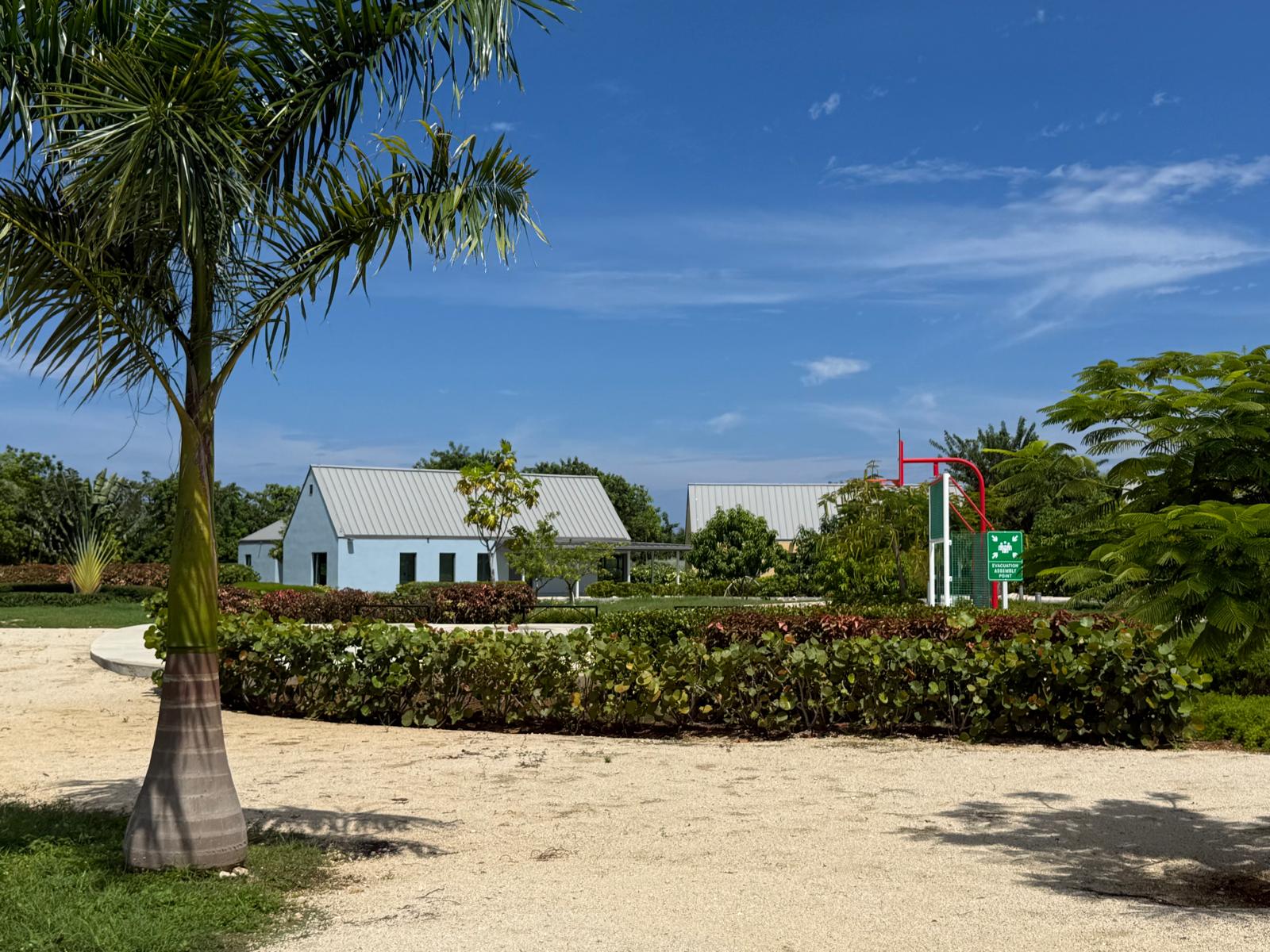
Nestled amid farmland in East End, Cayman’s long-awaited mental health facility, the Poinciana Rehabilitation Centre, is currently home to 15 residents, with the facility’s capacity expected to grow in the coming months.
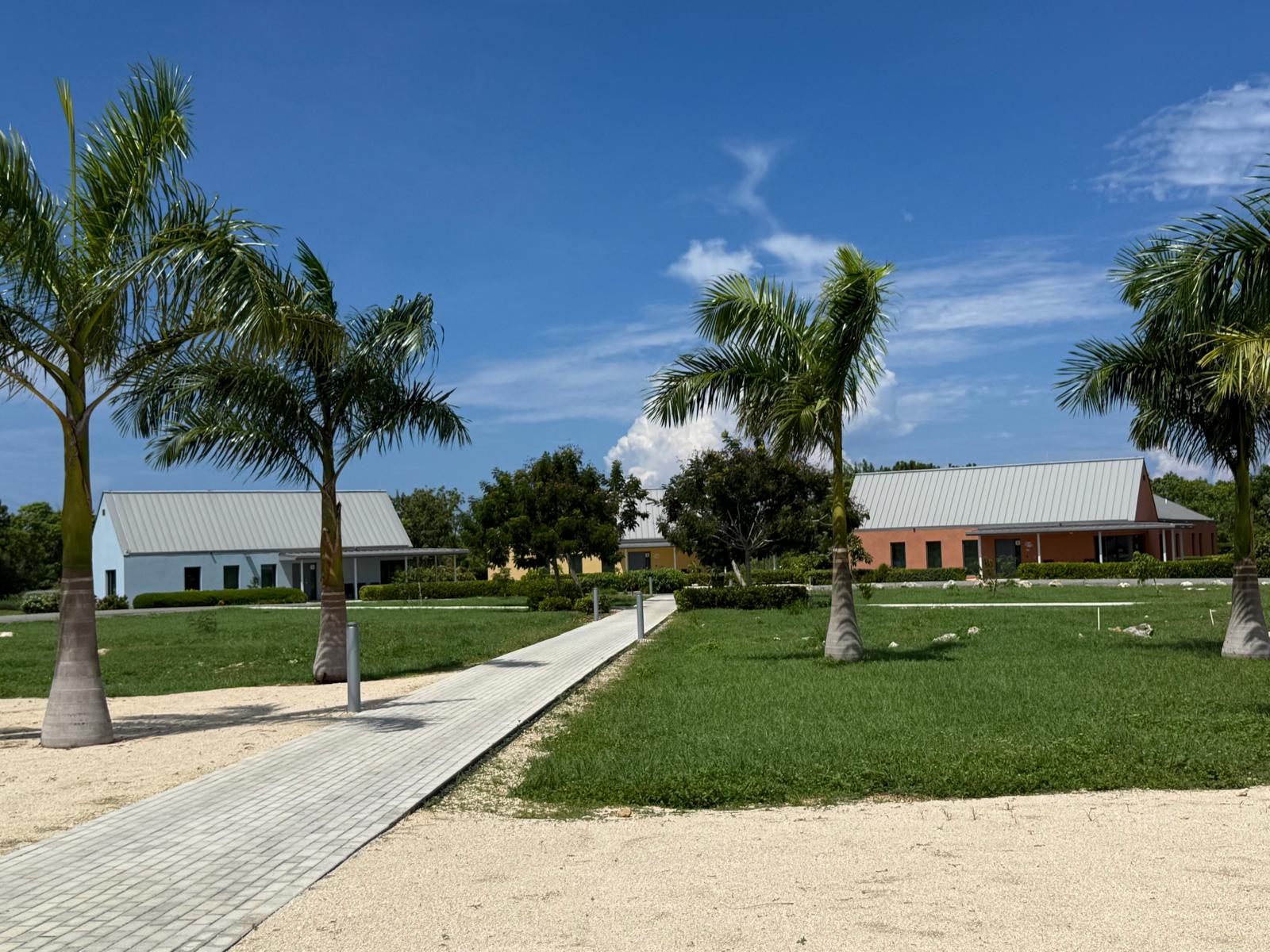
The centre, located along a quiet back road in High Rock, is a calm oasis for its residents, who live in cottages dotted around the 15-acre property.
Members of the public will get their first chance to see for themselves the facility, which opened late last year, on World Mental Health Day, on Friday, 10 Oct.
In the run-up to the open day, Poinciana gave Compass Media a tour of the facility, which had been on the cards since a 2016 KPMG outline business case identified that a premises with residential cottages and on-site therapeutic care and counselling would be the best solution for the long-term mental health needs on island.
“This is the first time in the history of our islands that we’re able to provide tertiary or longer-term care for those with serious and persistent mental illness here in the Cayman Islands,” said Dr. Marc Lockhart, Poinciana’s consultant psychiatrist and programme manager.
For decades, Cayman has been sending patients who require long-term care overseas, to Jamaica or the United States – a practice, Lockhart says, that is unsustainable.
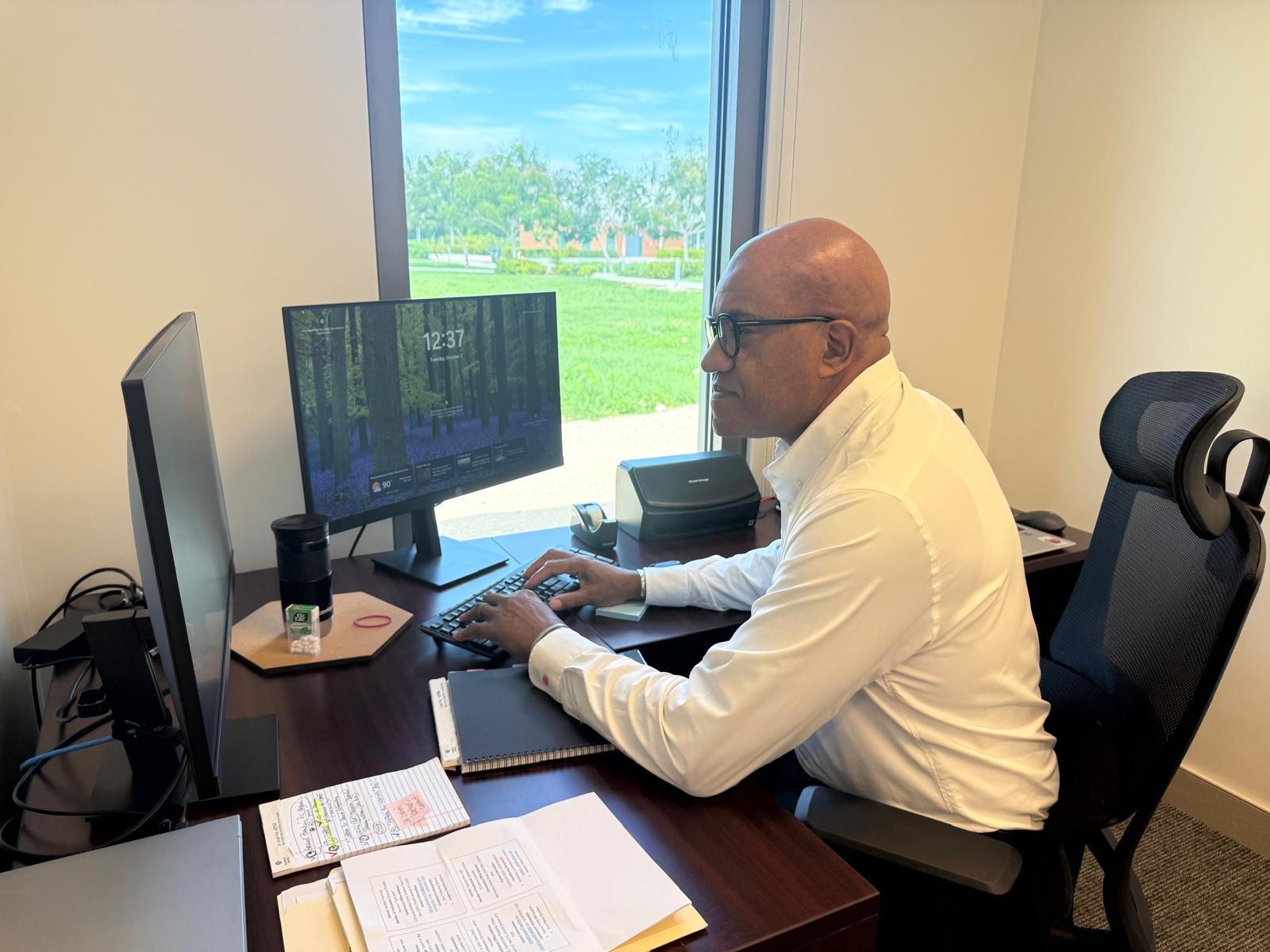
“It’s not a healthy or dignified way to treat anyone with an illness, by sending them, in essence, in exile to another country just because you can’t provide basic care,” he said, adding that, with the new East End facility, individuals can remain in Cayman, where their families and loved ones can remain close to them.
On the property, a basketball court sits among palm trees and plots of grass, where newly planted trees and bushes are beginning to grow. Paved pathways criss-cross the land for the residents and staff to walk from the cafeteria, administration buildings and lounge areas to the nine cottages, each of which can house up to six people. There are even golf carts available to transport people to and fro.
Though not a high-security facility – there are no fences or locked gates to pass through when one arrives at the site – there are full-time security staff on the premises.
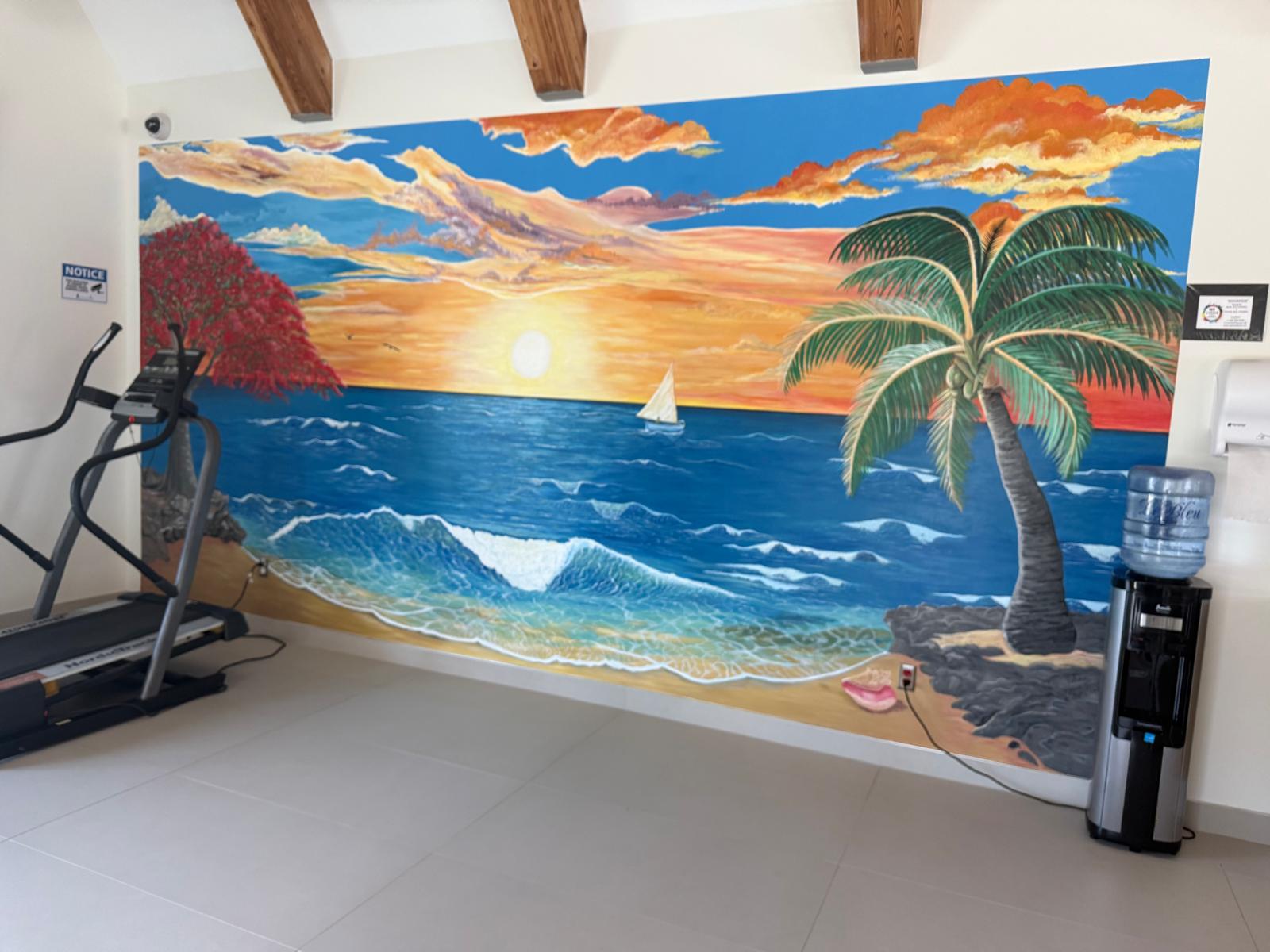
Inside, residents move about freely, playing dominos in a games room, checking out books from the library, or watching music videos in a lounge that will eventually house a coffee shop and a gift shop run by those residents.
Opening in increments
Among those being cared for at the eventual-54-bed Poinciana are nine Caymanians who were repatriated from facilities in Jamaica in December, while others have been referred from the government’s Anthony S. Eden Hospital in George Town.
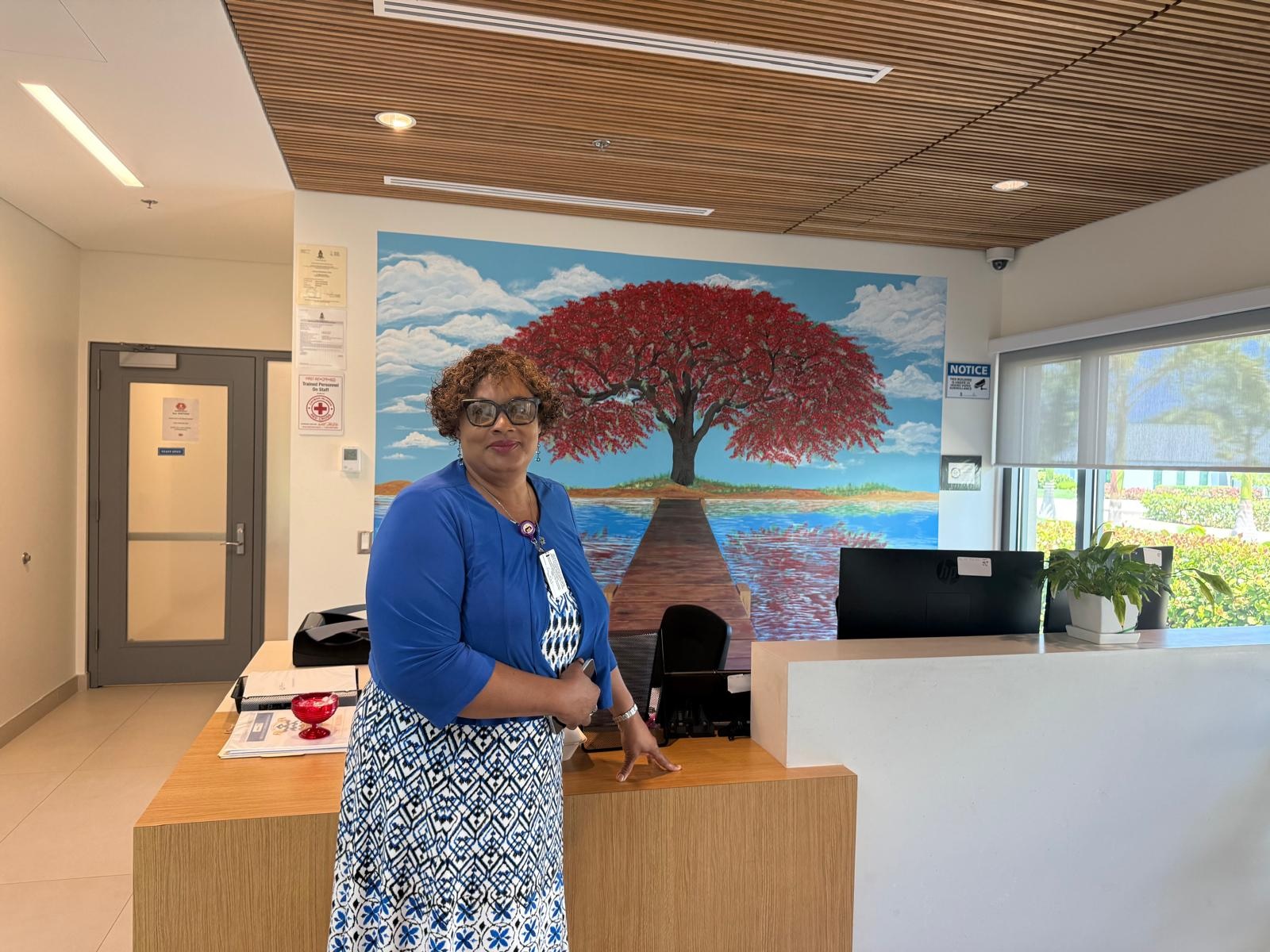
Poinciana, which is opening in increments, has a current capacity of 18. At one point recently, it did have a full house of 18 residents, which included individuals referred by the courts, but a number of those were subsequently sent home or to other facilities.
While Lockhart says he’s pleased with the pace of hiring and getting the facility prepared for more intakes, he acknowledges a public perception that it’s moving too slowly.
“One of the criticisms is, ‘You have 54 beds; you have, right now, 15 or 17 residents. What’s taking so long? The place should be full already.’
We want the place to be full, believe me. From the standpoint of helping those that need help, not just filling it up with anyone, but providing the help for those that need it,” he said, adding that local and international standards of resident-to-staff ratios need to be met first.
“We want to make sure that things are done safely, so we’re moving ahead with that. Just in the past month, we’ve had admissions. We have plans for more admissions this month,” he said.
Starting last month, he added, the facility will be admitting new clients “every single month, moving forward”.
Marcia Mullings-Thompson, director of Poinciana, explained that the facility is currently undertaking a phased approach to both staffing and admissions.
In June, the first group of graduates from the newly established Trainee Psychiatric Nursing Assistant Programme completed core training in foundational nursing and mental health care. Members of that graduating class are currently taking part in a two-year internship programme at Poinciana.
“That was the first cohort, and we’re planning additional cohorts to upskill Caymanians with opportunities to work at Poinciana in that area, and even to expand on those areas,” Mullings-Thompson said.
Clarifying misconceptions
Saying he wants to “demystify this facility and to clarify misconceptions” about Poinciana, Lockhart stressed that it is “not a hospital”, noting that acute care for mental health issues continues to be offered at the Anthony S. Eden Hospital, while those requiring longer-term or rehabilitative care could be referred from there to Poinciana.
Among some who have already been through the facility are individuals who have been admitted through the court system, said Lockhart, who also chairs the Poinciana Mental Health Advisory Council.
He said he had heard people say they believed Poinciana was a “place for the criminally insane, and that’s false”.
“There were some discussions held, but we have realised that that would not make the best use of this facility, so that is not the case,” he said.
On the other hand, he said, there was also a misconception that “this is not a facility that would accept anyone with a criminal history or … with some legal entanglements. And that is completely false.”
He added, “Unfortunately, worldwide, we know that up to half of people with chronic, persisting mental illness can have challenges with a police record. Sometimes, it’s because of vagrancy or substance use or other contacts with the criminal justice system.
So we have received and will continue to receive some of our residents through the court system, but we do very robust risk assessments. The primary thing we’re looking at is to make sure that all our residents are able to participate in the programme [and] they’re able to function without any severe aggression towards themselves or others.”
For many years, in the absence of a local alternative, Northward Prison has been legally considered a “place of safety” for individuals with mental health issues, who may pose a danger to themselves or others.
The opening of Poinciana, however, will not change that. For now, Northward retains that designation, and will continue to be an option for individuals whose “behaviour is so far out of bounds that the only facility that would have the requisite safety component and staffing to protect them would be somewhere like Northward,” Lockhart explained.
Community involvement
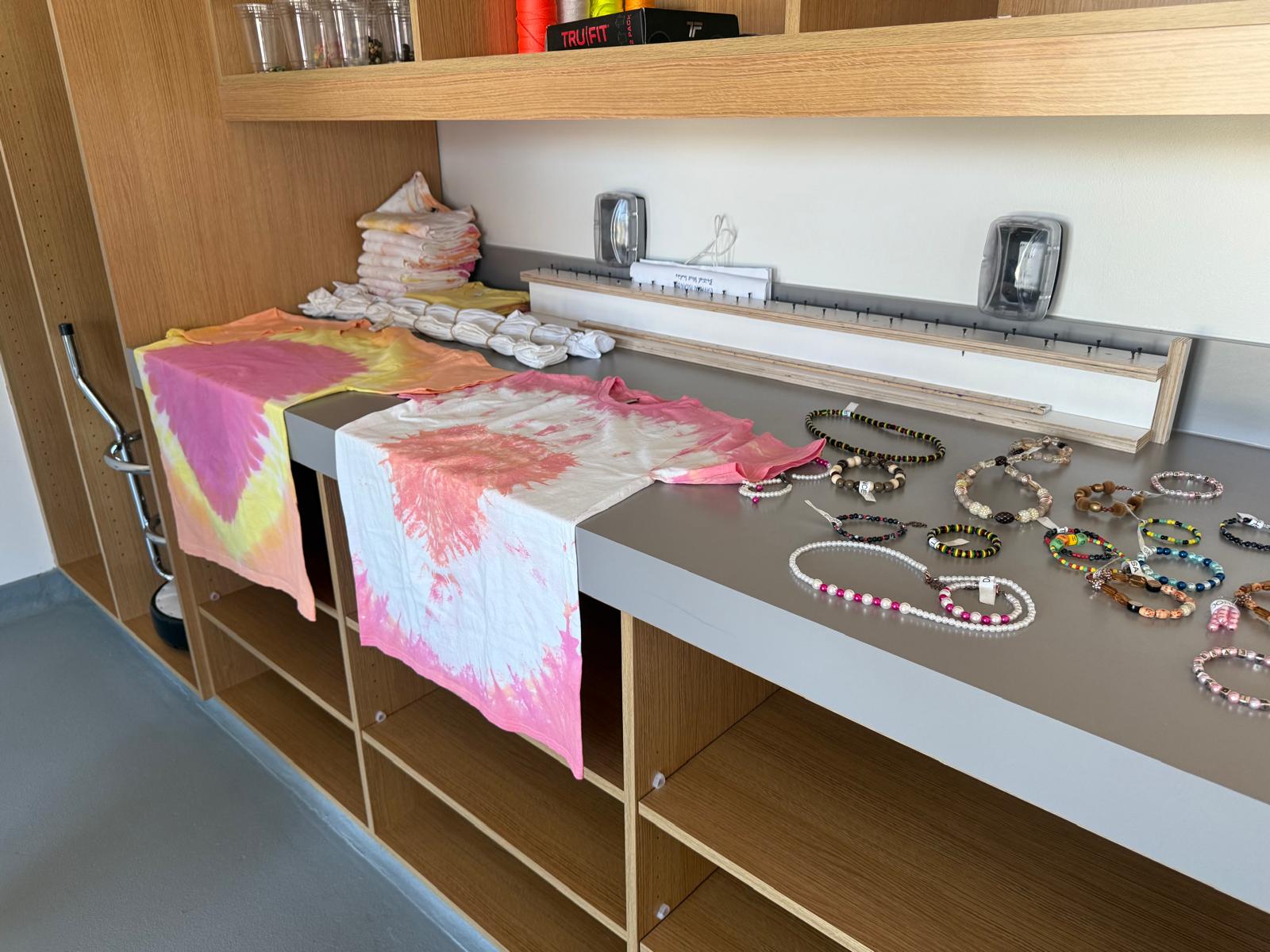
As well as Friday’s open day, when members of the public will be able to see the facility for themselves, the community is also being invited to take part in life at Poinciana, by volunteering their time and skills, perhaps through literacy efforts or arts and crafts classes, or by donating items, such as books or exercise equipment.
Integrating the residents back into society where they can become functional members of the community is a “major component of what we’re doing”, Lockhart said.
“We’re going to be doing that by providing social skills-, life skills-type experiences,” he said, adding that this includes teaching residents such things as how to open a bank account, manage money, pay bills, register online to get services, how to find accommodation, and even interact with loved ones.
“The other community component is involving the family, loved ones and caregivers of those that are here, so that they also are equipped to be able to help our residents when they do return,” he said.
The open day at Poinciana, located at 37 High Rock Drive, will be held from 10am to 3pm on Friday, 10 Oct.
To find out more about volunteering at Poinciana, email [email protected] or call 946-2222.