


Starting on Sunday January 11th, 2026, this thrilling 2,995-nautical mile challenge will once again set sail from Calero Marinas Marina Lanzarote in the Canary Islands before charting a new course west to a spectacular finish in Antigua, West Indies. This exciting new destination ushers in a vibrant chapter in the race’s evolution, reinforcing its place as one of the great modern ocean classics and offering better logistics for race teams continuing on to Antigua for the RORC Caribbean 600.
Now in its 12th edition, the RORC Transatlantic Race welcomes a diverse fleet including IRC yachts, Superyachts, Classic yachts, Class40s, and high-performance Multihulls, with a dedicated IRC Two-Handed Class also available.
This year’s event will showcase one of the most fascinating contrasts in modern offshore sailing. Lining up together on the start line will be two extraordinary yachts that could not be more different in philosophy, execution and feel, yet are united by a shared ambition to race cross the Atlantic fast, safely and competitively.

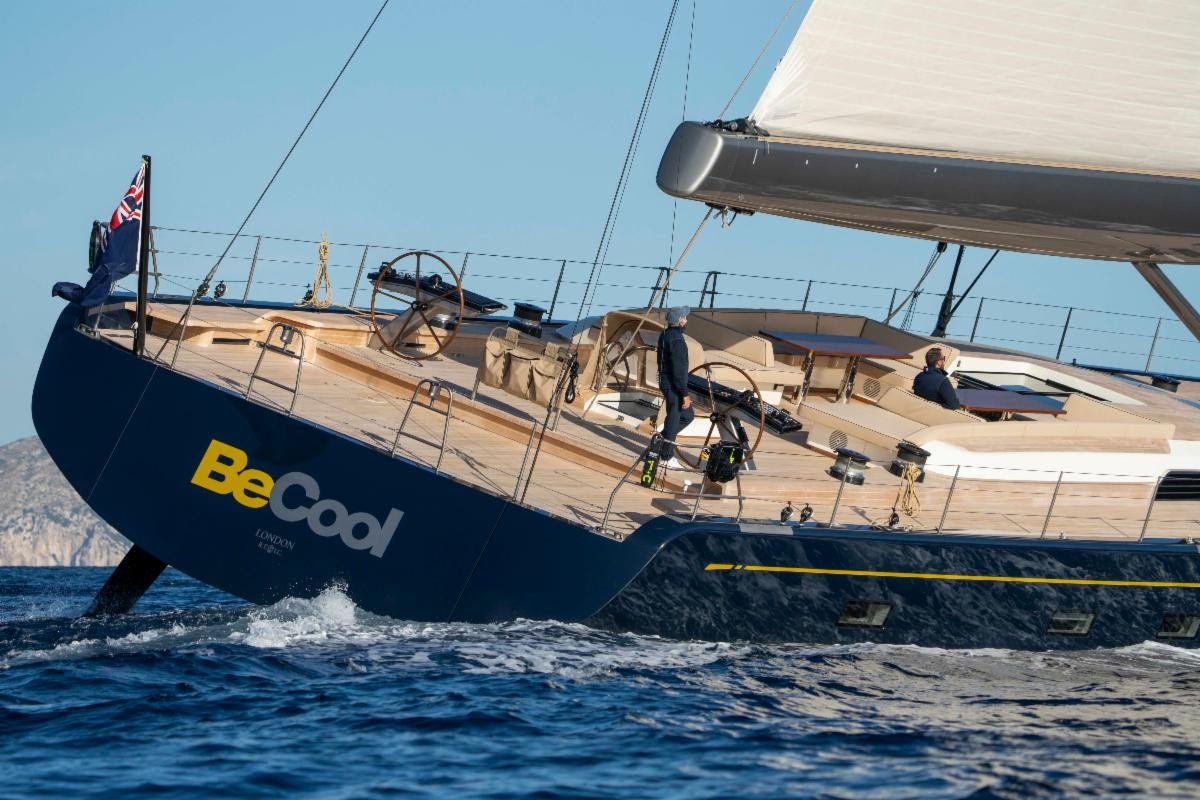
On one side is Raven, the 34-metre Baltic 111 is at the cutting edge of offshore design. She is light for her length, foil assisted and engineered to sustain extraordinary speeds for days at a time. On the other is Be Cool, the Swan 128, a powerful performance superyacht drawn by German Frers that blends refined ocean cruising, owner sailing and serious performance pedigree into a single elegant platform.
Together, they underline exactly what makes the RORC Transatlantic Race so compelling. It is not a one-dimensional speed contest. It is a race that rewards vastly different interpretations of offshore performance, where design philosophy, seamanship and decision making matter as much as outright pace.
Although Raven has already crossed the Atlantic twice and logged more than 18,000 nautical miles offshore, the 2026 RORC Transatlantic Race will mark her first competitive transatlantic campaign. For project manager Klabbe Nylof, that moment has been a long time coming.
“This is really the first time we are putting Raven into a proper offshore racing environment,” said Nylof. “We have done long passages, we have pushed the boat hard, but a race like this asks different questions. It is about consistency, resilience and learning how the whole system works under pressure for many days in a row.”
Designed by Botin Partners, Raven is the first yacht of her size purpose-built with adjustable side mounted hydrofoils to generate righting moment, combined with around 10 tonnes of water ballast. The concept allows the yacht to prioritise average speed rather than headline top speed. Raven has already exceeded 30 knots and, more importantly, can sit comfortably between 25 and 27 knots for long periods, opening the door to 600 mile days in the right conditions.
For Luca Serra, Boat Captain of Be Cool, the RORC Transatlantic Race is a natural next step. “This will be the first competitive race for Be Cool, but the project itself is very experienced,” he says. “We have already sailed more than 5,000 nautical miles, including from Finland to the Mediterranean. Now it is time to test the boat properly in a serious offshore race.”
The RORC Transatlantic Race, in association with the International Maxi Association and Yacht Club de France, will start from Marina Lanzarote on January 11th, 2026. With more than 20 teams already entered, including some of the most remarkable yachts afloat, the stage is set for another unforgettable crossing.