


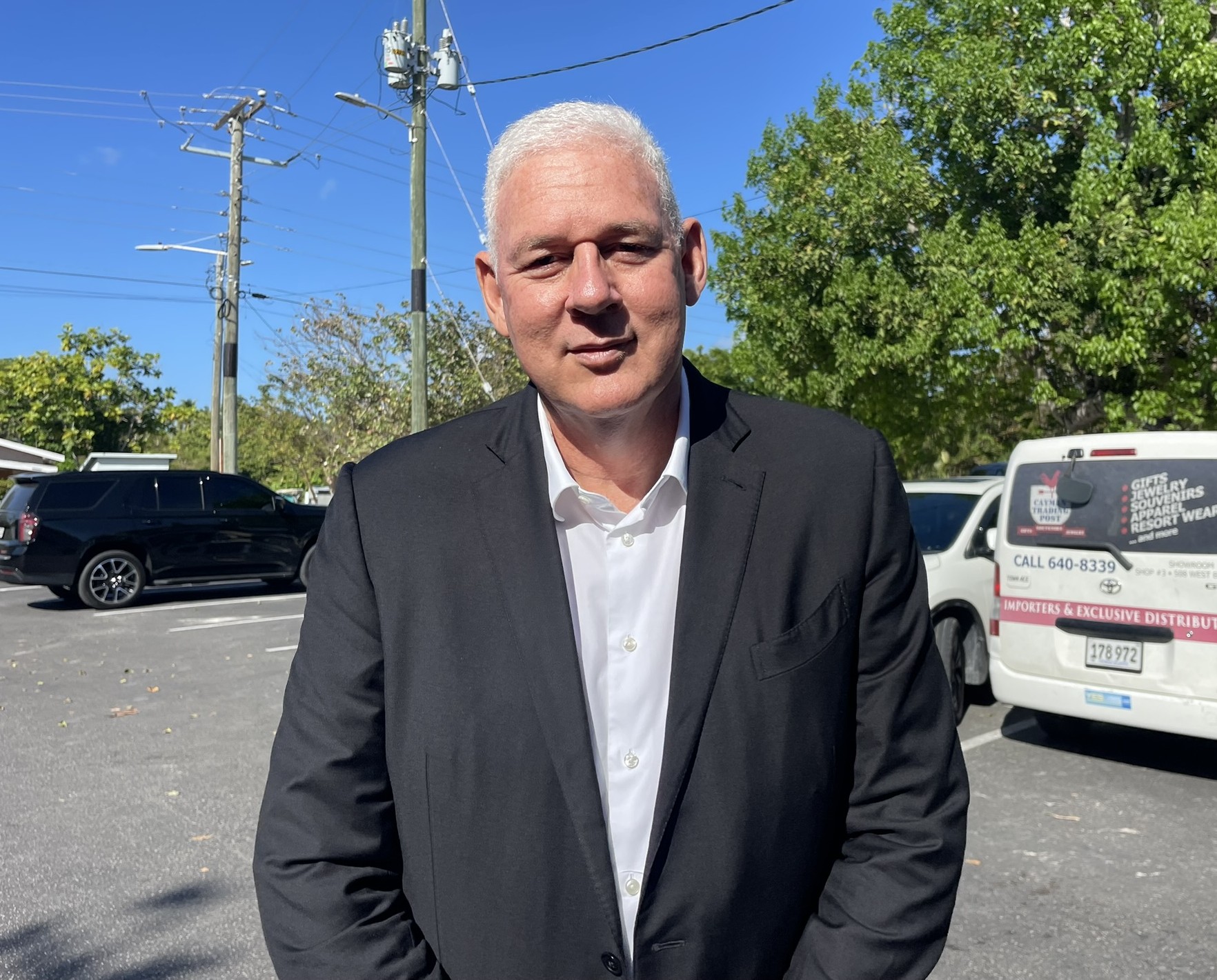
The ‘yes’ campaign in the cruise referendum received a boost this week when Allen Chastanet, former prime minister of Saint Lucia, backed the call for the Cayman Islands to have its own cruise berth.
Opposition Leader Chastanet, who was invited to join the debate in the Cayman Islands by pro-cruise group ACT, is a vocal opponent of the new cruise terminal project in his home country, describing it as a “disastrous deal” for Saint Lucia, but said that a similar situation would not arise in Cayman due to more transparent governance and procurement rules here.
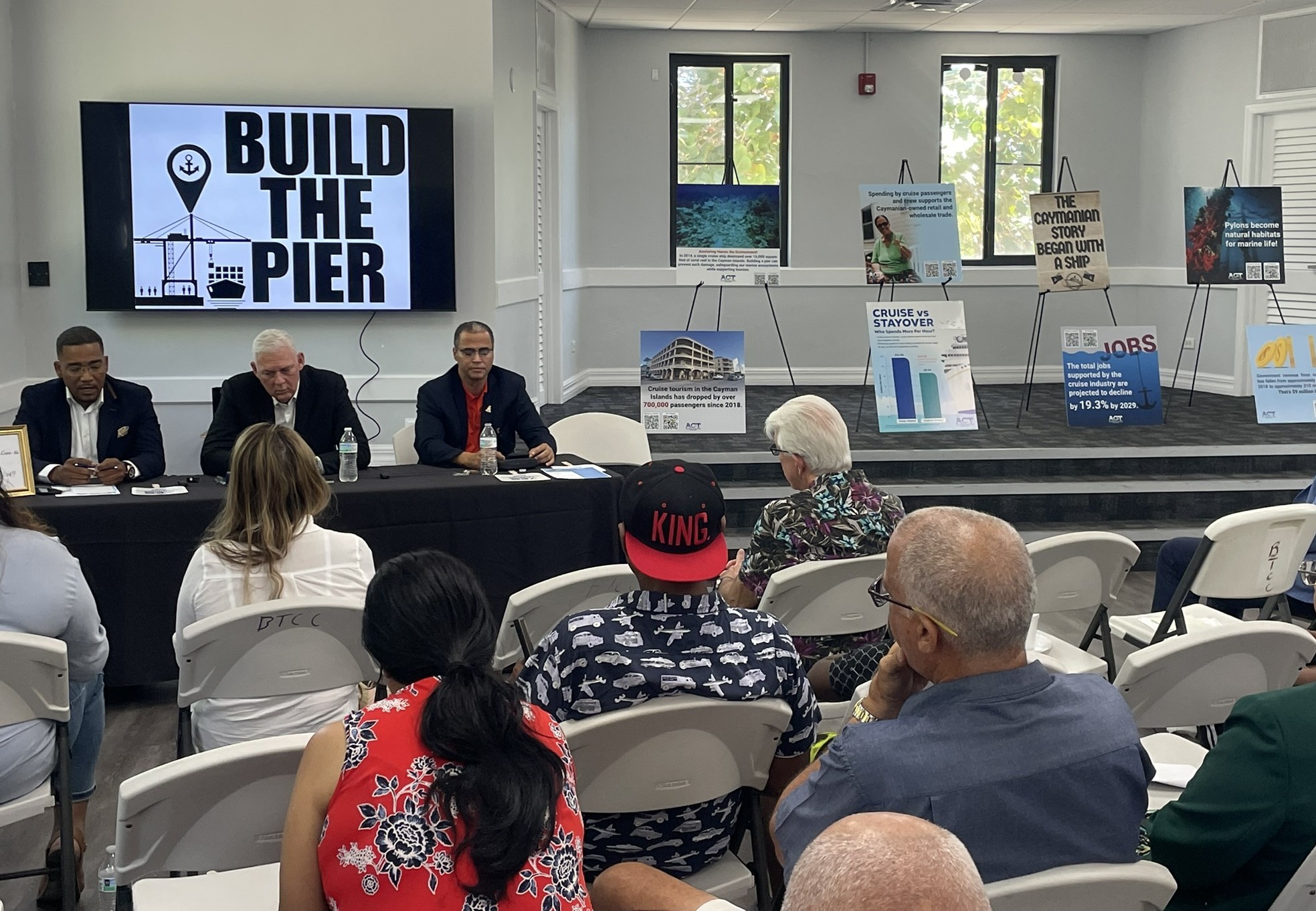
Speaking at an ACT meeting held at the South Sound Community Centre on Tuesday, Chastanet described himself as a “huge fan of the Cayman Islands” and that he hoped his years in tourism and politics could shed light on some of the issues.
“I’m not here to convince anybody. I’m here to give a perspective, to help, hopefully, in educating everyone on what the issues are,” he said.
He told the Compass that the decision was a “no-brainer”, given Cayman’s reputation as a high-quality destination.
“The decision as to whether we do tendering or we do a berth is a no-brainer for me, given the ‘brand’ of Cayman”, he said. “Are people writing and saying, ‘I can’t wait to come back to Cayman because of how I was tendered’? I don’t think so.”
Saint Lucia welcomed 732,509 cruise passengers in 2024, an 18% rise on the previous year, and hopes to get more than a million cruise visitors a year with the expansion of its cruise facilities. In 2023, its government signed a 30-year agreement with Global Ports Holding, the world’s largest independent cruise port operator, to run the terminal and expand its main berth to allow it to handle the largest cruise ships in service.
Referring to the project, Chastanet, whose administration had previously held talks with GPH but didn’t reach an agreement, said that he was “shocked” by the deal struck, which, he said, meant that GPH was going to get $440 million of revenue for $40 million of expenditure, but with no cost-sharing for Saint Lucia.
“I would hope that the governance structures in Cayman would protect the people of Cayman from a secret deal being done, and then once that deal is discovered, that the government was not being transparent, it would be for people to determine whether that was a good deal or not,” he said.
“The lesson from Saint Lucia’s perspective is from a government’s perspective. I’ve seen a much stronger system here. It may not be perfect but I’m not so sure that that kind of deal that was done in Saint Lucia could happen here and if it did, I would really hope that your leaders of the opposition and your civil society groups would stand up and call it out.”
Chastanet said that he supported a cruise berth for Cayman as it was better suited to the nature of the tourism industry here as well as being able to cope with the larger ships, which were increasingly being deployed in the Caribbean.
“I think that when you think of ‘brand Cayman’ as a quality brand, and you’re going to be in the tourism business regardless of how many people you’re going to be getting, a berth is necessary to keep up with the brand, but more importantly, to keep up with the changes of the industry, because these bigger ships will not be able to work with the tendering model.”
Premium destination
He gave the example of walking off a plane into the tropical heat compared with walking into an air-conditioned terminal via a passenger bridge, also known as jetways.
“People who don’t support jetways will tell you that when people come off the plane, the first thing they want to do is feel the heat of the sun,” he said.
“But it’s an inefficient way of disembarking and embarking. The reality is that if I say ‘modern airport’, I don’t think that anybody would picture not having jetways. If you are going to be a quality destination, do you justify not having airways? And now let’s put that in the context of your cruise berth … I say to you, premium destination and tendering — is that a consistent picture in your mind?”
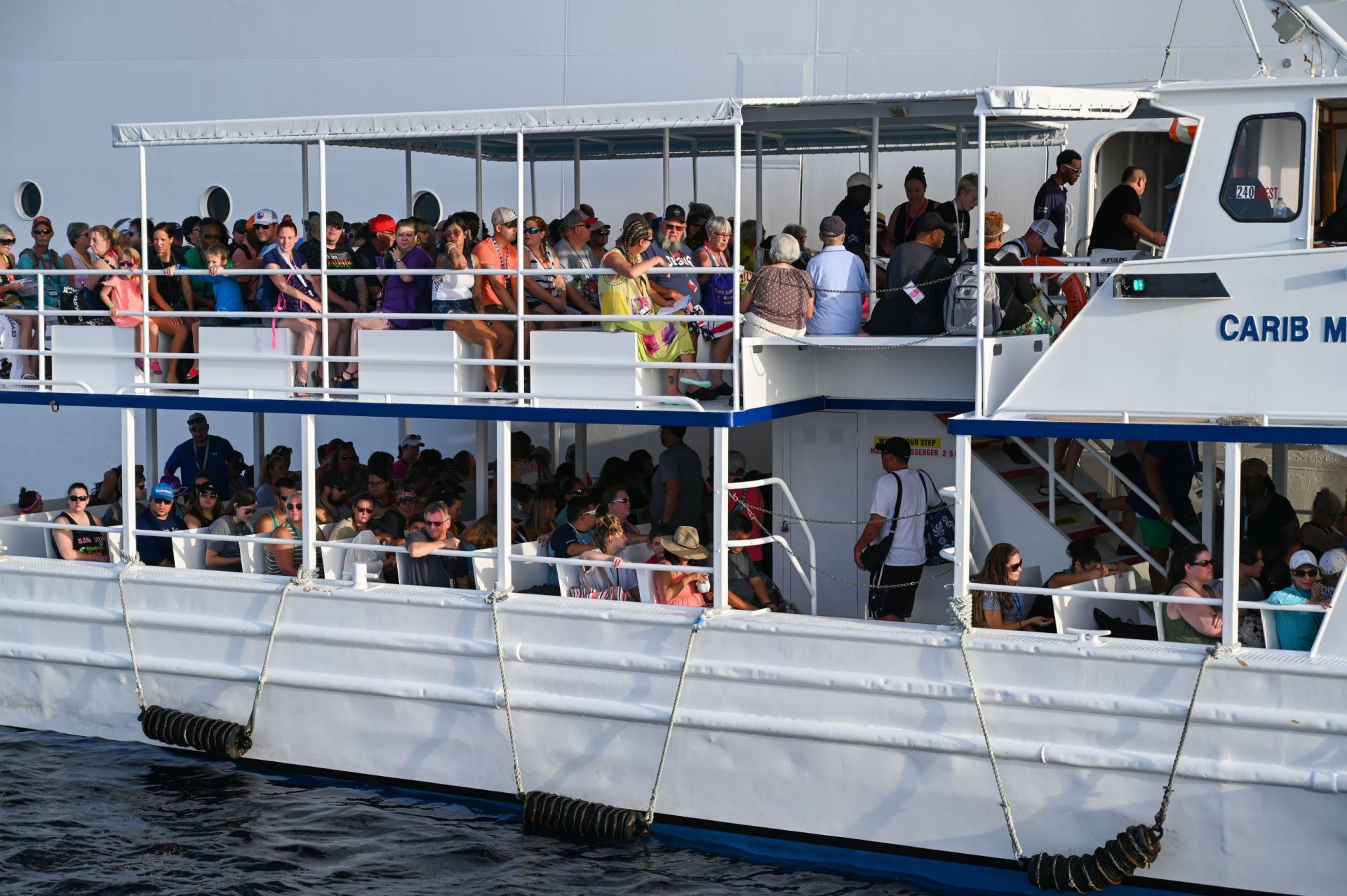
“Now I may be wrong, and it may be that there are people who think the tendering is quaint, and say, ‘I went to Cayman on a cruise. I can’t wait to go back because of the tendering experience’, [but] just ask yourself that question, is it consistent? I would say to you, I would like to think that infrastructural development and improvement is a necessity of any country that wants to develop.”
Bryan: It’s about maintaining, not increasing
Sharing the platform with Chastanet was deputy premier and tourism minister Kenneth Bryan, who has been a passionate advocate for a cruise berth for Cayman. He said that because of the Cayman Islands’ strict procurement laws, “we won’t have a situation like what happened with GPH” and he wanted to make clear that a cruise berth was not about increasing the number of cruise visitors to the Cayman Islands, but halting the current decline in numbers.
“Just to keep the million that we have now, we need to have infrastructure,” he said, “because less and less of the ships that tender right now will come. So this isn’t about increasing. This is about maintaining. And when we use the word sustainability, it’s also about sustaining the economy and the people who depend on it to live.”
He added, “If you don’t have the infrastructure, you will not have a choice.”
He told the audience that cruise visitors supported the attractions on island which were also enjoyed by stayover visitors, saying, “Cruise numbers support the attractions to make them viable and to be open for the stayover passengers. So if there weren’t all the cruise passengers, there wouldn’t be a turtle farm for the stayover passengers to go to, or all the other attractions.”
“If we lose cruise, then our stayover [visitors] that everybody talks about is so valuable … will also suffer,” he continued. “And I want us to think about some of these other factors, rather than just the other elements that we’re hearing like cost, like the environment, like location, because there’s other things that need to be considered when we’re thinking about whether we should do this.”
Concern about accident risk
ACT executive programme manager Ellio Solomon said that the tender boats which transport cruise visitors to and from the ships are not suitable for many passengers.
“You should not have elderly, children, special needs, handicapped swinging up and down on tenders.” he said.
“An accident has not happened yet. But it is not a question of if it’s going to happen. It’s a matter of when it’s going to happen. When we get the piers, not only are we going to allow persons to be able to get off in a very expeditious manner and also be able to get back on, but it allows Cayman to benefit financially.”
He added, “We all go to the airport to travel, but if we had to travel by cruise ship, and our family had to stand in that cattle line to get on the ship and the cattle line to get off, we would have built this cruise pier a long time ago.”
Debate series
The meeting, held on Tuesday, was the latest in a series of debates held by ACT on the cruise berth issue. Cruise campaign group CPR Cayman held its own meeting last month at which economist Marla Dukharan questioned the economic necessity of having a cruise berth, saying that it would not necessarily reverse the decline in cruise passenger numbers, and that she would discourage any such project if it involved financial outlay or obligation.
The referendum question, “Should the Cayman Islands develop cruise berthing infrastructure?”, will be put to voters on Election Day, 30 April, at the same time as two others questions on decriminalising small amounts of ganja and having a national lottery. Information on all three questions can be found at the government’s Referendum Hub.