


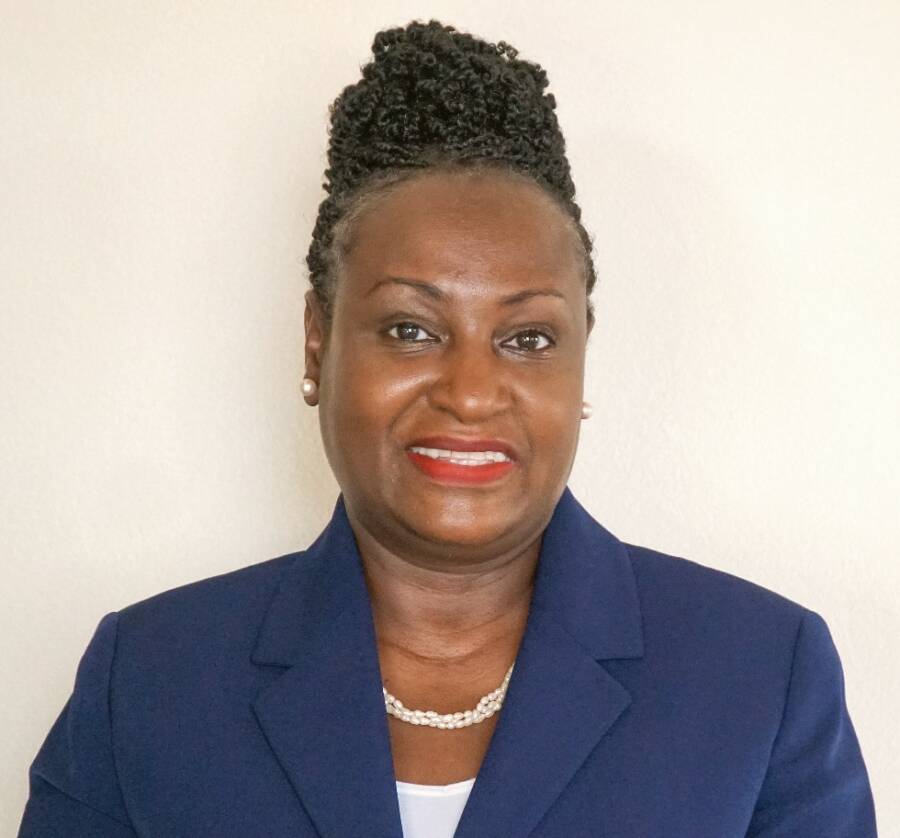

by Dr Wendy C Grenade
The Government and people of Grenada are faced with perhaps their most challenging foreign policy dilemma since 1983. In this article, I will share some insights on some of the lessons that can be learnt from the past to inform the present.
We are in the month of October, and although 4 decades have passed, the events of October 1983 continue to reverberate throughout Grenadian society, carrying lasting pain and unresolved trauma for many. As we collectively seek healing and reconciliation, we must confront the historic fact that although the Grenada revolution brought tremendous social and economic benefits to Grenada, the revolutionaries made glaring foreign policy blunders, given their alignment to the Soviet Union and Cuba in the context of the Cold War and Grenada’s positionality as a Small Island Developing State in the Caribbean Basin. Lessons from the revolutionary era are useful to guide Grenada’s foreign policy praxis 42 years after the tragic events of October 1983. I will outline a few lessons from the Cold War era that remain useful today.
- Neutrality must be a central pillar of small states’ foreign policy
- Genuine non-alignment allows small states to be “friends of all and satellites of none”
- When small states become proxies of great powers, they compound their vulnerability and can become casualties of war, with lasting scars on their societies
- In the context of economic dependency, the exercise of sovereignty demands pragmatism
- Diplomacy must be conducted silently, skilfully and with a sense of soberness
- Militarisation invites militarisation and undermines the Caribbean as a Zone of Peace
- Democracy matters — the will of the people and public opinion must guide foreign policy decision-making
- Small states cannot go it alone — collective security through sub-regionalism and regionalism provides a larger platform for collective resilience
Against this background, there is no doubt that even as the Cold War was characterised by ideological divides and proxy wars, it was a more predictable and stable bipolar world. The current moment is shaped by a whirlwind of global chaos, progressive disruption and deepening uncertainty. This brings to the fore the convergence of old problems in new times and diverse paradoxes, particularly for small states. For instance, how to balance sovereignty in the context of economic dependence? In a multipolar world, how to maintain neutrality and non-alignment without compromising security and territoriality? In the context of unequal power relations, how to stand tall in ‘smallness’ without sacrificing principle, dignity and peace?
Drawing on the lessons from the past and taking into account current realities, strategic diplomacy must be a key pillar of Grenada’s foreign policy. I have often defined strategic diplomacy as “the art of finding diplomatic equilibrium in a world of unequal power relations; multiple actors; unfair trade; complex, intersecting cross-border issues; competing and conflicting interests; dwindling resources and capacity constraints.” For its success, strategic diplomacy must be buttressed by, inter alia, security regionalism, technical competencies and research capabilities and inclusive democratic participation. I will examine each of these in turn.
Strategic diplomacy must be accompanied by security regionalism. This refers to adopting a regional approach to multiple and intersecting (in)securities to provide a stronger platform on which small states can stand to navigate the waves of the international system. I must point out that the Revised Treaty of Chaguaramas, among other things, makes provision only for the coordination of foreign policies among Caricom member states. However, the Revised Treaty of Basseterre goes further and commits OECS member states to coordinate and also harmonise foreign policies. In fact, when Caricom could not find consensus during the Grenada crisis in October 1983, it was the OECS that took the lead. The Regional Security System (RSS) remains a bastion of collective security for the OECS, Barbados, and recently, Guyana. The RSS provides a framework for security cooperation and an institutional architecture within which Grenada’s military and non-military security interests are coordinated, along with other member states. Therefore, given historical precedence and treaty obligations, a sub-regional approach is a necessary imperative for Grenada in the current circumstance.
Technical competency and research capabilities must be at the core of strategic diplomacy. Policy and research units within Ministries of Foreign Affairs must be staffed with competent experts, trained in diplomacy, international relations and global affairs. Embassies and consulates must be supported by skilled diplomats who have mastered the art of negotiations, bargaining, and trade-offs. In essence, 21st-century diplomacy requires multidisciplinary professionals who are intellectually rigorous, practically agile and capable of commanding respect in the international community. Again, regional cooperation through collective diplomacy is essential for small island developing states.
Strategic diplomacy must also be buttressed by a democratic ethos within member states. During high-stakes crises, public opinion matters for foreign policy decision-making, since citizens are indirectly and directly impacted by foreign policy choices. In thriving democracies, when countries are faced with such crises, governments address the issues diplomatically. Beyond diplomatic efforts, citizens sign petitions, social activists protest peacefully, the intellectual class engages in public education, and the public often finds various other ways to articulate their positions to policymakers. In the final analysis, substantive democracy is premised, among other things, on people’s participation in their governance, voice, accountability and a politics for sustainability. This refers to inclusivity and cooperation across political and other divides for the collective national good.
Finally, 42 years after the implosion of the Grenada Revolution, there are lessons from that era that can be useful to guide the way forward. Ultimately, 2 of the enduring lessons are: militarisation invites militarisation and foreign policy must be deployed as a strategic instrument to promote Grenada and indeed the Caribbean as a Zone of Peace. This is essential to enhance our collective well-being and advance our equal humanity. Strategic diplomacy is, therefore, a bulwark to safeguard state sovereignty, ensure territorial integrity and promote long-term security and peace.
Dr Wendy C Grenade is a Grenadian political scientist who has taught and researched in the field of International Relations for the past 20 years.
Continue Reading