

Smith
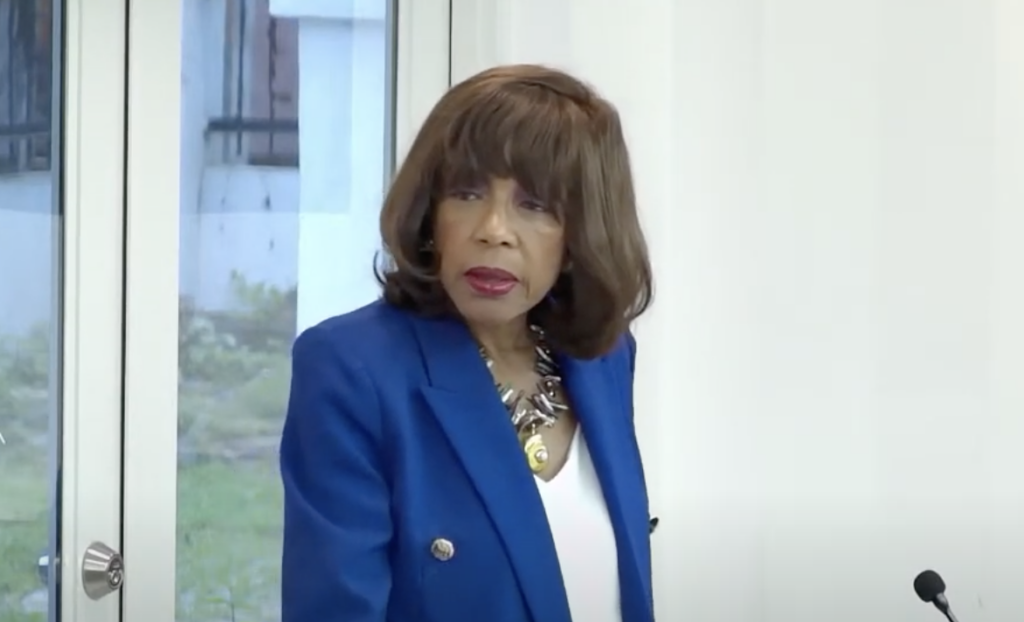
Junior Minister for Financial Services Lorna Smith has pushed back strongly against repeated claims by Opposition Leader Myron Walwyn that the government engages in “parasitic debating” during sittings of the House of Assembly.
Walwyn has argued that government members routinely wait for the Opposition to raise concerns before rising to rebut them, a practice he says amounts to parasitic debate.
However, during her contribution to debate on the Virgin Islands Energy and Water Corporation Bill, 2026, Smith rejected that characterisation, saying she listened carefully to Walwyn’s contribution not as part of any so-called group, but to genuinely understand the Opposition’s concerns about the proposed merger.
“I wanted to understand very clearly what were his concerns, as well as the rest of the opposition to the merger,” she said, adding that by the time the Opposition Leader concluded his remarks, she formed the view that the accusation of parasitic debate could not fairly be levelled at the government side.
Smith suggested instead that the language used in making the accusation was itself problematic. She described the term “parasitic debate” as unparliamentary and said it did little to advance constructive discussion on the bill.
While defending the government, Smith agreed with Walwyn that debate remains fundamental to democracy. But she said the sharp language used by any elected representative not only targets elected members, but can be perceived as an attack on the electorate itself. As an At-Large representative, she said she was mindful that thousands of voters placed their confidence in her.
“When you make these comments, it’s not really made to Lorna Smith or any individual member,” she said. “It’s really made to the people who elected us, the people who are behind us.” She urged members on both sides of the House to be more considerate and parliamentary in their language, stressing the need for collegial conduct.
Growing parlimentary tensions?
In recent times, sittings of the House of Assembly have grown increasingly tense, with sharp exchanges reflecting wider unease both inside the chamber and across sections of the public. Several members of the House, along with commentators in wider society, have taken issue with the tone and presentation style of the Opposition Leader, arguing that his language and framing of arguments have at times escalated debate beyond robust scrutiny into personal or institutional confrontation.
These moments have fuelled accusations of unparliamentary conduct and contributed to an atmosphere where policy discussion — particularly on major legislation such as the utilities merger — has at times been overshadowed by clashes over rhetoric and intent. Government members have suggested that such presentations risk undermining collegiality and distracting from the substance of proposed reforms.
Walwyn, however, has consistently defended his approach, maintaining that he is simply fulfilling his constitutional role as a district representative. He has argued that his interventions are not designed to embarrass the government or individual ministers, but to challenge policy, expose weaknesses, and force accountability in the interest of the public.
Copyright 2026 BVI News, Media Expressions Limited. All Rights Reserved. This material may not be published, broadcast, rewritten or distributed.