


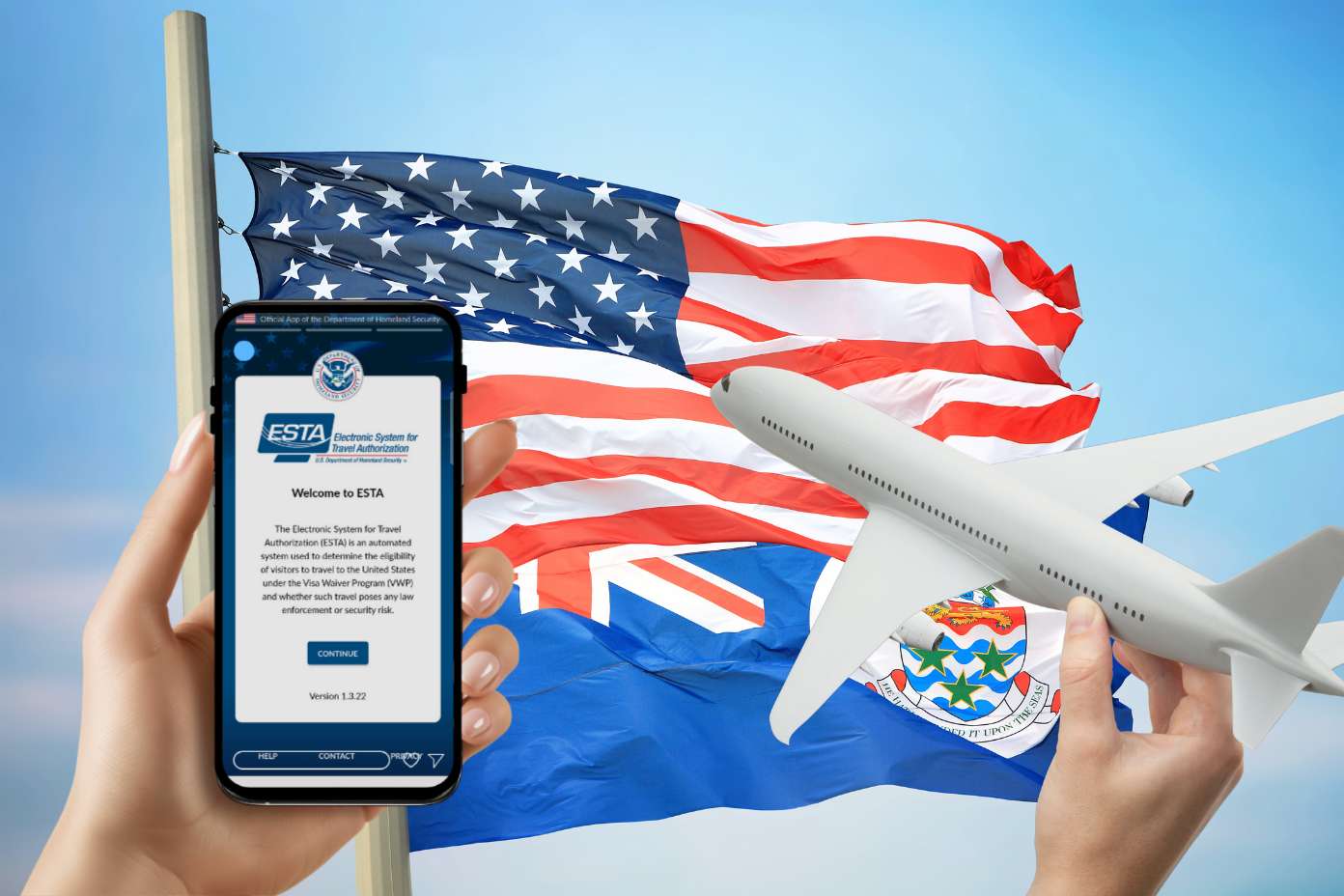
The United States is preparing to impose the most expansive data-collection requirements ever applied to visitors from visa-waiver countries.
A new proposal from the Department of Homeland Security would make five years of social-media history and other biographical details a mandatory part of the Electronic System for Travel Authorization, or ESTA – the pre-clearance process that allows citizens of the United Kingdom, Ireland, Australia and 38 other nations to enter the U.S. for short visits without a traditional visa.
Proposed ‘national security’ measures
The proposal, disclosed in a notice from US Customs and Border Protection and now open to 60 days of public comment, would effectively eliminate the long-standing “optional” social media field on ESTA forms and replace it with a much broader suite of personal-data disclosures.
The Customs and Border Patrol notice said that, in keeping with an executive order “Protecting the United States From Foreign Terrorists and Other National Security and Public Safety Threats,” five years of social media history will become a mandatory data element for all ESTA applications.
The proposal also requires applicants to complete new “high-value data fields.” These expanded biographic requests include telephone numbers used within the past five years; email addresses used over the past 10 years; IP addresses and metadata from electronically submitted photos; the names of parents, spouses, siblings and children; those family members’ telephone numbers from the past five years; their dates and places of birth; and details on previous residences. A wide range of biometric identifiers – facial data, fingerprints, DNA and iris scans – would also be collected. Applicants would further need to provide business telephone numbers from the past five years and business email addresses from the past 10 years.
In a structural shift, Customs and Border Patrol is preparing to scrap the ESTA website altogether, instead funneling an estimated 14 million annual applicants through its mobile app.
The new social-media mandate arrives as ESTA rules have already begun tightening. Earlier this year, ESTA applicants were hit with new photography standards requiring recent, passport-style images.
Fees have risen as well. In September, the cost of an ESTA nearly doubled from US$21 to US$40.
Not all citizens of visa-waiver countries are eligible for ESTA either. Anyone with a criminal record, prior deportation, visa overstay or travel to Cuba since January 2021 – or to Iran, Iraq, Libya, North Korea, Somalia, Sudan, Syria or Yemen since 2011 – must apply for a formal visa instead.
85,000 visas denied this year
The proposed ESTA requirements expansion is unfolding against a broader hardening of US visa policy.
According to CNN, US authorities have revoked 85,000 visas so far this year, including more than 8,000 student visas. In addition, the State Department has planned to place roughly 55 million visa holders under “continuous vetting,” a system that automatically scans for criminal activity, immigration violations, political expression and social media activity throughout a person’s stay.
The shift affects a wide range of travellers. Students must keep social media profiles public. High-skilled workers face new ideological vetting. A diplomatic cable instructs consular officers to assess whether applicants display attitudes “hostile” to American institutions.
For Caymanians who require a visa rather than an ESTA, interview backlogs, heightened documentation demands and stricter eligibility reviews are becoming the norm. Applicants are subject to expanded security checks.
Knock-on effects
The Cayman Islands does not qualify for the Visa Waiver Program, and Caymanian passport holders must still apply for a US visa in Jamaica. Even so, the proposed ESTA rules carry broader implications for Cayman.
According to the 2024 Compendium of Statistics, 3,328 Cayman work-permit holders are citizens of visa-waiver countries. European tourists, many of whom use ESTAs, have made up between 5% and 15.6% of Cayman’s arrivals over the past five years, and many of them connect through U.S. airports to reach Cayman. A large share of Caymanians also hold U.K. passports and use ESTA visas to enter the United States.
The risk is felt acutely in Cayman, where US travel is deeply embedded in local culture. Students attend U.S. schools or use American hubs to reach universities overseas and families make routine trips for goods and services unavailable at home. Cayman residents also travel to the United States for medical treatments.
Advice for Cayman residents
Fiona Brander of Travel Pros Cayman said the proposed changes underscore the importance of staying ahead of paperwork rather than scrambling at the last minute.
“For people living in Cayman, it’s a good idea to get into the habit of checking your ESTA is valid and making sure you always have a valid ESTA or valid US visa,” she said.
Brander noted that processing times can catch travellers off guard. “Applying for a new ESTA currently can take 72 hours, and it’s been known to take longer,” she said. “I don’t think it counts Saturdays and Sundays in the 72-hour turnaround. Will this turnaround time increase? Yes, possibly, so it’s a wise idea to be prepared.”
She added that the advice holds true regardless of whether the proposed rules move ahead. “Even without these possible changes to the ESTA, this is good idea, you never know when you need to fly. Be prepared for emergencies. If you need to suddenly fly tomorrow via or to the U.S., be ready, have a valid ESTA or visa.”