


Deep cuts at the National Oceanic and Atmospheric Administration and a major policy shift on climate change in the US are expected to have significant impacts in Cayman.
The evolving situation at NOAA – the agency on whose work the US and the Caribbean depend to forecast and track storms – has created uncertainty ahead of hurricane season.
Meanwhile, grant funding for climate research and resilience projects across the region is in doubt.
President Donald Trump signalled his approach to climate change on day one in office, pulling the US out of the Paris Agreement and following up with a flurry of executive actions stripping funding from climate-related projects and rolling back green energy initiatives.
In the latest instalment of our ‘Trump Effect’ series, the Compass looks at his administration’s stance on climate change and budget cuts at key agencies responsible for hurricane forecasting.
The key decisions on climate that could impact Cayman are:
- Pulled US out of the Paris Agreement aimed at limiting global warming to 2°C
- Cut an initial 1,000 jobs at NOAA, with 20% of the agency’s staff expected to be cut in total
- Removed federal funding for any projects that contain the word climate
- Changed the mandate of the National Science Foundation to pivot away from funding climate-related projects
- Pulled funding for USAID, which supports climate- and weather-related research in the Caribbean, including Cayman
- Issued an executive order to ‘promote energy independence and economic growth’ by revoking clean-energy plans and loosening regulations on emissions
Impacts for Cayman
Cayman and much of the Caribbean leans heavily on the US for support in terms of hurricane research and forecasting.
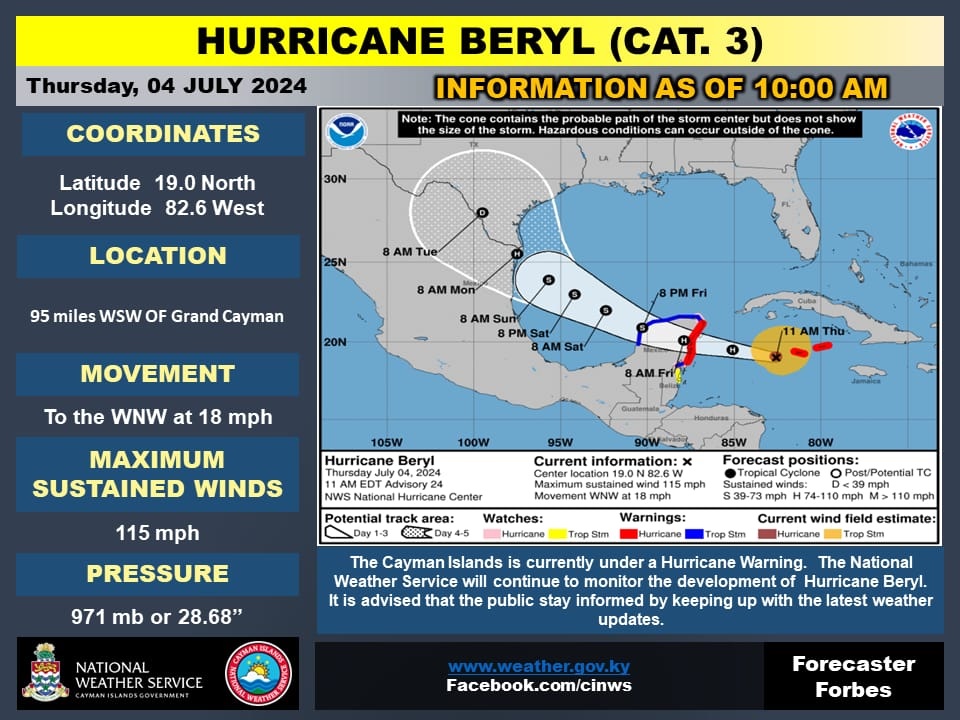
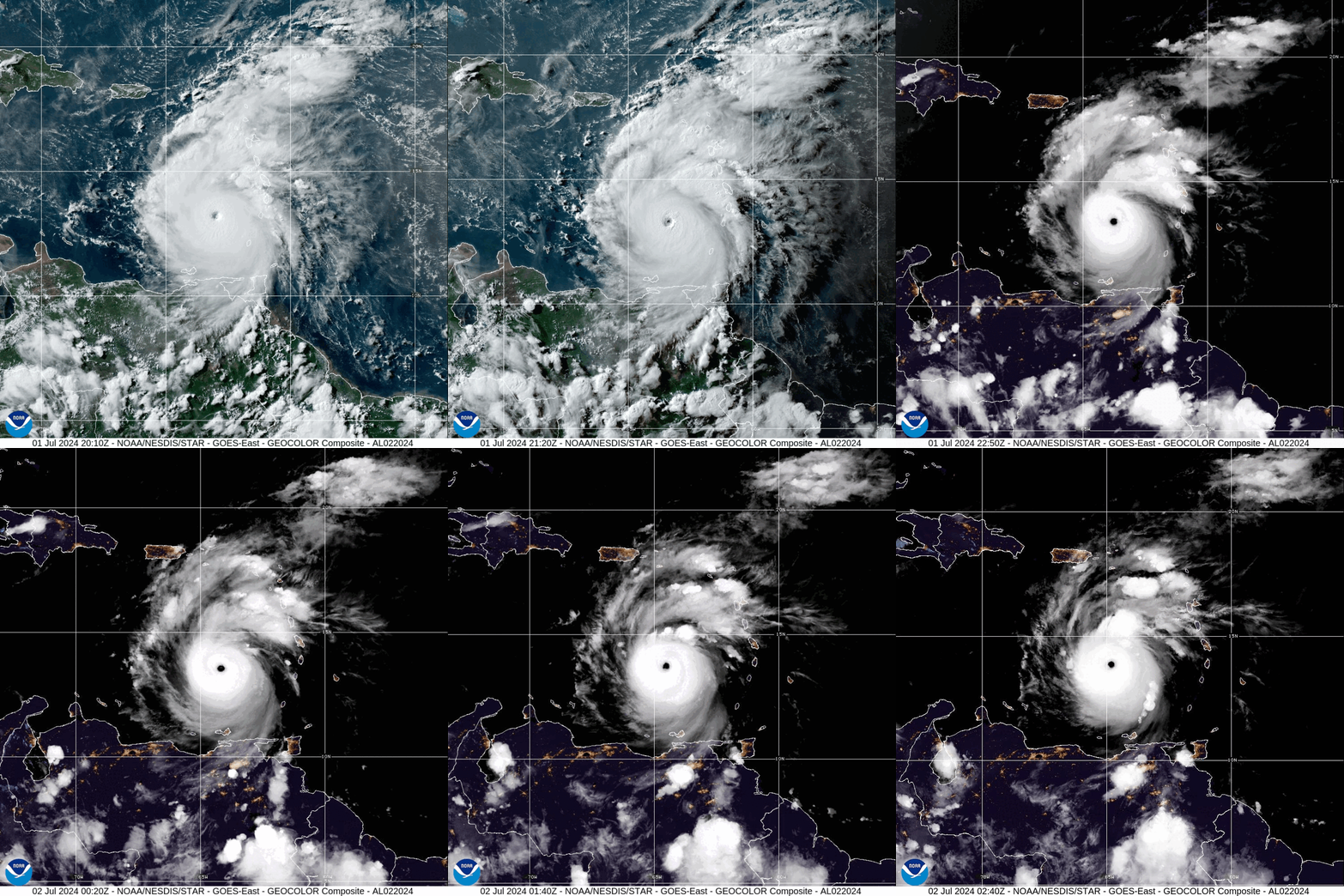
NOAA’s satellites are the source for the majority of tropical-storm-watch maps, and its Hurricane Hunter aircraft fly into the eyes of storms as they pass the region to deliver vital life-saving data to impacted communities.
Cayman also benefits from USAID funding, including for a storm surge modelling project using advanced computer profiling to calculate the likely storm surge in Cayman from thousands of potential hurricane approaches.
The National Science Foundation has also been a key source of funding for climate-related projects.
On the flip side, if Trump’s decision to abandon climate targets and loosen regulations is effective in driving down the cost of oil, that will have an impact on Cayman fuel prices, which touch everything from shipping and aviation to electricity and prices at the pump.
Let’s take a closer look at three key impacts.
1. NOAA cuts sow confusion ahead of hurricane season
The US Department of Government Efficiency has NOAA in its sights. An estimated 1,000 jobs have already gone from the agency, and, according to The New York Times, that is expected to double in the coming months.
There is an element of uncertainty over the extent to which this will impact hurricane forecasting and protection.
That’s partly because of the chaotic nature of the cuts. For instance, five people involved in Hurricane Hunter flights were laid off – only for three of them to be told they would be reinstated.
Speaking to the British newspaper The Guardian, current and former NOAA staff painted a picture of an organisation in chaos amid fears that critical forecasting capacity for extreme weather could be compromised.
Danielle Coleman, head of Hazard Management Cayman Islands, which coordinates the islands’ disaster-response plan, said the unit was working with government’s risk assessment team to analyse likely impact.
“We are liaising with the National Hurricane Center and with NOAA, and doors are not shut to us right now,” she said.
“We will have to see what happens tomorrow, next month and on June 1 (the start of hurricane season).”
She added that NOAA’s data is open source and unless that changes, the information will remain available to Cayman.
“It is difficult to predict right now and we have to contingency plan,” she said.
Professor Anthony Clayton, of the Institute of Sustainability at the University of West Indies, said the Caribbean was extremely reliant on the US, particularly through NOAA, for extreme weather research and data. He is sceptical as to whether that service will remain available.
“We have been heavily reliant – much more so than people realise – on the effectively free provision of information and other forms of support from the US. Now, that era, I think, has probably come to an end,” he said.
2. Funding for climate research and resilience is drying up
Last year was the hottest on record, coral reefs are bleaching at an alarming rate, and the threat to the Caribbean from intensifying storms continues to escalate.
Against that backdrop, the US shift away from supporting climate research is a major challenge.
Two immediate impacts for Cayman could be the USAID-funded project to model storm surge impacts of various hurricane approaches and the US National Science Foundation’s support of Little Cayman’s Central Caribbean Marine Institute.
Coleman, of Hazard Management, said the agency was still waiting on news of the storm surge modelling data project, which was a partnership between USAID, NOAA and Caribbean governments.
At CCMI, the change in mandate to the National Science Foundation has already had an impact.
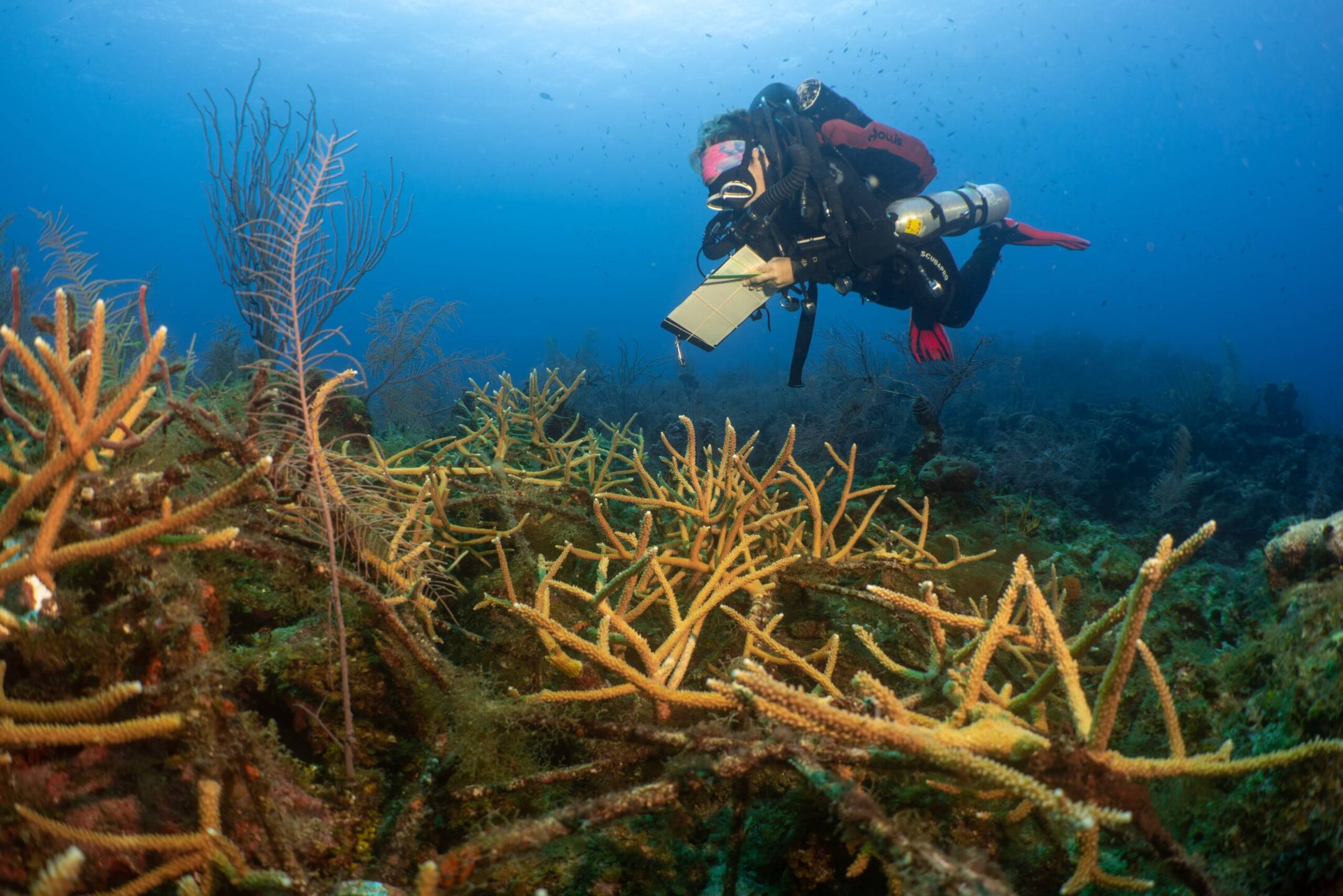
The institute’s ‘deep refuge’ research – which has looked at the viability of cooler deep water reefs as a refuge for threatened coral species amidst the impacts of warming oceans – was funded through a grant from the foundation.
That has come to an end and the possibility of renewal appears slim.
The institute’s general manger, Kate Holden, said the work was a priority project for CCMI – given the mass die-off of corals on reefs from Florida to Cayman due to bleaching over the past two years.
“That is strategically our priority. It seems fairly ridiculous to not be investing in climate right now,” she said.
In the absence of a clear source of funding from the US, and with the UK budget for such research also under review, she said it was critical that CCMI – which pulls around 20% of its founding from the National Science Foundation – looked to private partnerships and collaborations with other research institutes to fill the gap.
Lack of funding for US universities on climate research could have a further impact, she added.
The Cayman Islands Department of Environment gets little direct support from the National Science Foundation, USAID or NOAA, although it partners with groups that do.
The Caribbean Marine Protected Areas Connect initiative and the NOAA Coral Reef Conservation Program are “important regional partners”, according to John Bothwell, at the Department of Environment.
He added, “US-led research has been a leading component in the work to try to understand and then combat stony coral tissue loss disease which has been devastating Florida and Caribbean coral reefs. Any cutbacks in this field will be immediately felt.”
3. Will ‘drill, baby, drill’ philosophy impact fuel prices?
Trump’s abandonment of climate targets, clean energy polices and rollback of regulations on pollution are designed to increase production of fossil fuels.
“We are unabashedly pursuing a policy of more American energy production and infrastructure, not less,” said newly-appointed energy secretary Chris Wright at a conference in Houston last month. The long-term impact of that, combined with the US withdrawal from the Paris accord, could have serious consequences for Cayman and other low-lying islands.
The Trump administration has rationalised the shift as an effort to drive down energy prices by freeing the industry from expensive regulation and ending subsidies for solar and wind.
K.T. McFarland, a former Trump national security advisor, who appeared at the RF Cayman Economic Outlook conference last month, suggested the US was seeking “energy dominance”. By abandoning climate agreements and investing in fracking, she said the US could drive down and control the price of oil and natural gas.
“If the United States does have an economic boom, as we’re hoping with President Trump’s tax cuts and energy policy, then it will be a great benefit, I would think, to the Caribbean countries,” she told the Compass.

If fuel costs do come down, everything from electricity to airline tickets would be cheaper as a result.
The Caribbean Utilities Company says the answer to lower costs for Cayman lies in renewable energy, regardless of what happens in the US.
“Fuel costs have always fluctuated due to geopolitical factors, creating price volatility that makes budgeting challenging for both residential and business energy users,” a CUC spokesperson told the Compass.
“In contrast, renewable energy remains largely unaffected by such price variations and is significantly more affordable than any future fossil fuel energy models in Grand Cayman. Considering these advantages, along with the substantial environmental benefits, CUC strongly supports transitioning to a renewable-dominated energy mix as the most beneficial path for Grand Cayman.”
That appears to be the pathway on the Sister Islands as well, where Island Energy has targeted a shift to renewables as a means of achieving greater energy security and hitting sustainability targets.
What does that mean for Cayman’s energy transition?
Despite optimistic energy plans, Cayman still derives 97% of its power from fossil fuels.
The National Energy Policy seeks to flip that dynamic totally over the next two decades.
OfReg, Cayman’s utility regulator, is in the middle of a bidding process on what is expected to be the first of several large solar farms. At current fuel prices, utility-scale solar generation is almost half the price of diesel power generation, so there is an economic case, as well as an environmental one, for continuing in this direction.
The University College of the Cayman Islands has received grant support from the European Union’s Resilience, Sustainability, Energy and Marine Biodiversity initiative and invested heavily over the past few years in upskilling Cayman’s workforce for a green energy conversion.
Its president and CEO Robert Robertson said those efforts would continue.
“I think the general consensus globally is that green jobs will continue to rise in terms of volume, and the value and the skills around those areas will continue to be very important,” he said. “For example, we’re not going to reach our energy targets in the Cayman Islands unless we have a trained and skilled workforce.”
Nature knows no borders
Both UCCI’s Robertson and UWI’s Clayton point out that ecosystems don’t respect international borders.
The problems on Cayman’s coral reefs are closely linked with those on reefs around the Caribbean and in Florida. Wildfires in Canada don’t stop at the 49th parallel.
For Clayton, the future for scientific research looks bleak.

“They’re taking a blunt axe to the federal service, and funding for science has also been butchered. I’m not optimistic about this at all,” he said.
But he suggests that Caribbean nations are not wholly without options.
“We don’t have the satellites, obviously, and we don’t have the Hurricane Hunters, but there’s a great deal more that we could be doing as a region,” he said, citing information sharing, building out the insurance pool, and smarter development in coastal areas, as much-needed policy shifts locally.
Robertson sees the US, under Trump, as something of an outlier on climate change. And he is cautiously optimistic that others will help fill the void.
“It is obviously their choice,” he said, “but I think you’ll see other countries will step up and try to be more aggressive in their response to climate change, which may have some impact globally.”