


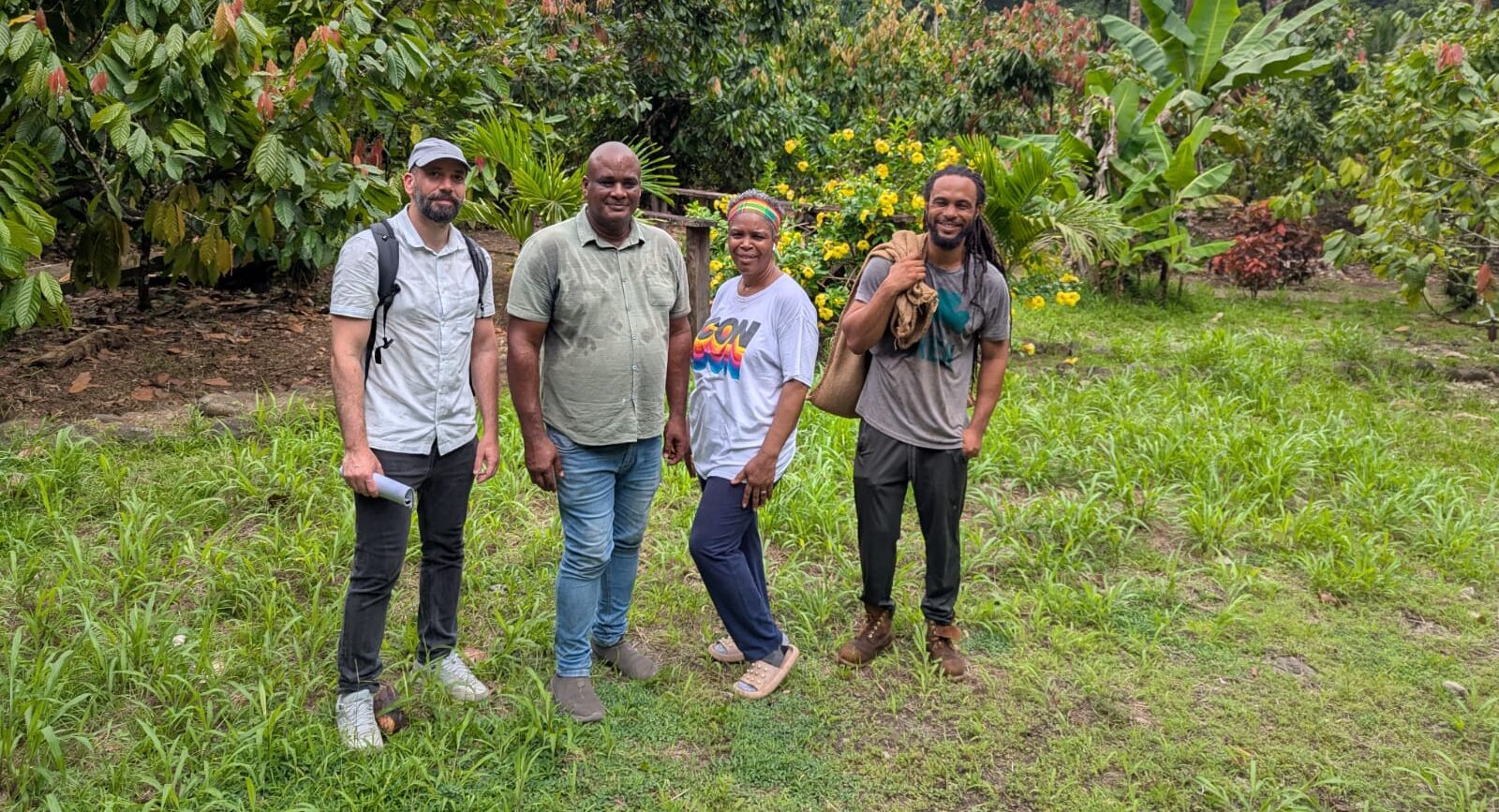

Between August 6 and August 26, 2025, the Food and Agriculture Organization of the United Nations (FAO) conducted a series of missions across four Caribbean nations—Dominica, Saint Lucia, Saint Vincent and the Grenadines, and Grenada.
FAO reported via press release that the purpose of these visits was to evaluate the current state of the cocoa industry in the region and to identify avenues for sustainable development and better positioning in global markets. Led by Mr. Gustavo Ferro, FAO’s Cocoa Market Analysis Specialist, the initiative was financed through FAO’s Regular Programme Funds, aligned with the project titled “Strengthening the Foundations for a Specialty Cocoa Sector in the Caribbean.” It is widely acknowledged that cocoa has the potential to bolster local economies, support rural communities, and open doors to premium fine-flavor markets.
Throughout the mission, FAO explored strategies to boost productivity and competitiveness while emphasizing sustainable growth pathways for the Eastern Caribbean’s cocoa industry. Initial findings reveal that, despite variations among the four nations, the region’s extensive network of smallholder farmers could become more competitive through improved coordination efforts, such as group aggregation and more efficient logistics. Encouraging signs include the revival of the sector by farmers, processors, and community organizations through initiatives like bean-to-bar chocolate production, artisanal cocoa products, and traditional cocoa tea. When coupled with the region’s thriving tourism industry, these developments highlight significant prospects for origin branding, agro-tourism connections, and niche markets.
During the mission, as per the release, Mr. Ferro engaged with various stakeholders, including Ministries of Agriculture, producer associations, cooperatives, exporters, chambers of commerce, and private processing firms. He also visited farms and processing sites to evaluate production practices, post-harvest handling, and quality control systems. Additional discussions took place with Permanent Secretaries and technical staff from the respective agriculture ministries, providing comprehensive insights into each country’s cocoa sector.
The organization says that the mission is expected to produce detailed situational analyses for each nation, identifying strengths, gaps, and opportunities along the cocoa value chain. These reports will contribute to a regional roadmap aimed at elevating the Caribbean’s positioning in the fine and flavor cocoa markets. A comprehensive report and presentation will be shared at the upcoming Subregional Dialogue and Validation Workshop.
Mr. Ferro expressed optimism about the feedback received from the participating islands, expressing that Dominica has potential for specialized marketing of the product because of its unique variables.
“In Dominica, the island’s rich biodiversity and agroforestry systems offer a natural advantage for high-quality cocoa. With stronger post-harvest infrastructure and farmer incentives, Dominica could secure a place in the specialty cocoa market,” he explained.
According to Ferro, Saint Lucia’s, “modest production base” which he said demonstrates how cocoa-based products that extract maximum value can sustain a “vibrant market.”
He also praised Grenada and Saint Vincent and the Grenadines: “Grenada continues to stand out with its distinctive fine-flavor cocoa and entrepreneurial farmers, while Saint Vincent and the Grenadines demonstrates resilience—dedicated producers are keeping the country’s cocoa heritage alive.”
Jennifer Pascal, President of the North East Cocoa Producers Cooperative in Dominica, shared her enthusiasm: “Our members were deeply engaged in the discussions with Mr Ferro, and it was inspiring to see their enthusiasm for strengthening Dominica’s cocoa sector. The meeting brought renewed energy to our cooperative and reaffirmed the strong potential of our industry. We look forward to building on this momentum to position Dominica’s cocoa as a
high-quality product that sustains our farmers and communities.”
Looking forward, said the write-up, FAO will collaborate with the Cocoa Research Centre at the University of the West Indies to host a Subregional Dialogue on the Specialty Cocoa Sector scheduled for November 2025 in Trinidad and Tobago.
This gathering will bring together various stakeholders from across the Eastern Caribbean to validate the findings, exchange best practices, and develop a strategic roadmap for sustainable growth and improved global competitiveness.