


US president Donald Trump can hardly have had the Cayman Islands in mind when he implemented sweeping global tariffs on America’s trading partners last week.
But the islands’ niche export market may be collateral damage in a coming global trade war.
A new 10% tax on anything exported from Cayman to the US was announced on 2 April, alongside tariffs on goods imported to the US from more than 180 other countries and territories. Details of when and how those tariffs might be imposed remain unclear but it is another worrying sign for businesses on the islands.
The far bigger impact of the tariffs will be on imports to Cayman. Products from cellphones and running shoes to steel and fresh produce have complex global supply chains and will attract tariffs that make them more expensive in the US and, therefore, in Cayman.
But for the few local companies that do ship products from Cayman to the US, the 10% export tariff is another headache.
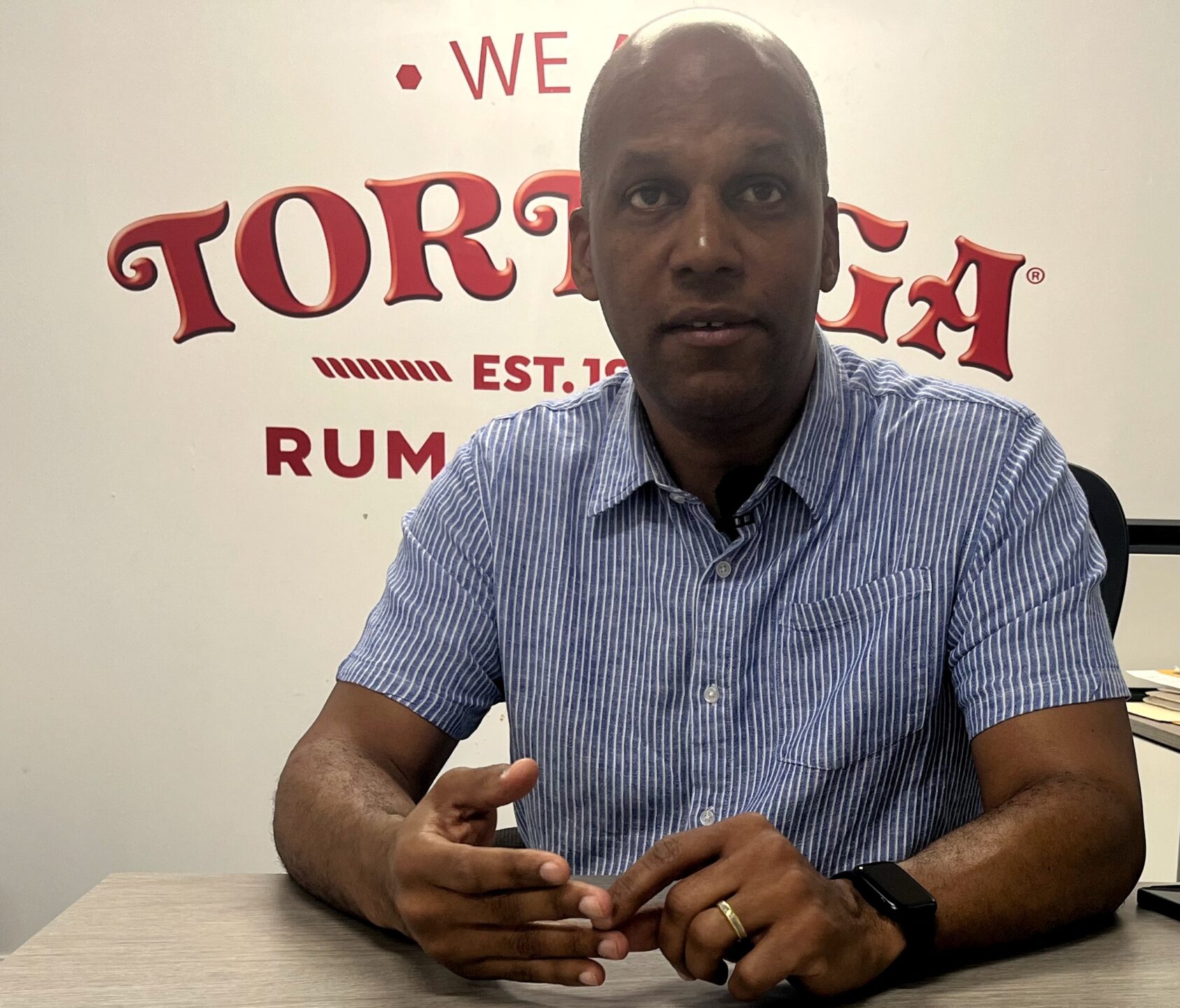
At Tortuga Rum Company, the implications spread beyond its small Cayman headquarters.
“We produce a little bit more than a million pounds of rum cake each year and around 50% of that is for US exports,” said Marcus Simmonds, CEO of Tortuga International Holdings.
The bulk of that is produced in Jamaica. The company still manufactures some of its product in Cayman — around 10% — and will face a marginal impact here too.
Rising cake costs
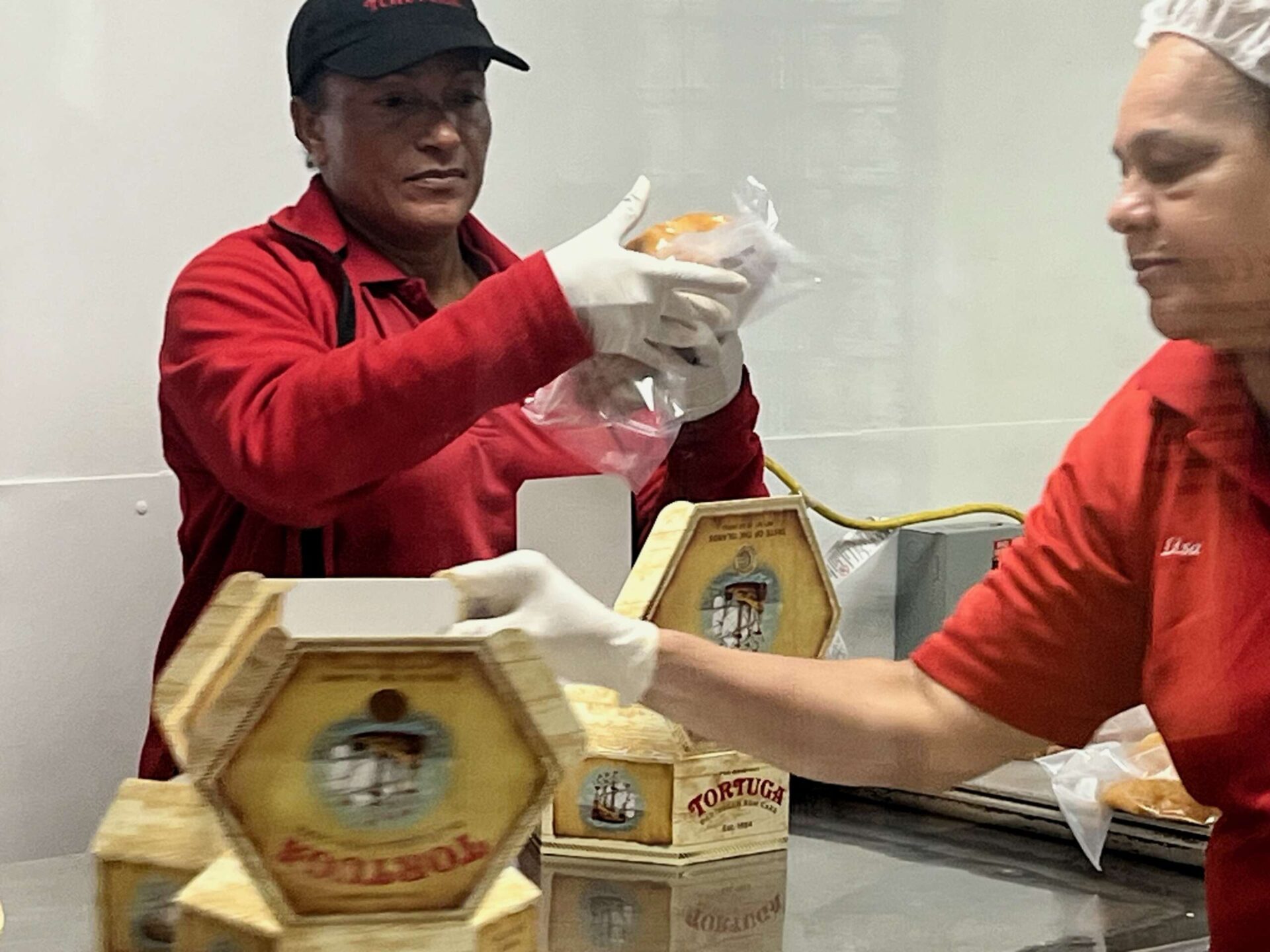
On Friday last week, a team worked under the supervision of head baker Arthur Bell to mix, bake and package multiple different varieties of Tortuga rum cake at its Cayman headquarters on North Sound Road.
The tariffs will impact the ingredients that go into the cakes as well as the machinery that produces them and even the cost of living for staff. Imports into Cayman from the US on anything that originated outside of the United States is likely to be more expensive as a result.
“This is not just the direct impact of these tariffs. It is the indirect impact on the supply chain that we have to consider,” Simmonds said.
“There is going to be an inflationary impact on the US and that will invariably impact the Cayman Islands in a significant way.”
The Compass reported at length on this issue last month. Since the publication of that article, new tariffs have been announced that will broaden the impact.
Rum producers examine impact
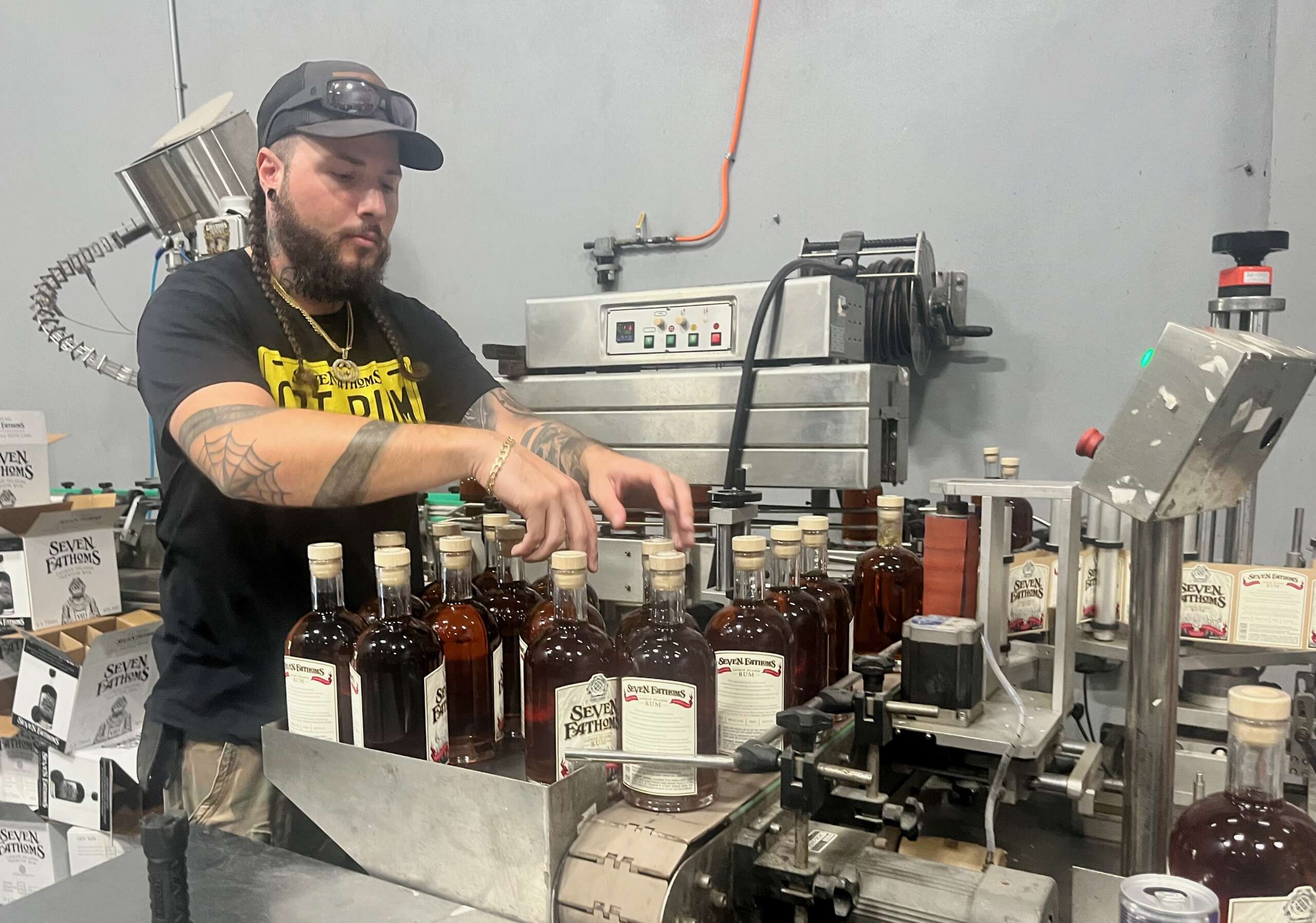
A short walk away at the Cayman Spirits Company, the scent of fermenting alcohol lingers in the air amid the hiss and spit of bubbling tanks of sugary liquid. Rows of glass bottles filled with Cayman’s famous Seven Fathoms rum clink along a conveyer belt to be embossed with the company’s distinctive label.
Some of these bottles are headed for the export market. The distillery ships to Germany, the UK and Canada, and has a small foothold in the American market, worth around $25,000 to $50,000 each year.
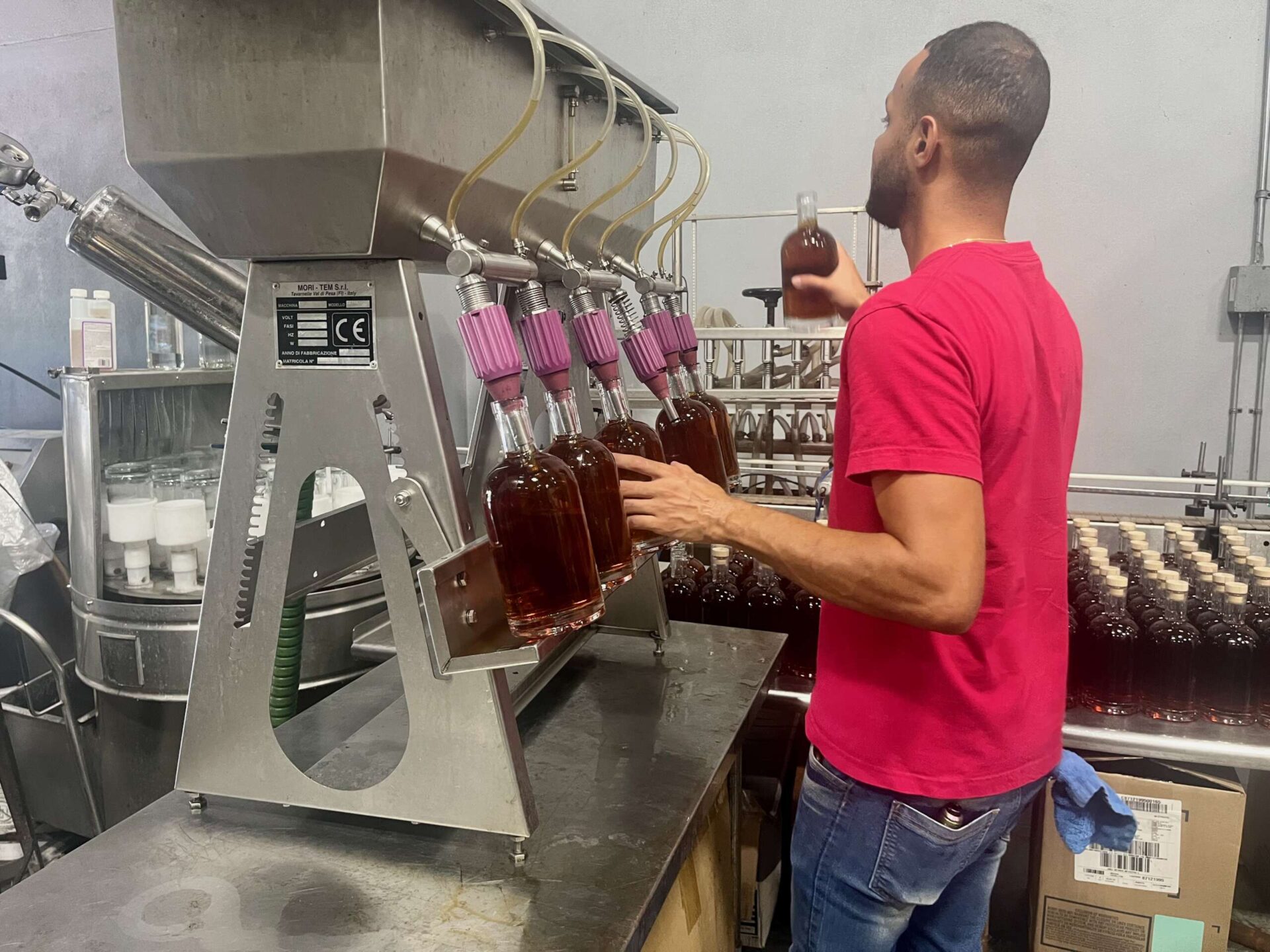
Owner Nelson Dilbert is still digesting the impact of Trump’s tariffs. He is hopeful that the US Craft Beverage Modernization Act, which provides tax breaks for small producers, may apply to his business as he seeks to expand that footprint in the US. The company is in the midst of negotiations to find a new importer.
Another form of export is direct sales to tourists which tend to be exempt from taxes, and Dilbert is hopeful of striking a deal to get Seven Fathoms sold on cruise ships around the Caribbean.
Cayman-made products could increase
Dilbert was Chamber of Commerce president in 2023 when it launched the ‘Cayman Made’ initiative to support local producers.
As well as rum and rum cakes, there is fresh produce and fish for the local market, sea salt and cigars, artwork and souvenirs, and a handful of other products that attract small sales volumes from overseas.
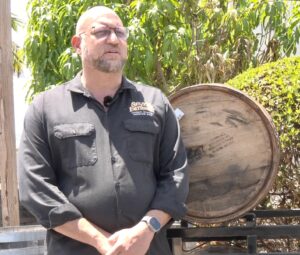
Ramping up local production is something that Simmonds believes Cayman should look at again. He acknowledges the islands will never be self sufficient but believes more local farming and manufacturing would make Cayman more sustainable and create different jobs.
“We will never be an export jurisdiction by any stretch of the imagination but we certainly have the opportunity to develop manufacturing a little bit more.”
“It’s not about rum cakes,” he insists, but a wider conversation about developing homegrown agriculture and other products to provide a greater degree of self sufficiency.
New shipping routes
Dilbert, who as former chamber president was part of a recent trade mission to Panama, which looked at new shipping routes, believes diversifying Cayman’s cargo options is part of the solution.
Cayman does have some routes via Jamaica and Honduras but the vast majority of imports come from or through Florida ports.
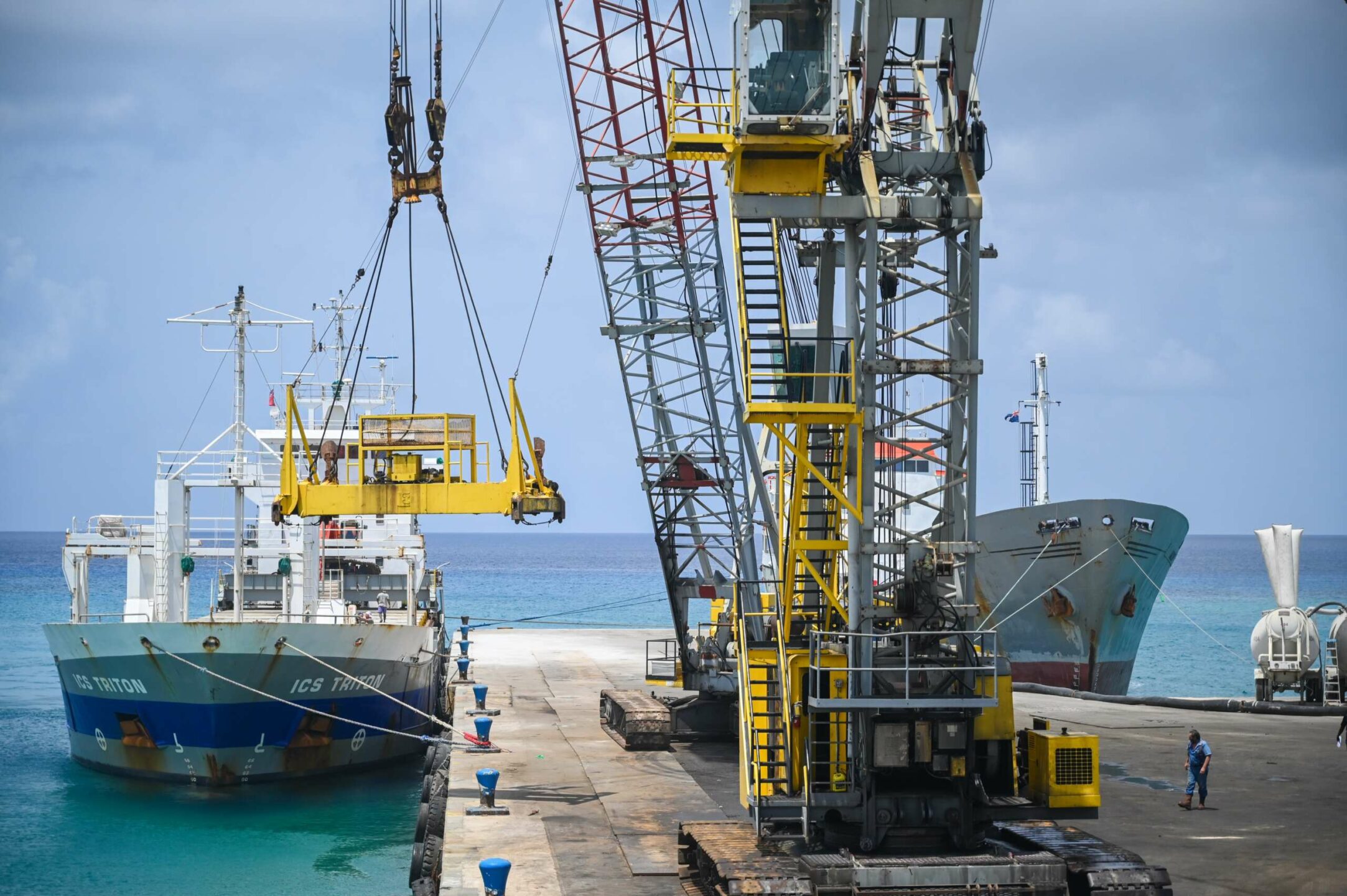
The size limitation of Cayman’s cargo port is another restrictive factor.
“Trade routes is the biggest issue for us,” Dilbert said.
“Because of our port size, we are stuck to smaller cargo ships. … We do need an upgrade to our port system.”
A larger port would enable much larger ships to stop in Cayman as they transit through the Caribbean, reducing reliance on the two-way route from Miami and Port Everglades, he said.
What about Cayman’s tariffs?
For Simmonds, a quick solution for Cayman would be to look at its own tariff structure.
Cayman generally charges around 22-27% on most products imported to the islands.
“We are faced with a cost-of-living crisis,” he said.
“We are going to have to have a serious look at our duty structure.”
The Compass will be taking a closer look at the cargo port options and the duty structure as we delve into the cost-of-living challenges ahead of the election.
We will look more closely at both of those in future articles.