


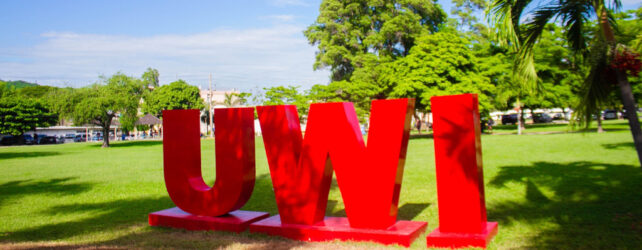
A recent Vice-Chancellor’s Forum hosted by The University of the West Indies (The UWI) centered on vital themes such as academic liberty, institutional autonomy, and the evolving responsibilities of higher education institutions in advancing sustainable development.
The event, titled “Academic Freedom, Sustainable Development, and the Role of the University,” took place on Thursday, July 3, at The UWI Regional Headquarters. Attendees could also join virtually through UWItv’s live stream. Assembling university leaders, international scholars, government officials, UWI said that the students also deliberated on some of higher education’s most urgent global issues.
A press release summarized the opening address of Professor Aldrie Henry-Lee, Pro Vice-Chancellor for Graduate Studies and Research at UWI and moderator of the session, stating that she underscored the importance of these themes amid current global challenges such as reduced university enrollment and institutional mergers. She also posed critical questions to the audience, probing how universities can uphold academic freedom and bolster their resilience against financial strains and post-pandemic hurdles.
The forum’s discussions featured Professor Canute Thompson, Pro Vice-Chancellor for Undergraduate Studies at The UWI and the event’s conceptualizer. According to the release, he brought attention to the politics of knowledge creation, questioning whose interests influence research agendas. “What knowledge should be produced? How should that creation of knowledge be funded?” he inquired.
The release went on to state that he emphasized the need for universities to challenge the existing power structures related to funding and research priorities, advocating for an ethical approach to knowledge production.
A distinguished panel of local, regional, and international thought leaders rounded out the conversation, shared UWI. Participants included Professor R. Clive Landis, Pro Vice-Chancellor and Principal at The UWI, Cave Hill Campus; Professor John Petrovic, a Social and Cultural Studies scholar at the University of Alabama; Professor Jonathan Becker, Vice President of Academic Affairs and Director of the Centre for Civic Engagement at Bard College; Dr. Leahcim Semaj, a psychologist and author; Ms. Liat Ariel, a PhD candidate specializing in Philosophy of Education at the Hebrew University of Jerusalem; and Mr. Matineil Bartley, a postgraduate student at The UWI, Mona Campus.
Professor Landis highlighted the role of academic freedom in fostering peace, stating, “A very important freedom is the freedom to disagree with someone in a peaceful manner,” and emphasized that open, critical dialogue is essential for both societal stability and academic progress.
Professor Petrovic focused on the innovative capacity of universities, cautioning against the influence of neoliberal ideologies, which he argued tend to reduce education to a mere economic tool.
He remarked, “The biggest responsibility of universities is that they do the heavy lifting that corporations won’t,” calling for increased investment in liberal arts and interdisciplinary approaches.
His experiences with political repression was the basis for Professor Becker’s insights, referencing the forced relocation of the Central European University from Hungary. Becker pointed out that government and market pressures threaten institutional independence, noting, “Autonomy is always relative.”
Meanwhile, Ms. Liat Ariel from Jerusalem drew attention to the challenges faced by graduate students, who often encounter censorship and political interference. “The university has a responsibility to support students navigating these politicized environments,” she asserted, urging academic institutions to create spaces that promote open discourse.
Dr. Semaj offered a perspective grounded in the cultural and historical context of post-slavery and post-colonial societies. He stressed the moral obligation of scholars to contribute to meaningful and liberating knowledge, asserting, “Scholarship and the university should be tools of liberation through the pursuit of knowledge and truth.” He warned against the notion of academic neutrality, arguing that it can inadvertently align with oppressive systems. “We need to connect scholarship with reality to avoid irrelevance,” he added.
The forum concluded with a collective recognition of the important role universities play in fostering sustainable development while safeguarding academic freedom.
The discussions reinforced the necessity for higher education institutions to confront existential threats, such as political and economic pressures, while remaining centers of innovation and knowledge. Participants also emphasized the responsibility of universities to contribute meaningfully to sustainable development within their local communities and globally.
The recorded session of The UWI Vice-Chancellor’s Forum on “Academic Freedom, Sustainable Development and the Role of the University” is available for viewing on UWItv’s Facebook page.