


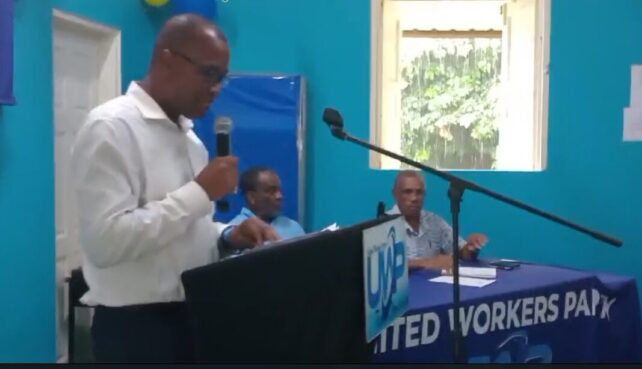
At a town hall meeting in Roseau North recently, the political leader of the United Workers Party (UWP), Dr. Thomson Fontaine, voiced strong criticism of the current government’s expenditure habits, stressing the need for austerity measures and strategic financial planning to foster sustainable development.
He said that the government’s current structure, with 18 ministers and 10 advisors, represents unnecessary wastefulness.
“When you cut down on government waste, right there you have a lot of savings,” Fontaine stated. “We aim for a slim government, similar to models elsewhere, for example, the cabinet of the U.S. which manages over 300 million people with just 12 members. We need to get serious about reducing costs.”
The UWP leader proposed that reducing the size of the government bureaucracy would be a primary step toward fiscal responsibility.
“We will cut down on wasteful government spending and eliminate unnecessary positions,” he vowed. “A leaner government will free up resources that can be redirected toward vital programs for youth empowerment, environmental protection, and livelihoods development.”
Dr. Fontaine also discussed innovative funding strategies, including leveraging international aid and grants.
“I know. I have done it for other countries,” he asserted referring to his work as an economist with the International Monetary Fund (IMF). “I have been able to encourage countries to do it, to seek those avenues where if you want to do certain programs, especially if it has to do with livelihood development, if you’re looking to put people to work, if you’re looking to develop certain sectors that will contribute to the well-being of the country, there are specific grants and donor countries that will help you get that. So that is one way.”
He said he has been working with organizations such as ECLAC and the UN Office in Trinidad on plans to seek debt relief through a proposed “debt-for-climate” swap. This initiative would involve exchanging debt repayment obligations for investments in climate resilience infrastructure, such as river walls, sea defenses, and resilient housing, which would simultaneously bolster the country’s defenses against hurricanes and rising sea levels.
“Currently, Dominica spends over $100 million annually on debt service — money that could otherwise be invested in agriculture, fisheries, and other sectors that support our people,” he explained. “By accessing funds from the Green Climate Fund and other international grants, we can turn debt liabilities into opportunities for climate adaptation and economic growth.”
He assured his assured his audience and Dominicans by extension, that his party’s plan would prioritize responsible spending, tapping into friendly nations, grants, and international funds, alongside cutting government waste, to finance development projects crucial to Dominica’s future.
“Although we have yet to assign a specific cost to these plans, we are confident that through these methods — reducing waste, seeking grants, and engaging with international partners — we can secure the resources needed to build a resilient and prosperous nation,” he concluded.