


Transparency-related tensions have again erupted between the Virgin Islands and Britain, which recently launched a new anti-corruption strategy that suggests overseas territories should launch fully public registers of beneficial ownership.
Premier Natalio “Sowande” Wheatley — who says the register the VI plans to launch next June will be accessible only to people with a “legitimate interest” in viewing it — responded by insisting that his government will not tolerate Britain trying to “impose” laws on the territory.
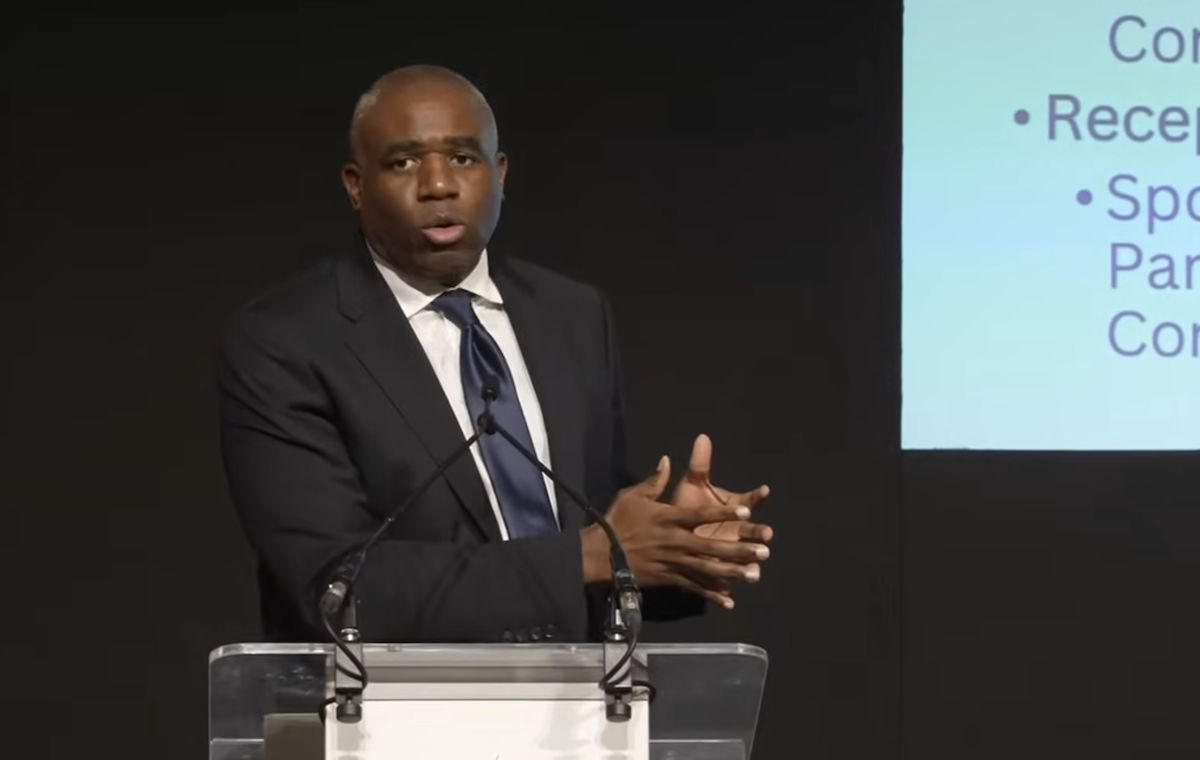
The United Kingdom’s 119- page strategy, which was launched on Dec. 8 by UK Deputy Prime Minister David Lammy, states that overseas territories should begin by establishing beneficial-ownership registers with “broad and inclusive legitimate-access in line with UK expectations as an interim step to public registers.”
However, the premier insisted during a Dec. 12 press conference that the VI is doing the right thing as it prepares to launch its register.
“We make laws for the Virgin Islands,” Mr. Wheatley said. “We don’t wish to have any laws imposed on us, especially in areas to do with our economy.”
JMC tensions?
The premier also appeared to acknowledge difficulties with London on the issue despite meetings with UK officials last month at the annual Joint Ministerial Council.
“We recognise that we are not exactly in the right place,” he said. “That’s why we have got to keep talking. We have always sought to cooperate with the UK in the fight against illicit finance.”
Mr. Wheatley added that the government is concerned with protecting the privacy of the approximately 361,000 companies currently registered in the territory.
“We are ahead of the global standard,” he said. “No global standard exists in this particular area. We have a legitimate-interest access regime which satisfies the constitutional test, because when you are dealing with persons’ constitutional rights you have to protect their right to privacy, safeguarding a person’s personal data.”
‘F for failure’
The comments came shortly after the government’s register plans received the grade “F for failure” from a prominent watchdog.
In a recent report titled “Opening Up Offshore Secrecy,” Transparency International UK issued a scathing assessment of the VI’s register-access policy even as it praised Monserrat for leading the way among overseas territories.
The watchdog used 92 criteria to rank the register-access regimes in the VI, Cayman Islands, Bermuda and Montserrat.
The VI’s planned register scored an accessibility rating of 26 percent, slightly ahead of Bermuda, which also received an “F” rating, with 22 percent, but way behind the Cayman Islands’ 46 percent — a “C” rating. Montserrat, with 81 percent, earned an “A” grade.
However, the VI did receive an overall “A” rating for its overall beneficial-ownership framework, with a score of 73 percent. This figure was the same as Montserrat’s and 20 points ahead of the Cayman Islands.
‘Fallen short’
Study author Margot Mollat, TIUK’s senior policy and research manager, said the VI had “fallen short” of its promises on openness and is too “secretive” regarding financial ownership.
Her study highlights various perceived flaws in the VI’s access policy, such as measures to tip off company owners when journalists or other investigators seek information about them.
TIUK also criticised “barriers to access,” including requirements for investigators to know key information about a company they are investigating in order to search it.
“Our research has found that companies registered in UK overseas territories have been used in more than 273 cases of largescale corruption and money laundering, amounting to £250 billion across 79 countries,” Ms. Mollat stated.
“The British Virgin Islands alone featured in 92 percent of these cases.”
‘Completely untrue’
Financial Services and Economic Development Junior Minister Lorna Smith defended the government stance.
“TIUK’s view that there is narrow access — that is completely untrue,” Ms. Smith said at the Dec. 12 press conference. “Anyone who can prove … they have a legitimate interest in the BVI in relation to money laundering or terrorist financing [will be able to access the register] — be they a journalist, university, an investigator. Anyone can have access to beneficial ownership information.”