


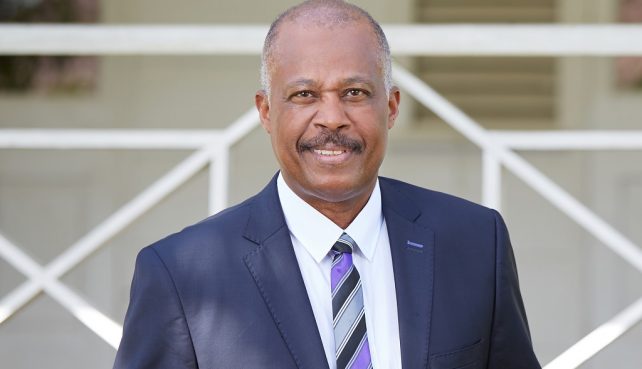
UWI’s Vice-Chancellor Professor Sir Hilary Beckles has gone on the record, delineating the University’s progress in economic development and its rising international standing over the past five years, while concurrently, he reportedly has maintained a steady commitment to decolonising the institution. A press release from the school emphasized that the focus is on shifting away from its historical ties to British legal traditions toward becoming a fully independent, indigenous university.
During his recent presentation of the 2023-2024 annual report to the University’s governing Council, with the theme ‘Regionally Respected. Globally Celebrated,’ Vice-Chancellor Beckles announced that the decolonisation journey is nearing completion.
He provided historical context, recalling that The UWI originated as a College of the University of London in 1948, established following recommendations from the Asquith Commission to create colonial universities. He noted that the process of decolonisation has been gradual, beginning with the 1962 separation from the University of London and the adoption of its current constitution as The University of the West Indies. Beckles acknowledged Sir Arthur Lewis, the institution’s first Vice-Chancellor, for his pivotal role in executing this initial milestone.
Further key moments in The UWI’s decolonisation included aligning the university with regional discussions about shifting away from reliance on the Privy Council and adopting the Caribbean Court of Justice (CCJ). Reflecting these regional developments, Vice-Chancellor Beckles took steps to indigenise the role of Visitor at The UWI, ending the longstanding system where the British monarch served as Visitor and where the Privy Council functioned as the court of appeal for student and staff legal matters. Supported by Britain, the university appointed The Honourable Justice Rolston Fitzherbert Nelson as the first Caribbean Visitor in 2019.
In 2024, commemorating the institution’s 75th anniversary, The UWI replaced its traditional academic regalia—originally inherited from the University of London—with designs that are uniquely Caribbean, better suited to the tropical environment and reflective of regional culture and identity.
Looking ahead, Vice-Chancellor Beckles articulated the importance of the next steps, stating, “When this University was established in 1948, we were given the power to grant degrees by means of Royal Charter, and we issued degrees on behalf of the British monarchy. Theoretically and legally that Royal Charter can be revoked — and if it is revoked, The UWI will not exist.”
He referenced the 1973 Treaty of Chaguaramas, which founded CARICOM, highlighting that “The UWI’s republican status is complete with judicial and intellectual independence. The final step in decolonisation is the power to grant degrees. We have approached the Heads of Government, and have said this final decolonisation has to be the revocation of that Royal Charter. They have endorsed the transfer of that Royal Charter into an agreement embedded within the Treaty of Chaguaramas. This will reverse the existential threat, and bring the degree-granting function within legal domestic arrangements, and completely indigenise The UWI as a regional university.”
He further explained that the Treaty of Chaguaramas also affirms The UWI’s status as an independent, regional institution for eternity. The proposal submitted for approval to the University Council involves establishing the legal entity within the Caribbean region itself.
Finally, Vice-Chancellor Beckles acknowledged the vital contributions of Ms. Laleta Davis-Mattis, former General Counsel of The UWI, and the Honourable Mr. Justice Adrian Saunders, former President of the Caribbean Court of Justice, both of whom served as lead consultants in this process.
The full 2023/2024 annual report is accessible at www.uwi.edu/vcreport, and a recorded broadcast of the Vice-Chancellor’s live presentation can be viewed here.